

Japanese Traditional Culture you can experience in Sugita only 20 minutes from Yokohama by train. A one-stop-shop for many cultural practices such as meditation, sutra reading, tea ceremony, ukiyo-e, kaiseki meals, geisha song and dance, and more!

Written by
This is an experience plan associated with the Sugita Plum Grove and Sugita plum trees in Sugita, Isogo Ward, which was once the most popular ume viewing spot in the Kanto region. At Hitorizawa Terrace, a restaurant located 50 minutes from Yokohama in a farm, participants will experience Japanese food culture through "miso making," "vegetarian cooking by a renowned chef," "medicinal Chinese cuisine using Japanese ingredients," and "harvesting winter vegetables in Hitorizawa and a meal of rice balls and tempura. In the "Yokohama Traditional Culture Workshop," participants will enjoy meditation and sutra chanting at Myohoji Temple, where the Sugita plum tree still remains, a tea ceremony and Nodate experience in the temple grounds, singing and dancing by Yokohama geisha, and a kaiseki meal using Sugita plum trees. We are looking for 3 pairs of trial tour for each course for the following experience in Yokohama for foreigners living in Japan. Please apply via Google Form. Please do not cancel your application after you have been selected. ◆trial tour 1.Life with Sugita Ume: Cooking with Sugita Ume ①January 11 (Thu): 【Shojin-ryori (vegetarian meal) Workshop】A life with Sugita Plum Shojin-ryori and Sugita Plum (3 pairs) ②January 13 (Saturday): 【Yakuzen Workshop】 A life with Sugita Plum Yakuzen Chinese cooking and Sugita Plum (3 pairs) ③January 14(Thursday):Temae-miso making workshop(3 pairs) ④February 6(Tuesday): Winter Vegetable Harvest, and tempura and rice-ball lunch in Hitorizawa, Yokohama (3 pairs) 2. Yokohama Traditional Culture Workshop January 27 (Saturday): Japanese Traditional Culture Workshop in Isogo, Yokohama <Group Plans/Evening Program> (3 pairs) ◆Number of applicants 3 pairs for each course (English-speaking guides will accompany each pair) ◆Entry requirements (1) Foreigners living in or visiting Japan who are 16 years of age or older (If there are 3 or more foreigners, the accompanying Japanese person will also be invited free of charge) (2) Those who can spread the official Instagram and post a video of their experience on their own SNS. Those who are willing to fill out a simple questionnaire on the web. ◆Application Deadline 3 days prior to each tour date If there are too many applications, the participants will be selected by lottery. Please apply as early as possible. ◆Application Method Please apply from the following https://forms.gle/Xtq7uvwZYkDRhHYz9 ◆For inquiries, please contact Sugita Plum Grove Executive Committee for "Ume no Machi Sugita" (Plum Town Sugita) Email: sugita.umematsuri@gmail.com ◆Related URL Official Instagram: https://www.instagram.com/sugita.plum.groves/ Official HP (English): https://shunsaika.yokohama/en/
Plan overview
A Yokohama traditional culture experienceat a temple which was once vibrant during the Edo and Meiji periods. You cantry traditional Japanese cultural practices at Sugita (Isogo Ward, Yokohama),only 20 minutes from Yokohama by train. This plan entails meditation andsutra-reading in front of the Buddha statue, in the main temple. Later, you canexperience the tea ceremony in the Japanese-style room with tatami mats. If the weather permits, youcan visit Gozusan, located within the grounds. The peak of the mountain, whichcan be reached in about five minutes, can be enjoyed by matching the landscapeillustrated by Hiroshige Utagawa and the current state of the Tokyo Bay. Guestswill be able to enjoy a banquet including a multi-course meal using Sugita Plum,and a performance recreating the liveliness once present in Yokohama and Isogoduring the plum-viewing boom. You can enjoy singing, dancing, and ozashiki asobi (traditional games).Please visit Sugita, Yokohama and fully experience Japanese cultural activitiessuch as meditation, sutra-reading, tea ceremony, ukiyo-e, course meals, and geisha song and dance. (The noon program is scheduled to be held between 10:20am to 2 pm)
What is meditation?
It is a practice to relax the body and mind byquieting the heart and thinking of nothing. In this plan you will be able tomeditate in front of the Buddha statue in the temple building.
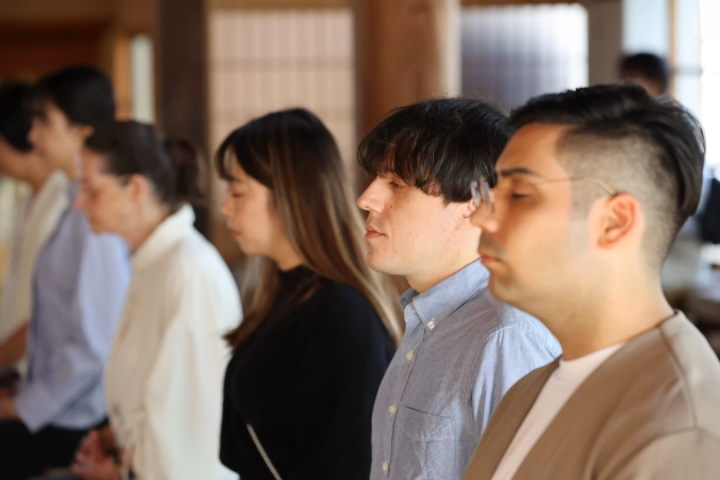
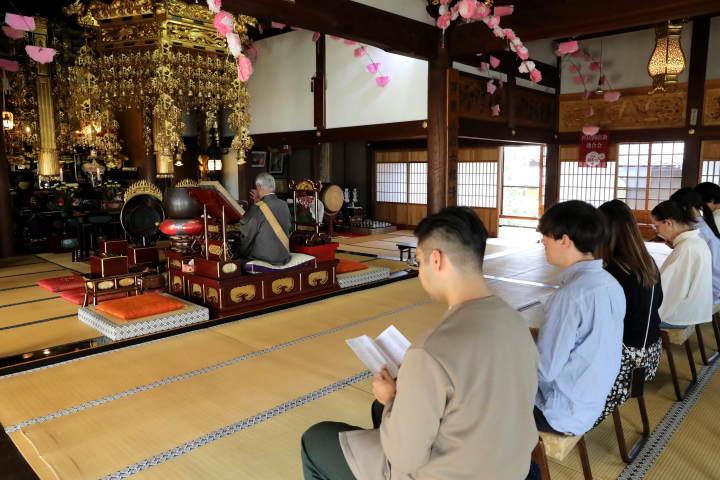
What is a sutra?
They are chants passed down by disciples through oraltradition so that anyone can chant them. The words are said to be the teachingsof the Buddha. You will be reciting the sutra after meditating. We will havethe sutra texts in alphabets so that non-Japanese speakers can also read along.
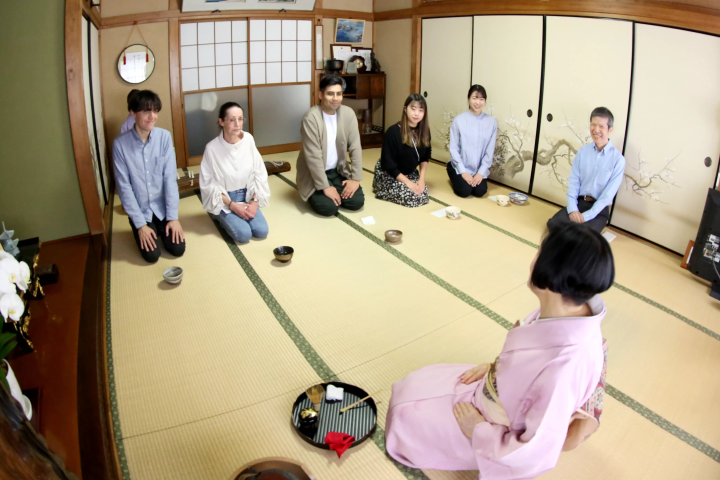
What is tea ceremony?
In the traditional Japanese tea ceremony,the participants calm their minds and prepare tea for guests to enjoy. We will not only be drinking the tea, but will also be feeling Japanese sensibilityfirst-hand, by experiencing the spirit of Japanese hospitality and wabi-sabi.
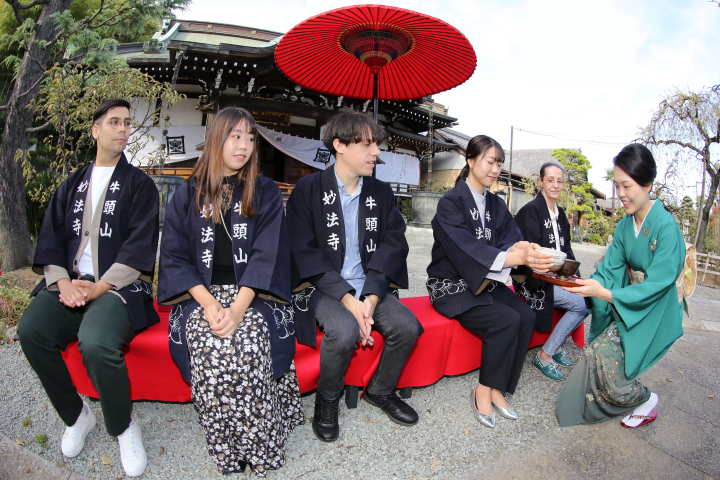
What is no-da-te?
No-da-te is the practice of preparing green tea ormatcha outside. Guests will be experiencing the tea ceremony in theJapanese-style room in this plan. On days blessed with good weather, we willmove to the grounds of the Sugita Plum Garden, and enjoy some tea while sitting on red chairs under a large red parasol, with the temple and plum trees in the back, as a no-da-te experience.
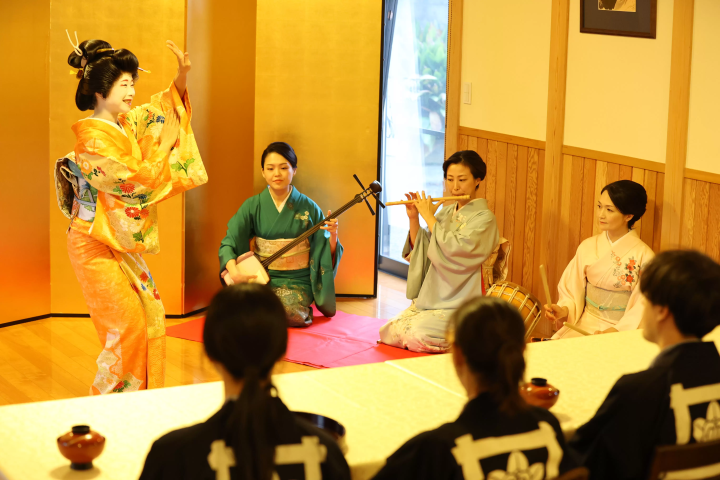
Song and dance by Yokohama geishas and banquet
The restaurant in Isogo, close to Myoho-ji, which is a famous plum-viewing location of Sugita, was founded in 1907. Songs of the IsogoRestaurant District and Red-light District, Isogo Ko-uta and Hama Jiman, weresung and accompanied by dance to entertain guests of the restaurants. The IsogoRestaurant District was lively with the sounds of the shamisen, singing, and dancing until 1960. This is a special program where foreign visitors can experience the vibrancy of the Edo Periodand Isogo songs and dancing throughout the year, in Sugita, Yokohama.
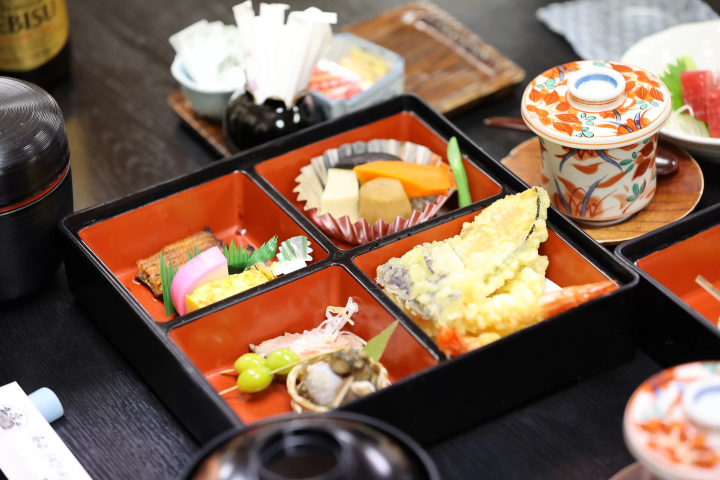
Kaiseki course meals using seasonal ingredients of Yokohama
Please enjoy the changing seasons of Yokohama throughkaiseki course meals which have been prepared by enhancing the flavors of the local produce. Tempura of seasonal ingredients, boiled dishes, sashimi withplum-salt, and delicious Sugita Plum preparations such as yukari can be enjoyed.
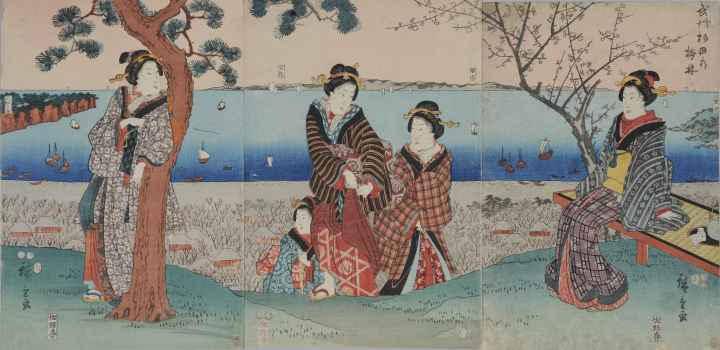
Bushu Sugita no Bairin (The Plum Forest of Bushu Sugita) by Hiroshige Utagawa I
The Sugita Plum Forest of Sugita was said to have 35,000 plum trees in the Edo Period. It was introduced in writing in during theend of the Edo Period, and was visited by many writers and artists. ThisUkiyo-e depicts a scene where beautiful women visit the village of Sugita toview the plum blossoms in full-bloom. The land of Kanazawa can be partially seen in the background, and the Boso Peninsula is also illustrated. Visitorscan view the current landscape from the peak of the hill within the grounds.(Source: Kanagawa Prefectural Museum of History)








![[Tokyo, Shinjuku] Buy Matcha Here! 2 Long-established Japanese Tea Shops Where You Can Get the Authentic Taste!](https://resources.matcha-jp.com/resize/720x2000/2025/09/24-245090.webp)



![[Kyoto Prefecture ] Let's go see Fukuchiyama Castle, the symbol of Fukuchiyama City | Highlights and seasonal events](https://resources.matcha-jp.com/resize/720x2000/2026/02/12-258435.webp)
![[Gozaisho Ropeway] Gourmet Guide](https://resources.matcha-jp.com/resize/720x2000/2025/12/03-251960.webp)