
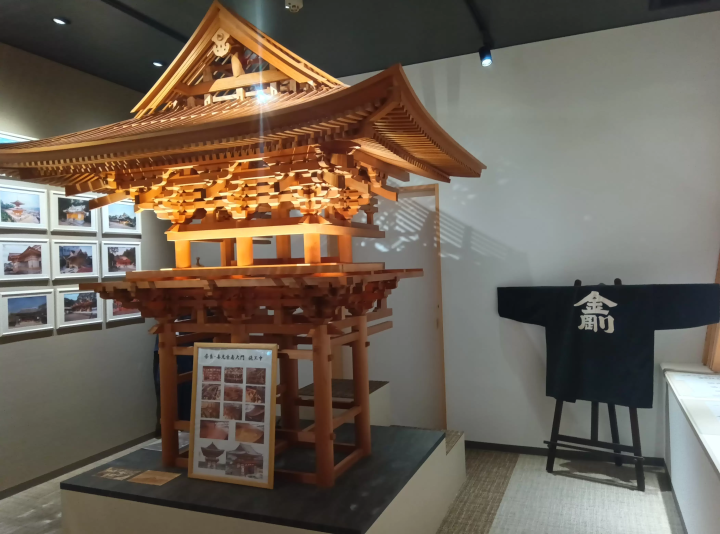
This article introduces a unique factory tour experience in Sakai, located near Kansai International Airport in Osaka.Step inside the world’s oldest company, with a history spanning over 1,400 years, and discover the essence of traditional architectural techniques and accumulated wisdom passed down through generations. Gain deep insights in a short time, making it an ideal program for corporate training, educational visits, and inbound tourism.

Written by
Namba in Osaka is the cultural center where theaters, shopping streets, and gourmet spots are all within walking distance, blending entertainment with authentic Osaka culture. It is a highly attractive MICE area where participants can enjoy exploring the city itself. The Namba ⇔ Kansai International Airport MICE Guide provides comprehensive MICE support based on Nankai Group venues, hotels, and convenient access. Pre- and post-event, we also offer tour plans combining industrial tourism—such as corporate visits and factory tours—in South Osaka and Wakayama. HP:https://www.japanrootsguide.com/en "This account is operated by Nankai Co., Ltd." [Photo description] 1. Rapi:t express train directly connecting Kansai International Airport and Namba 2. Scenery of Dotombori
-
Table of Contents
- Why Has It Lasted for 1,400 Years? Exploring the Essence of a Long-Standing Company
- Take a Look Inside the Tour Experience
- Production Center (Factory) Tour
- Talk by a Facility Representative
- Live Demonstration by Master Carpenters
- Tour Details
- How to contact us
- The next article you should read is here.
Why Has It Lasted for 1,400 Years? Exploring the Essence of a Long-Standing Company
This company, which operates one of the largest production centers in Osaka, is widely recognized as the world’s oldest company, founded in 578 AD. Its origins trace back to master craftsmen who came to Japan from Baekje, an ancient kingdom on the Korean Peninsula, at the invitation of Prince Shotoku, a member of Japan’s early royal family. These artisans laid the foundation for Japan’s temple and shrine architecture, including the construction of Shitennoji Temple. For more than 1,400 years, the company has continued to build and restore sacred sites, playing a vital role in preserving Japan’s spiritual and cultural heritage.
Throughout its long history, however, the company has faced numerous crises, including wars, natural disasters, and periods of severe financial difficulty. In the Showa era, in particular, it encountered a major management crisis. The turning point came with the appointment of its first female master carpenter (toryo), which helped revitalize the organization. Despite the hardships of World War II, the company adapted by embracing new construction methods and strengthening its management foundation. Many of these critical decisions have remained largely untold—stories behind the scenes that reveal how the company survived. What did it protect, and what did it change to endure for over a millennium? These real and compelling insights are shared through exclusive lectures by insiders, offering a rare experience that can only be discovered here.
Take a Look Inside the Tour Experience
Here is an overview of the factory tour experience. The tour proceeds as follows:
Production Center (Factory) Tour → Lecture by Company Representatives → Live Carpentry Demonstration
Production Center (Factory) Tour
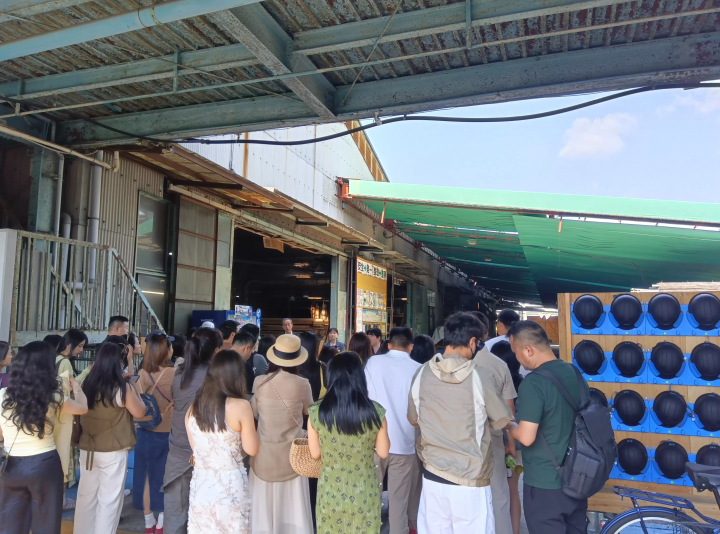
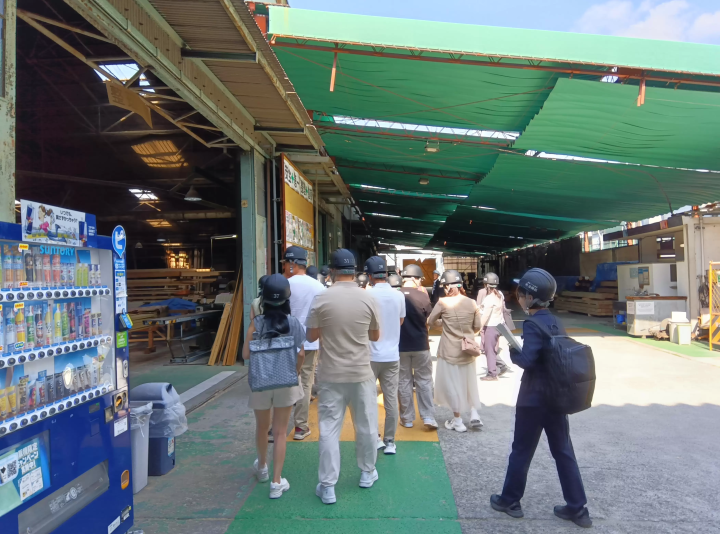
The tour begins with participants gathering at the site. For safety, everyone is provided with a helmet, and staff give a detailed briefing on important guidelines to follow during the tour. Even first-time visitors can join with confidence thanks to the clear and attentive instructions.
Next, participants are introduced to the master carpenter (toryo) who leads the site, along with other key members of the team. The toryo is a highly skilled craftsman with nearly 60 years of experience at the company, and every word shared carries the weight and credibility of decades of expertise. Despite this, the tone remains approachable and engaging, with moments of light humor that bring smiles to the group. The tour unfolds in a warm and welcoming atmosphere, setting the stage for a truly memorable experience.
At last, the tour moves into the production center. Upon entering, visitors are immediately struck by the cleanliness of the workspace and the meticulous level of organization throughout. A subtle fragrance of wood fills the air, and the gentle scent of Japanese cypress (hinoki) creates a calming atmosphere. Surrounded by this unique environment, participants can closely observe the craftsmen at work and experience the precision and care that define their craftsmanship.
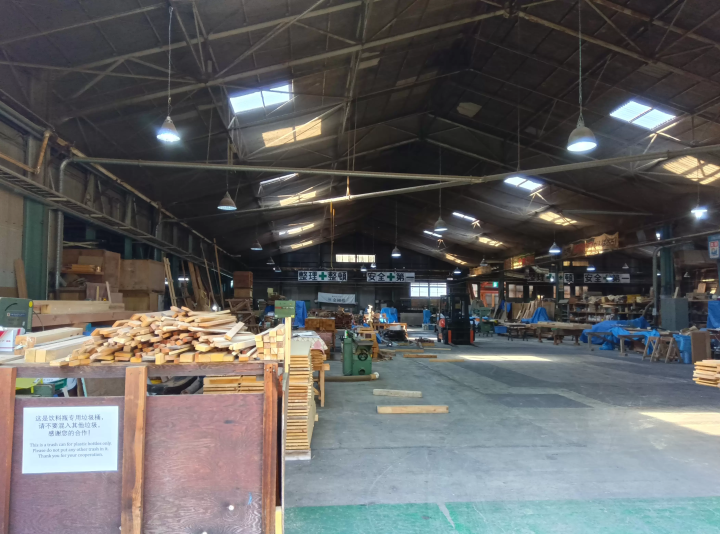
Visitors can explore the workshop, ask questions about wood, and hear directly from skilled craftsmen. By touching dried timber and experiencing its weight, aroma, and texture firsthand, they can learn about the unique qualities of Hinoki cypress and the importance of the drying process.
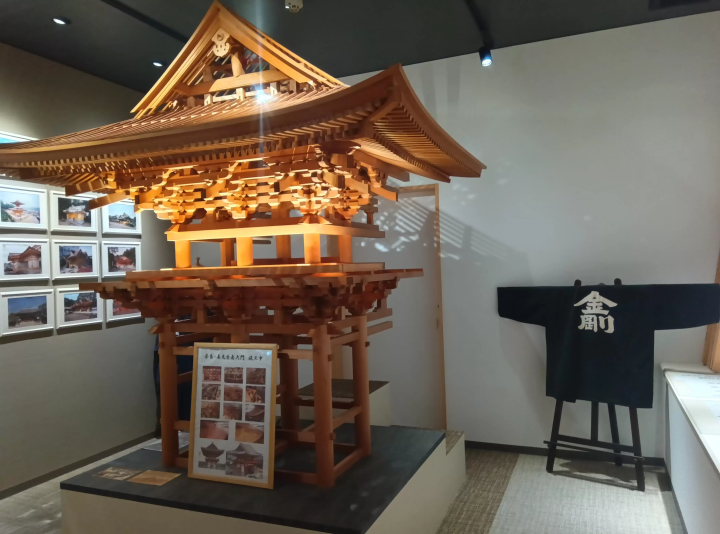
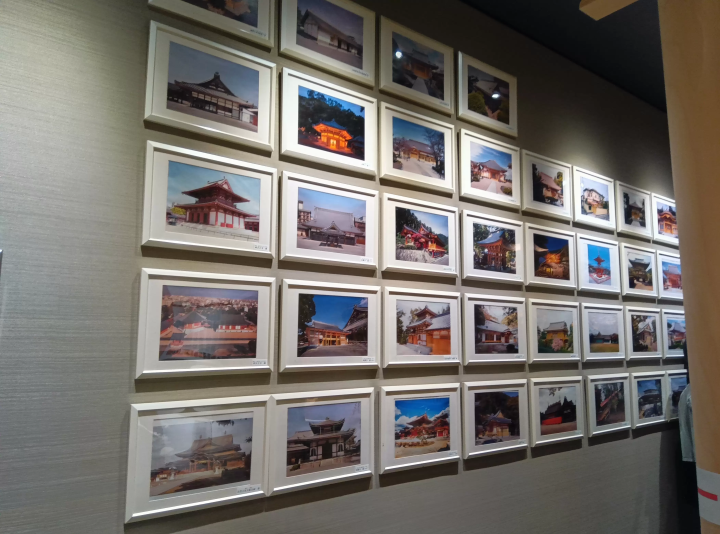
Next, visitors move on to the exhibition room, where a detailed scale model of an actual temple gate is on display. Although the model is built at roughly one-tenth the size of the original structure, the woodworking and assembly techniques used are exactly the same as those employed in full-scale construction.
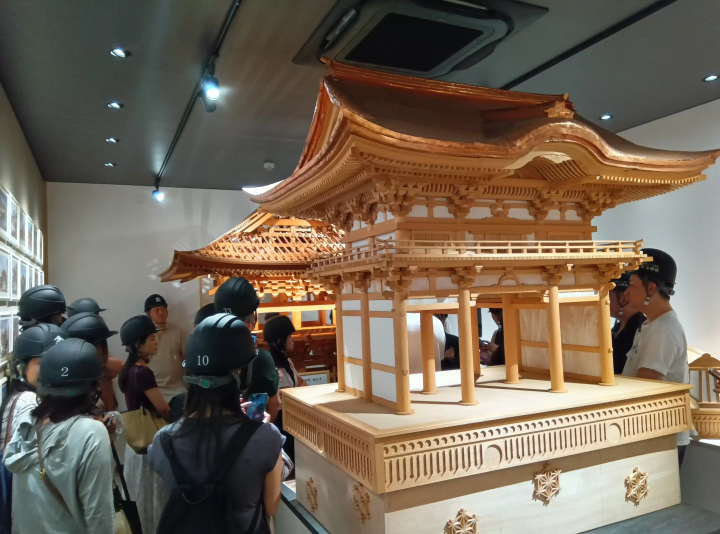
How have Japan’s wooden temples and shrines survived for more than 1,000 years? One of the key reasons is a traditional construction method that joins wood together with remarkable precision—without using a single nail. This technique helps buildings absorb movement and withstand earthquakes, showcasing the wisdom and craftsmanship passed down through generations.
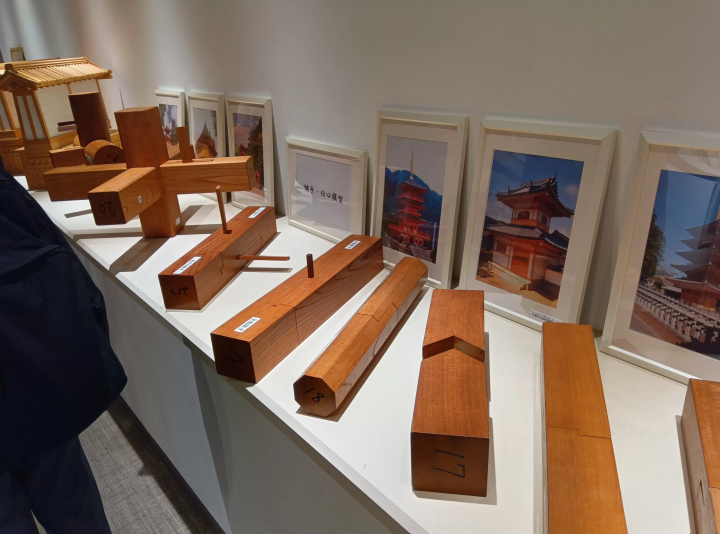
Visitors can also try assembling traditional wooden joints themselves using hands-on learning tools. While it may look easy at first, it quickly proves to be quite challenging. Laughter and cries of “This is harder than it looks!” can often be heard as everyone works through the task together. Experiencing the process firsthand offers a deeper appreciation of the skill, precision, and effort required to create traditional wooden buildings.
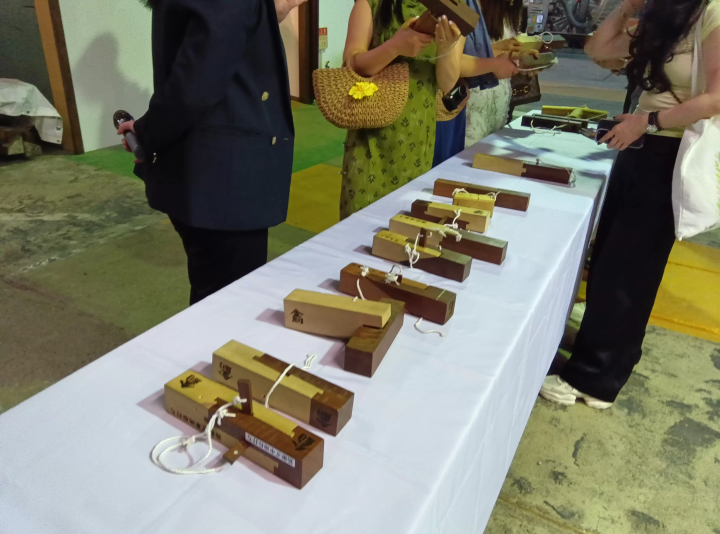
*The photo shows the joint-model experience for groups of 30 or more, divided into two tour groups. Normally, visitors will experience only the joint models displayed in the Yume Kobo workshop.
Talk by a Facility Representative
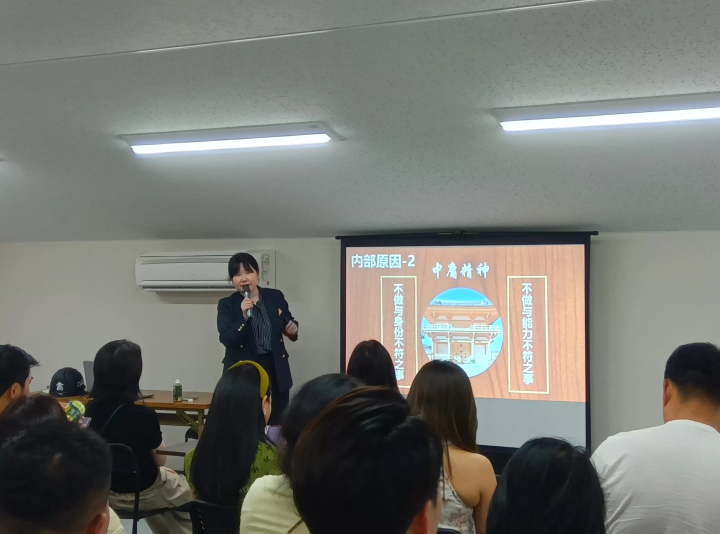
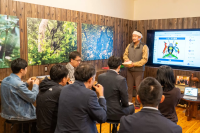
After the site tour, visitors attend a talk by a company representative. The presentation explores the company's history from its founding in the Asuka period to the present day, highlighting the key milestones that have enabled it to continue for more than 1,400 years.
Particularly inspiring is the company’s commitment to developing people. Kongo Gumi has a group of master temple carpenters known as the Takumi-kai, who play a vital role in passing traditional skills on to future generations. Their culture of teaching and learning from one another reflects the strong bonds, pride, and craftsmanship that have sustained the company for centuries.
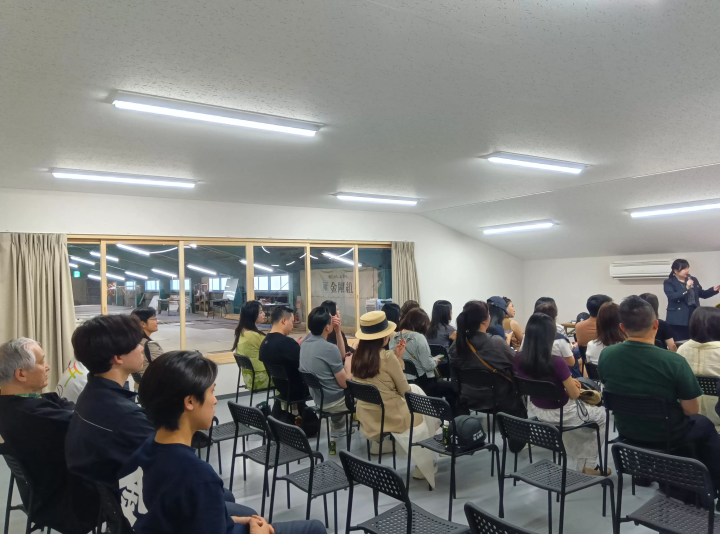
The talk also highlights the company’s unwavering dedication to temple and shrine construction, as well as its philosophy of never cutting corners—even in places that cannot be seen. Their commitment to quality from start to finish leaves a lasting impression. As the stories unfold, visitors often find themselves nodding in agreement and becoming deeply engaged. It is an insightful presentation that conveys both the weight of tradition and the passion of the craftsmen who carry it forward.
Live Demonstration by Master Carpenters
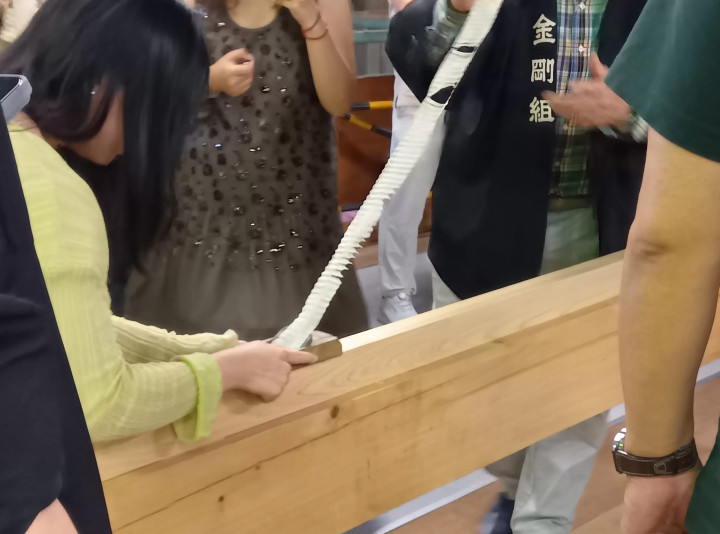
After the talk, it’s time for the highlight of the tour—the live planing demonstration by a master temple carpenter. Watching a skilled craftsman shave wood with remarkable precision is truly impressive. As thin, delicate wood shavings glide effortlessly from the plane, visitors often pause in amazement. Even standing nearby, you can enjoy the natural fragrance of the wood. Holding the shavings in your hands reveals just how incredibly thin they are, offering a firsthand appreciation of the craftsmanship and skill behind traditional woodworking.
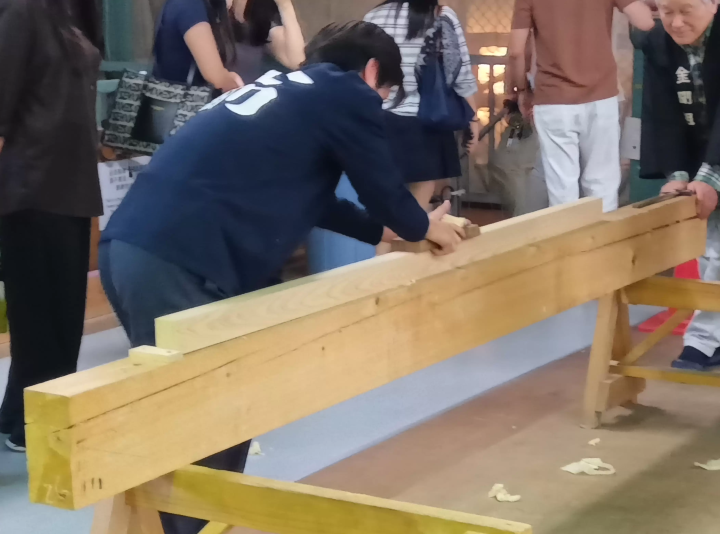
Depending on the day, some participants may even have the chance to try wood planing themselves. This hands-on experience allows visitors to do more than just watch—they can personally experience a traditional craft. The delicate wood shavings produced during the demonstration are known as kanna-bana. Participants also learn that these shavings can be placed in closets as a natural insect repellent, making them both beautiful and practical. It’s a memorable experience that offers not only a close look at traditional craftsmanship but also useful knowledge for everyday life.
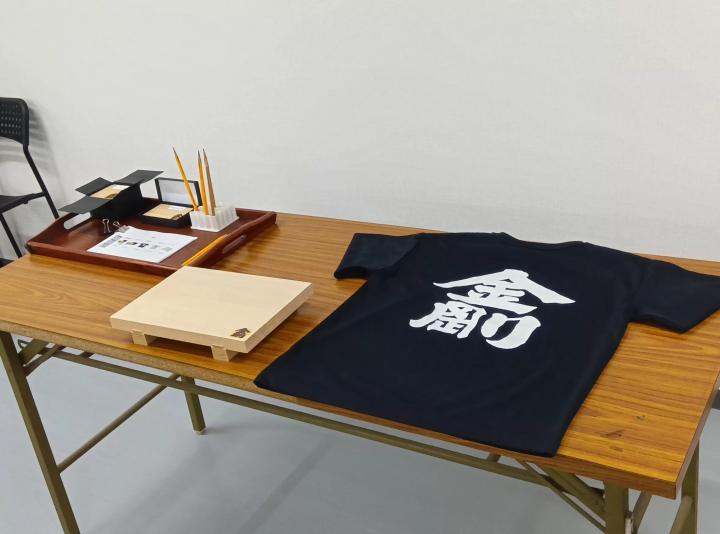
After the tour, visitors can browse a selection of exclusive products available only at the facility. Items such as business card holders and coasters showcase traditional woodworking craftsmanship and cannot be purchased elsewhere. These special souvenirs offer a lasting reminder of the experience and the skills passed down through generations.
*Please note that tour content may change depending on operational conditions. Schedule and content can also be adjusted upon request.
Tour Details
This tour offers a rare opportunity to experience how a history spanning more than 1,400 years continues to be passed down to the present day. Visitors gain insight into the craftsmanship, ingenuity, and techniques that are often hidden from view, uncovering the secrets behind Japan’s traditional wooden architecture. There are countless discoveries that simply cannot be conveyed through photos or articles alone. Why not experience it for yourself? You’ll enjoy the journey while gaining a deeper understanding of Japan’s rich architectural heritage and traditional craftsmanship.
≪Contents≫ Representative Talk, Wood Processing Center Tour, and Live Carpentry Demonstration
≪Price≫
・Up to 10 participants: ¥195,000 (tax included) per group
・11 participants or more: ¥19,500 (tax included) per person
≪Group Size≫ 1–50 participants
≪Duration≫ Approximately 2 to 2.5 hours
≪Application deadline≫ Bookings must be made at least two weeks in advance.
How to contact us
1. Please fill out the required information in the form below and submit your inquiry.
2. We will contact you within 3 business days from "industrial.tourism@nankai.co.jp".
Please feel free to contact us for anything from checking available dates to getting detailed tour information!











![[Tokyo, Shinjuku] Buy Matcha Here! 2 Long-established Japanese Tea Shops Where You Can Get the Authentic Taste!](https://resources.matcha-jp.com/resize/720x2000/2025/09/24-245090.webp)




![[Kyoto Prefecture ] Let's go see Fukuchiyama Castle, the symbol of Fukuchiyama City | Highlights and seasonal events](https://resources.matcha-jp.com/resize/720x2000/2026/02/12-258435.webp)
![[Gozaisho Ropeway] Gourmet Guide](https://resources.matcha-jp.com/resize/720x2000/2025/12/03-251960.webp)