![[Nagoya] Learning about manufacturing culture from Toyota's history](https://resources.matcha-jp.com/resize/720x2000/2025/05/14-233358.webp)
This time, we will introduce the Toyota Commemorative Museum of Industry and Technology, a recommended tourist spot near HOTEL RESOL NAGOYA. At this museum, you can learn about the history of Toyota, which has its roots in Nagoya, from its birth to the present day through enjoyable, hands-on exhibits.
![Resol Hotels -Chubu- [Kanazawa, Nagoya, Gifu]](https://resources.matcha-jp.com/resize/100x2000/2025/03/12-227694.webp)
Written by
Our Resol Hotel was born to weave unique stories rooted in each region and become a microcosm of the city. Just as each city has its own unique shape, we welcome visitors with a different face. Hotel Resol Trinity Kanazawa ~Time you can only get in this city~ Kanazawa, the largest city in the Hokuriku region, is also known as the Kaga Hyakumangoku. Its history began in 1546 with the Kanazawa Mido temple built by Ikko sect followers, and during the reign of the O-Omameda clan during the Warring States period, traditional culture such as crafts and performing arts developed. Hotel Resol Trinity Kanazawa was born to convey the unique charm that only Kanazawa has, and to be a base for cultural inheritance and urban development. Hotel Resol Trinity Kanazawa offers a "connection" to traditions and culture that can only be found here. Experience a rich time filled with the splendor of the Kaga Hyakumangoku at Hotel Resol Trinity Kanazawa. Hotel Resol Nagoya ~A hotel with suits and sneakers~ This urban American-style hotel, with the theme of "suits and sneakers," sprinkles the taste of jazz, a musical culture unique to his country, throughout the building, creating an exquisite balance between tension and relaxation. The space, which pays attention to every single detail, from the materials to the furniture, objects, and accessories, invites travelers who seek the real thing to deep relaxation, like an "adult hangout." Hotel Resol Nagoya is a hotel for adults, where you can relax in a sophisticated space that exudes the scent of good old culture and intelligence. Hotel Resol Gifu ~Experience the culture and history nurtured by clear streams with all your senses~ Beautiful mountains overflowing with greenery. Clear streams that seem to cleanse your soul. Gifu, blessed with beautiful natural scenery and clear waters, has a long history as a city that lives with water. Just a 20-minute walk from the hotel, you will come across the city's only natural waterfall, which flows from the mountain stream originating from Momoga Mine. The scenery changes with the seasons, and you will be impressed with something new every time you visit. The feelings of the people that are imbued with water, and the industries and cultures that have been nurtured there. Hotel Resol Gifu cherishes this relationship between people and water. Please enjoy to your heart's content the story that is woven at Hotel Resol together with the city and the people.
HOTEL RESOL NAGOYA
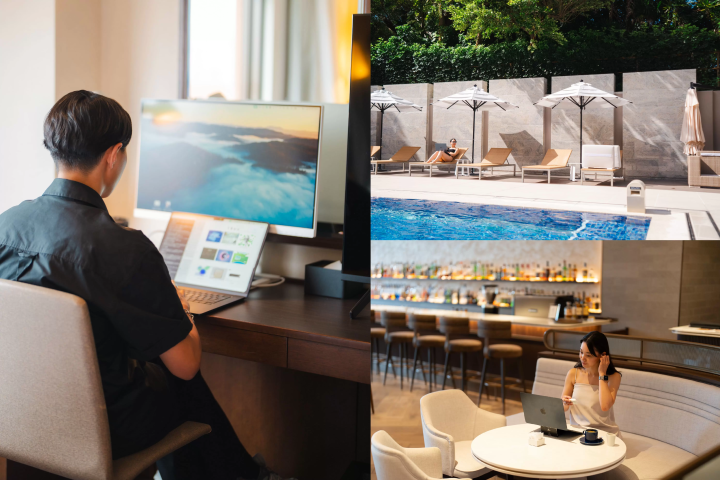
Located within walking distance of Nagoya Station, HOTEL RESOL NAGOYA offers a relaxing space where you can read a book and enjoy a cup of coffee, while the trees in the lobby add a touch of color with each season.
![[Nagoya] Learning about manufacturing culture from Toyota's history](https://resources.matcha-jp.com/resize/720x2000/2025/05/15-233568.webp)
-
Table of Contents
- Toyota Motor Corporation began as a factory in Nagoya, which was involved in the textile industry.
- The inherited "spirit of research and creativity" gives birth to Japan's automobile industry
- Don't miss the souvenirs that will let you take home the excitement
- summary
![[Nagoya] Learning about manufacturing culture from Toyota's history](https://resources.matcha-jp.com/resize/720x2000/2025/05/14-233370.webp)
When traveling abroad, you're sure to come across Toyota Motor Corporation. The birthplace of Japan's automotive industry, which is a source of pride not only in Japan but around the world, is located here in Aichi . When you think of Toyota Motor Corporation, you probably imagine its headquarters in Toyota City , Aichi Prefecture , but in fact, Toyota's story as a global company began at a textile factory in Nagoya City, where the Toyota Commemorative Museum of Industry and Technology is located. Both are key industries that supported the development of modern Japan, and we visited the Toyota Commemorative Museum of Industry and Technology, a popular place where you can experience the evolution of automotive technology, which continues to evolve even today.
The Toyota Commemorative Museum of Industry and Technology, which is based around the Textile Machinery Pavilion and the Automobile Pavilion and has a variety of exhibits and experience corners, is visited by many foreign visitors tourists. In Aichi, where the culture of manufacturing is deeply rooted, this place conveys the "spirit of research and creativity" and the importance of "manufacturing," making it a must-see spot for getting to know Aichi and Nagoya.
Toyota Motor Corporation began as a factory in Nagoya, which was involved in the textile industry.
![[Nagoya] Learning about manufacturing culture from Toyota's history](https://resources.matcha-jp.com/resize/720x2000/2025/05/14-233360.webp)
At the Textile Machinery Museum, you can observe a demonstration of spinning, which was practiced during the Edo period, with commentary provided. You can actually see the process of turning cotton into thread and understand the properties of cotton.
In fact, even now that mechanization has been implemented, the same process is still used, so the basic principles of spinning remain the same. In the Edo period, one person could only spin one thread, but as mechanization progressed, the number of machines that one person could operate increased, and the amount that could be produced increased - it is an impressive process. Spinning machines are full of ingenuity and ideas down to the smallest details, and the spirit of inquiry and passion behind them is truly moving.
![[Nagoya] Learning about manufacturing culture from Toyota's history](https://resources.matcha-jp.com/resize/720x2000/2025/05/14-233362.webp)
One of the most eye-catching exhibits in the Textile Machinery Museum is the "Toyota-type Wooden Hand-Powered Loom." This hand-powered loom was invented by Toyota Toyoda, founder of the Toyota Group, at the age of 23. Its ingenious design, using hands and feet to create cloth, is truly impressive. This loom was the first to be patented, and subsequent iterations of the loom contributed significantly to the industrialization of the weaving industry. The exhibit vividly conveys Toyoda's passion for constantly striving for improvement, as he sought to increase the amount of production that one person could produce while also finding ways to prevent defective products.
The inherited "spirit of research and creativity" gives birth to Japan's automobile industry
![[Nagoya] Learning about manufacturing culture from Toyota's history](https://resources.matcha-jp.com/resize/720x2000/2025/05/14-233364.webp)
Carrying on the spirit of Sakichi, the founder of the Toyota Group, Toyota expanded its scope of operations from the textile industry to the automobile industry.
Kiichiro, Sakichi's eldest son and founder of Toyota Motor Corporation, was confident in casting due to his experience in textile machinery manufacturing, and began full-scale automobile manufacturing in 1933. After repeated prototyping and research, Toyota's first engine was completed, and the first prototype body was actually made from hand-hammered sheet metal. The first prototype A1 passenger car was completed in 1935, and three years later, mass production and sales systems were put in place.
![[Nagoya] Learning about manufacturing culture from Toyota's history](https://resources.matcha-jp.com/resize/720x2000/2025/05/14-233365.webp)
Toyota's first truck was also completed, but due to the short time between completion and release, there were many breakdowns. However, Kiichiro rushed to the site to troubleshoot every time a breakdown occurred, which later led to the development of Toyota's "customer first" culture.
![[Nagoya] Learning about manufacturing culture from Toyota's history](https://resources.matcha-jp.com/resize/720x2000/2025/05/14-233366.webp)
Initially, this required skilled craftsmen, but through repeated improvements and innovations, production volume increased. In this corner, a life-size exhibit shows the evolution of the production process from the 1980s, when the company began developing its own robots, to the present day. You will be overwhelmed by the sheer scale of the exhibits, and your eyes will stop in your tracks as you watch the machines' uniform movements.
![[Nagoya] Learning about manufacturing culture from Toyota's history](https://resources.matcha-jp.com/resize/720x2000/2025/05/14-233367.webp)
Don't miss the souvenirs that will let you take home the excitement
![[Nagoya] Learning about manufacturing culture from Toyota's history](https://resources.matcha-jp.com/resize/720x2000/2025/05/14-233368.webp)
The history of the birth of the Toyota Group, which fostered Japan's manufacturing culture, is very deep, and you can learn about it at your leisure by visiting this memorial museum.
The fabric woven during demonstrations at the Textile Machinery Museum is processed into products such as pouches and sold in the museum shop. They are popular with foreign visitors tourists as they can be purchased in large quantities at reasonable prices.
![[Nagoya] Learning about manufacturing culture from Toyota's history](https://resources.matcha-jp.com/resize/720x2000/2025/05/14-233369.webp)
The most popular souvenir is the "Kurumania Maple Butter Cookies," which are packaged with illustrations of Toyota's classic cars. At the "Toyota Commemorative Museum of Industry and Technology," you can learn about Toyota's history and get some cute souvenirs. I was able to feel the "spirit of research and creation" that has been passed down through the generations.
Store name: Toyota Commemorative Museum of Industry and Technology
Phone number: 052-551-6115
Address: 4-1-35 Nishi Ward, Nishi-ku, Nagoya City, 451-0051
Access: 3 minutes walk from Sakae Station on the Nagoya
Official website: https://www.tcmit.org/
*For details on opening hours and closing days, please check the link above.
summary
This time we introduced tourist spots around HOTEL RESOL NAGOYA. The Toyota Commemorative Museum of Industry and Technology offers guided tours and demonstrations in both Japanese and English every day. If you're in Nagoya, be sure to stop by.







![[Tokyo, Shinjuku] Buy Matcha Here! 2 Long-established Japanese Tea Shops Where You Can Get the Authentic Taste!](https://resources.matcha-jp.com/resize/720x2000/2025/09/24-245090.webp)