
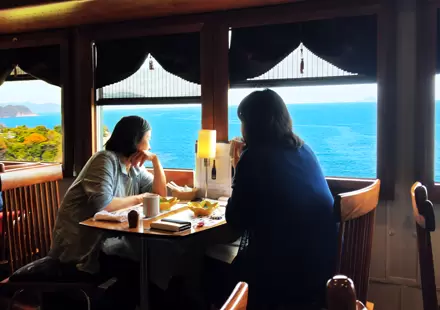
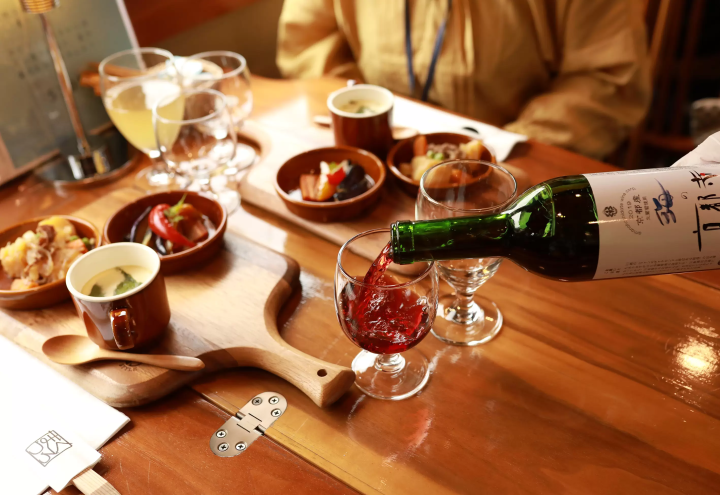
The menu, which incorporates the legends and scenery of Seaside Kyoto, is produced by a chef from a local restaurant. It's a dining experience on the move, filled with seasonal scenery and a sense of the seasons. Please see the website for details, including opening hours.

Written by
The Kyoto by the Sea area is about 99 km from Kyoto city, and can be reached in as little as 90 minutes by car or bus. It is close by and offers another side to Kyoto, with a different atmosphere from the city. Once upon a time, there was an ancient nation (Taniha no Kuni) with an advanced culture that was introduced from the continent, and it was also the secret stage of the creation of Japan. The Kyoto by the Sea area is filled with evidence of its origin, such as the legend of the descent of Toyouke-no-Okami, the oldest god of food, the demon legend of Mt. Oe, and the legend of the Dragon Palace. It is filled with the charms of Japan scattered throughout each era, such as Amanohashidate, which was the source of Kyoto culture that fascinates the world and was longed for by the people of the capital during the Heian and Muromachi periods, the Tango Chirimen Corridor woven with silk that has been spun for 300 years, the modern industrial heritage sites of Maizuru and Ayabe, the one-of-a-kind Ine Funaya landscape born from the work of fishermen, and Fukuchiyama Castle, which conveys the Warring States period to the present day. Furthermore, "Kyoto of the Sea" is a land of abundance, blessed with ingredients beloved by the god of food, such as seafood like Matsuba crab and Ine yellowtail, and rice and vegetables grown in pure water. Furthermore, its natural scenery, including the San'in Coast, a Global Geopark, and the mountains and rivers where gods, Buddhas and even demons reside, pique the curiosity of travelers, whose beauty will soothe their souls. It is a region where the culture of "valuing harmony" has lived on since ancient times, and where kind people are gracious and accommodating to travelers when they encounter it. Everything you taste and encounter here is connected to Japan's roots. This is Kyoto of the Sea, the source of Japan that lives in the heavens, earth, mountains and seas.
Operating Days: Friday, Saturday, Sunday, and Holidays ■Breakfast Course: Fukuchiyama ⇒ Amanohashidate, approximately 1 hour 40 minutes ■Lunch Course: Amanohashidate ⇒ Nishi-Maizuru, approximately 1 hour 50 minutes ■Sweets Course: Amanohashidate ⇒ Nishi-Maizuru, approximately 1 hour 20 minutes https://travel.willer.co.jp/train/tantetsu/
From Osaka to Fukuchiyama. Meeting the Tango Kuromatsu.
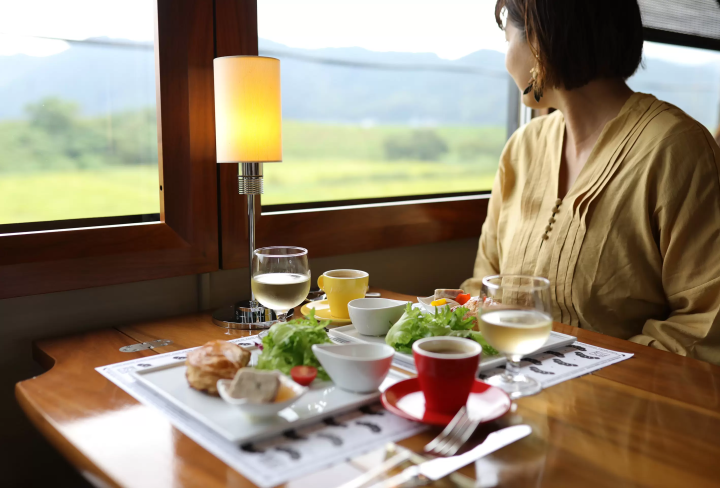
The first "European Breakfast Course" I took that day departed from Fukuchiyama and took about an hour and 40 minute journey to Amanohashidate. I started off heading from Osaka to Fukuchiyama. The scenery changed dramatically once I passed Takarazuka, with valleys and rural scenery passing by the train window. I was already in the mood for a trip, and my heart was excited at the thought of what kind of journey awaited me. It's also easily accessible from Kyoto by a single express train.
The train body, with its black base and gold and red lines, has a retro feel with a touch of luxury that instantly gets you excited about your trip. It was designed by the famous industrial designer Eiji Mitooka.
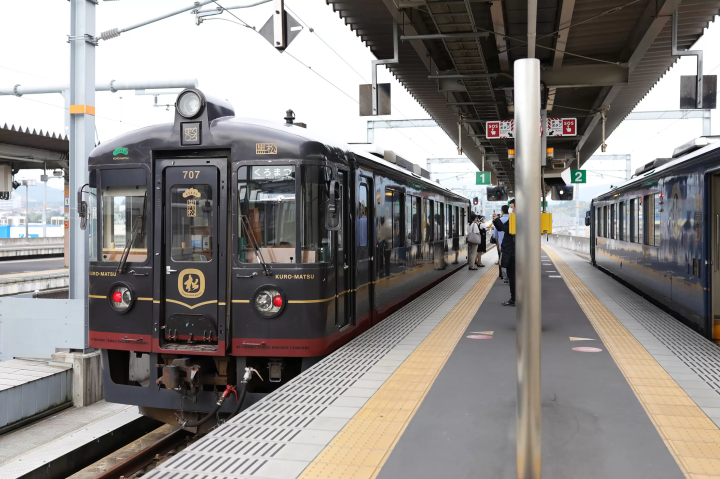

I excitedly wait for departure, looking at the menu that has been set out on my seat.
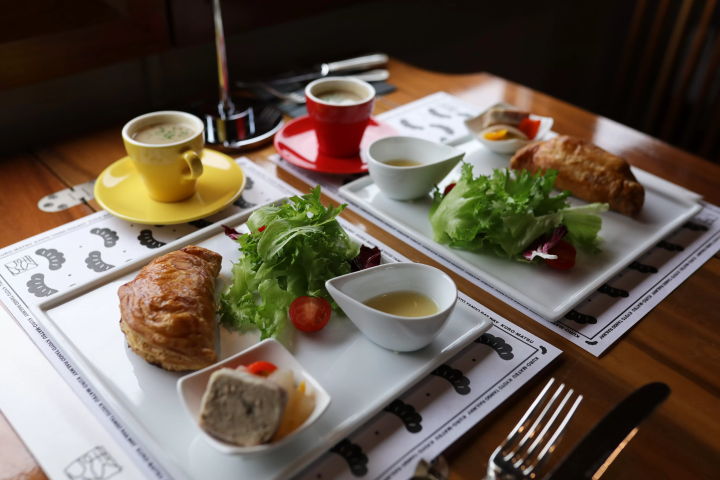
Enjoying a leisurely and elegant breakfast before arriving at Amanohashidate, one of Japan's three most scenic spots, is a truly meaningful and luxurious start to the day.
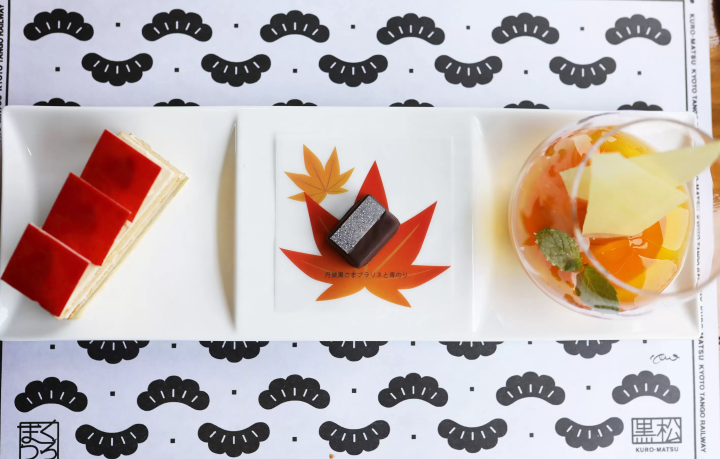
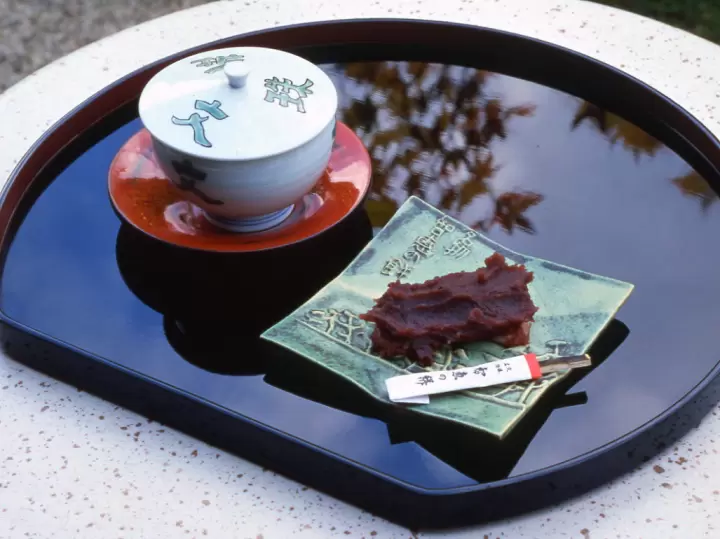
If you take the sweets course that departs in the evening, you will have plenty of time, so you can take a sightseeing boat to Kago Shrine or Kasamatsu Park, or go to Chionji Temple and Amanohashidate View Land, giving you more options.




A full course meal featuring a spectacular view of Wakasa Bay and local cuisine
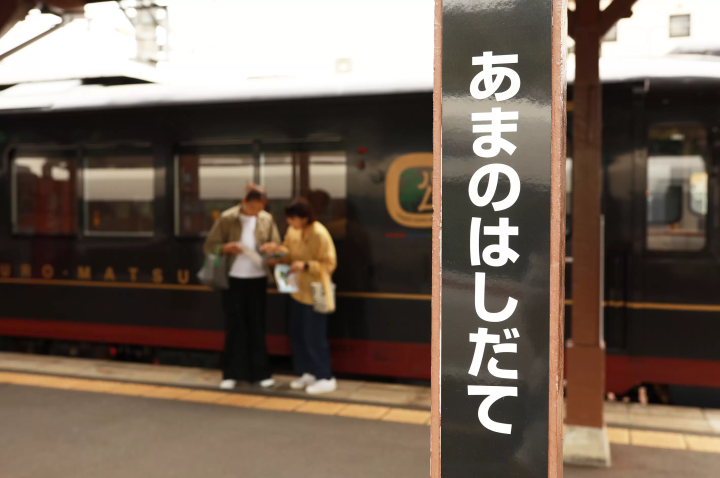

This time, we head east from Amanohashidate towards Nishi-Maizuru, a journey of about two hours.
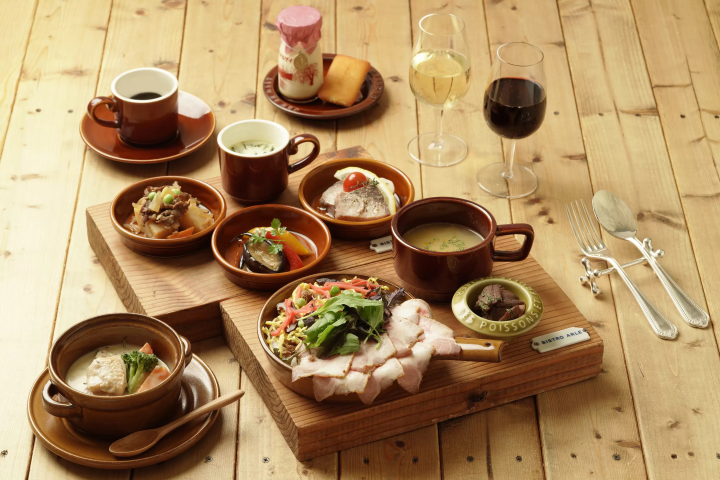
The interior of the car had changed slightly from before, and appetizers were already prepared at our seats.
The theme of each course changes every six months, so be sure to check the website before boarding. Dishes made with seafood and mountain produce caught in the rich natural surroundings of the Sea of Kyoto area are served. Sometimes they serve Japanese cuisine, and sometimes Western, so it's always fun to wonder what kind of food will be served.
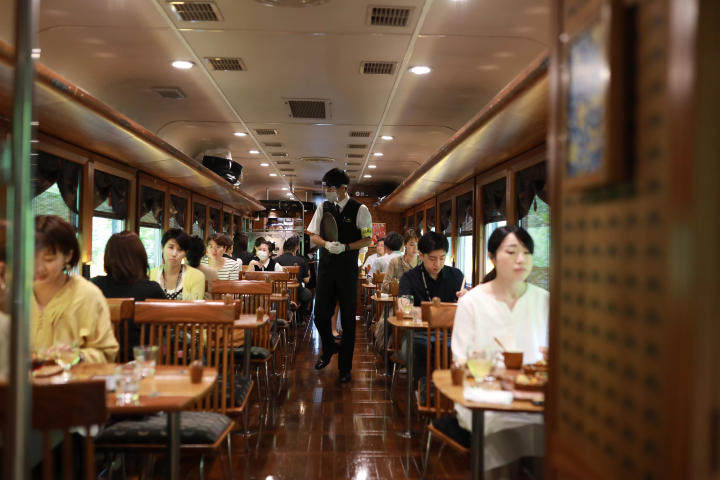
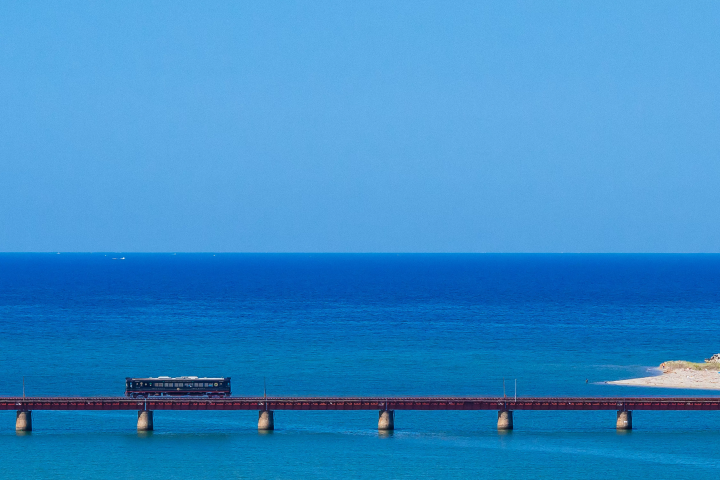
The train stops for about an hour at Tango-Yura Station, just before crossing the Yura River Bridge, one of the highlights of this trip. Let's start by enjoying a meal here so we don't miss out on this spectacular view.
This is one of the best views of Wakasa Bay, and you can also see the Tango Peninsula, including Ine.
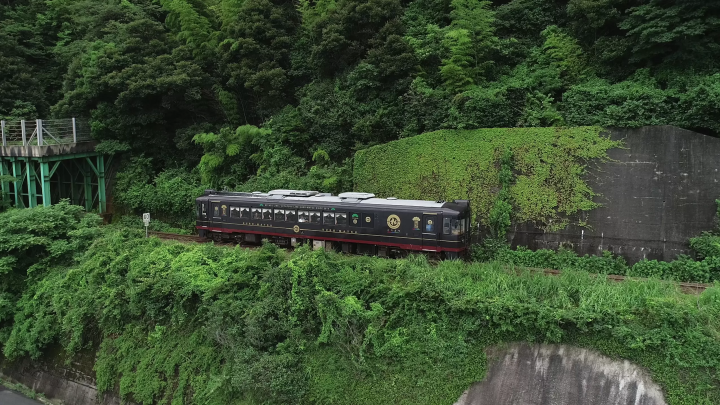
Crossing the Yura River Bridge, a spectacular view point
After enjoying a leisurely meal, the train started moving again, finally heading for the Yura River Bridge. This approximately 550m-long bridge spans the mouth of the Yura River and is known as one of the most spectacular views in the Kansai region. As the train slowly moves along on a single, thin rail, skimming just above the water's surface, the Wakasa Bay, Yura River, the blue of the sky, and the green of the mountains all blend together, giving you a unique feeling of floating and even a slight thrill. You'll feel as if you're floating on the sea. Be sure to take some photos!
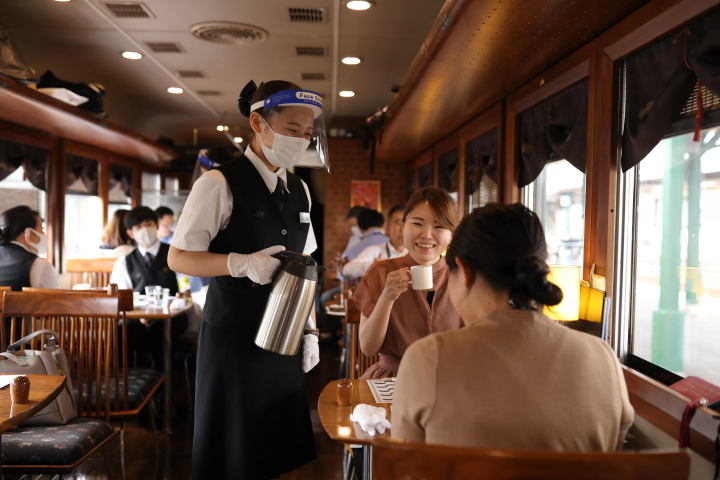
Enjoyable conversation with the attendant
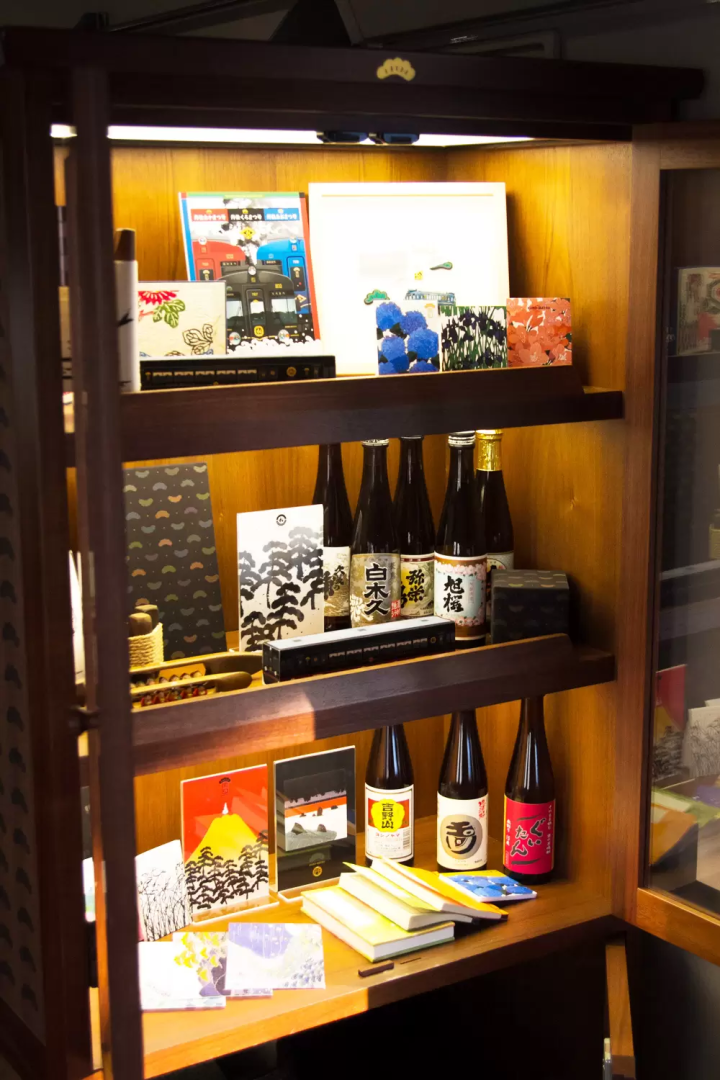
Inside the train, there is an exhibition of local specialties (not for sale).
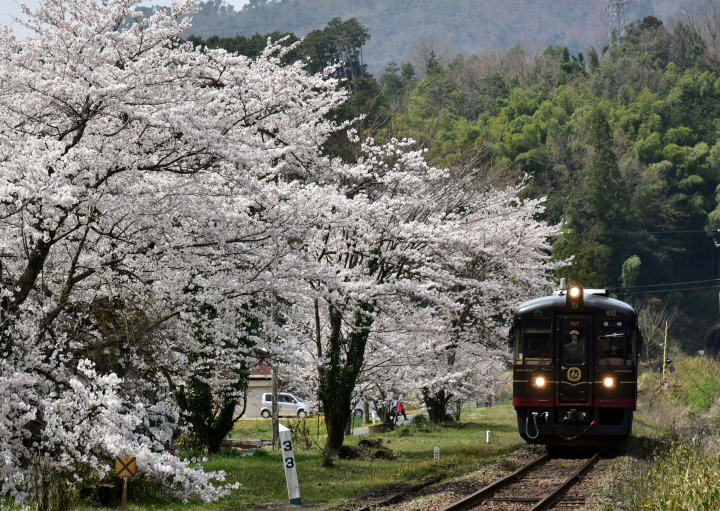
Kuromatsu train running among cherry blossom trees along the line




![[Tokyo, Shinjuku] Buy Matcha Here! 2 Long-established Japanese Tea Shops Where You Can Get the Authentic Taste!](https://resources.matcha-jp.com/resize/720x2000/2025/09/24-245090.webp)



![[Kyoto Prefecture ] Let's go see Fukuchiyama Castle, the symbol of Fukuchiyama City | Highlights and seasonal events](https://resources.matcha-jp.com/resize/720x2000/2026/02/12-258435.webp)
![[Gozaisho Ropeway] Gourmet Guide](https://resources.matcha-jp.com/resize/720x2000/2025/12/03-251960.webp)