
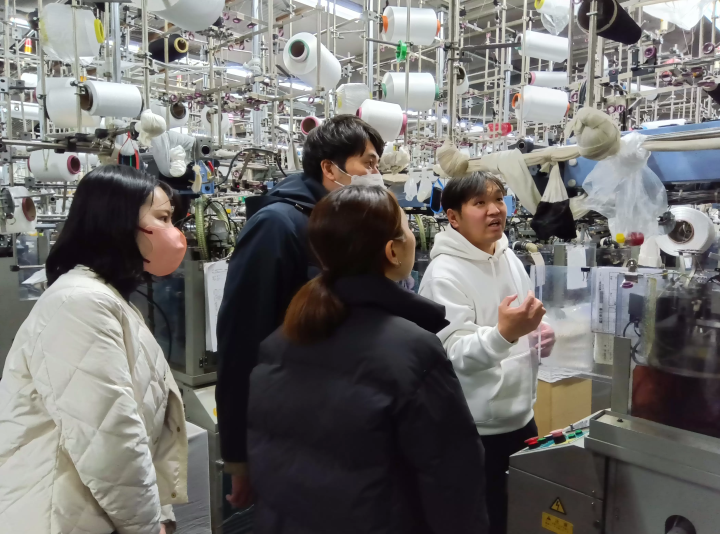
This article introduces a unique factory tour in Osaka’s Senshu region, located near Kansai International Airport, where a company with nearly 100 years of history continues to evolve through innovation and business transformation. Visitors gain rare access to behind-the-scenes operations not typically open to the public and can hear insights directly from company executives. This experience is ideal for corporate training, educational visits, and international travelers seeking authentic Japane...

Written by
Namba in Osaka is the cultural center where theaters, shopping streets, and gourmet spots are all within walking distance, blending entertainment with authentic Osaka culture. It is a highly attractive MICE area where participants can enjoy exploring the city itself. The Namba ⇔ Kansai International Airport MICE Guide provides comprehensive MICE support based on Nankai Group venues, hotels, and convenient access. Pre- and post-event, we also offer tour plans combining industrial tourism—such as corporate visits and factory tours—in South Osaka and Wakayama. HP:https://www.japanrootsguide.com/en "This account is operated by Nankai Co., Ltd." [Photo description] 1. Rapi:t express train directly connecting Kansai International Airport and Namba 2. Scenery of Dotombori
The Power of Transformation Sustaining a 100-Year-Old Japanese Company
Founded in 1930, this Osaka-based factory has achieved nearly a century of continuous growth. The key to its long-term success lies in its ability to adapt and transform its business in response to changing market conditions. During the factory tour, visitors can hear directly from company executives about this journey of transformation, gaining valuable insights into how the company has evolved over time.
The business originally began with ketchup production, later expanding into canned goods manufacturing, blanket production, and eventually the stockings industry. Over the years, the company further diversified into industrial filtration and real estate management, developing into a multi-industry enterprise. Supporting this evolution is a distinctive corporate philosophy: “No single business lasts more than 20 years.”With the understanding that societal demand changes significantly roughly every 15 years, the company has consistently anticipated these shifts and flexibly pivoted toward new technologies and markets. This proactive approach has strengthened both its sustainability and competitiveness. This “power of continuous transformation” is the foundation of its 100-year legacy, and visitors can experience real-world examples of this approach through factory tours and corporate training programs.
Let's take a look at the tour!
Discover what happens behind the scenes with a guided factory tour experience. Here’s what you can expect during your visit:
Executive Briefing → Factory Tour
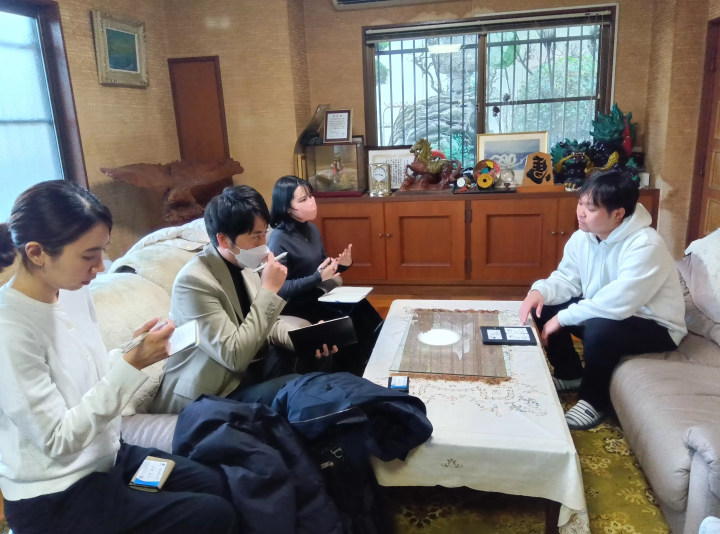
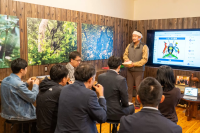
Executive Briefing: Insights from Company Leadership
During the factory tour, company executives personally guide visitors through the facility, offering a rare opportunity to hear firsthand how the business has transformed and expanded across multiple industries over its long history. In the industrial filtration business in particular, the company stands out by not only acting as a trading intermediary but also receiving direct orders from major manufacturers and managing everything from prototype development to mass production. This flexibility—unconstrained by conventional business models—demonstrates the company’s strong capability for transformation.
Another highlight is how the company applied its advanced fine-mesh knitting technology, originally developed for stockings production, to successfully enter the industrial filtration field. As one executive explains:
“Technology can be leveraged in new ways in entirely different fields. What matters is identifying where it is needed. As demand changes, so must the applications and value of that technology.”
This perspective offers valuable insights into strategic decision-making and risk management—lessons rarely accessible in everyday business settings. The executive briefing provides a unique opportunity to learn the philosophy and mindset that have sustained a company for nearly 100 years.
Factory Tour: Inside Japan’s Advanced Manufacturing Process
Now, it is time to step inside the actual factory.
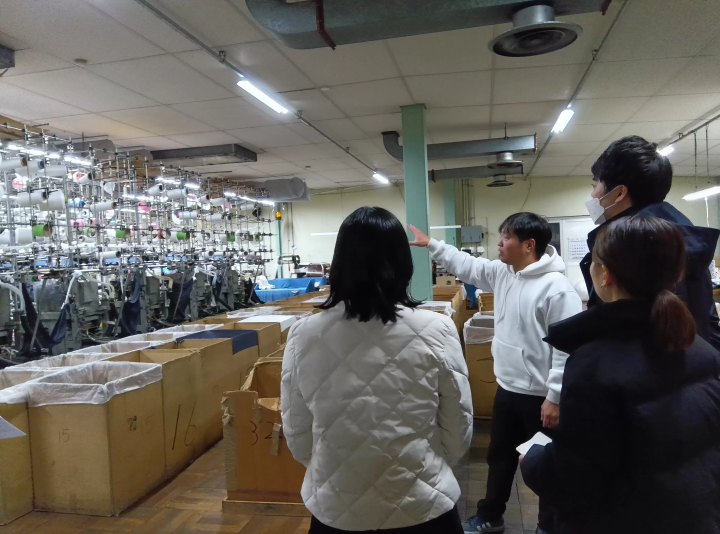
The production of a single pair of stockings involves multiple complex processes. Here, we highlight some of the most impressive stages you will encounter during the tour.
The process begins with the selection of high-quality yarn materials, which play a crucial role in determining the final product quality. By combining polyurethane and nylon, the company achieves both elasticity and durability. The knitting process follows, carried out in a controlled environment operating 24 hours a day. Temperature is maintained at approximately 27°C in summer and 24°C in winter, with humidity carefully regulated at around 63%. Using advanced knitting machines with 320 to 474 needles, each stocking is precisely crafted from the waist down to the toe, ensuring a smooth and beautifully finished shape.
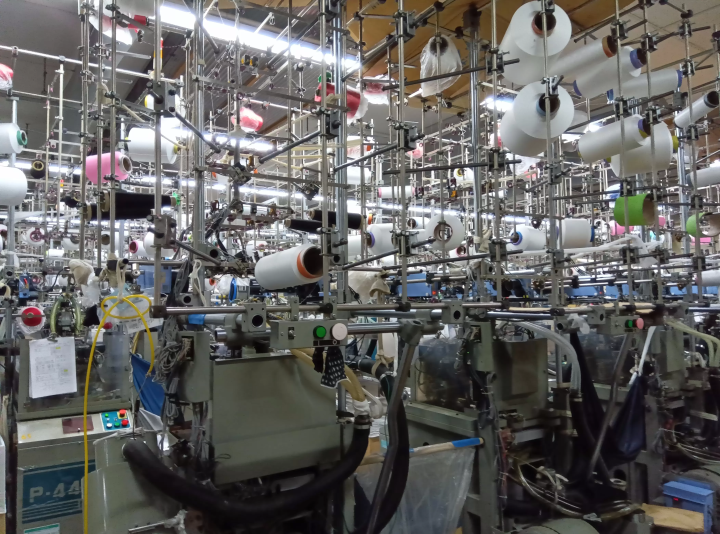
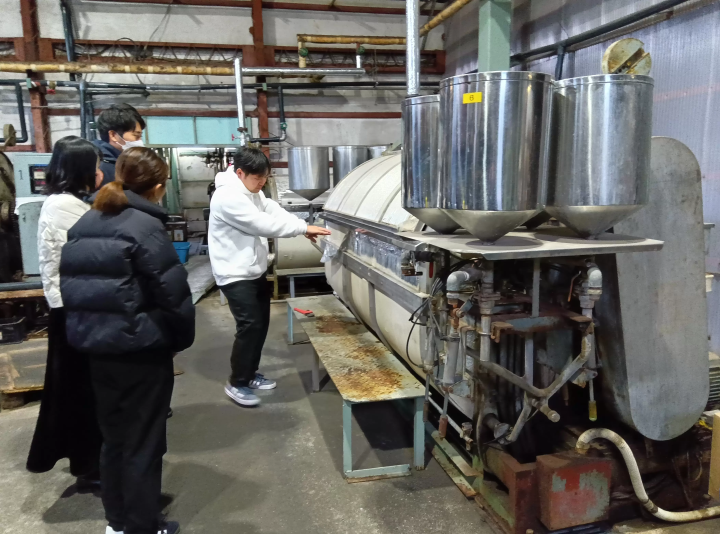
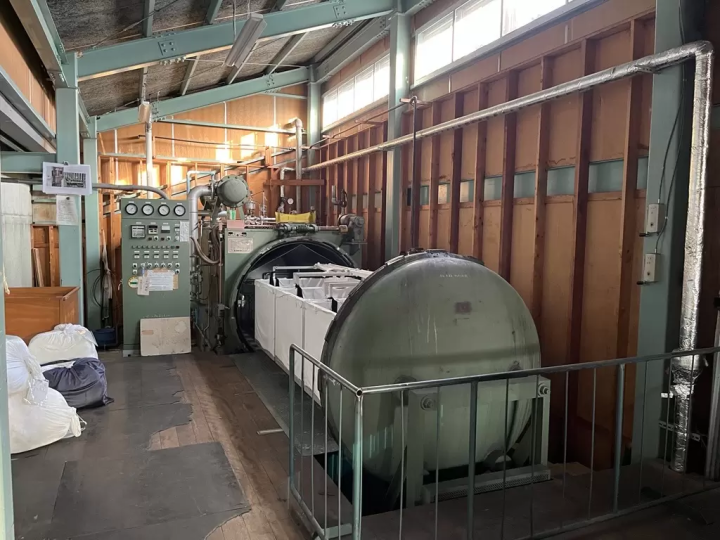
Next comes the presetting process, where the knitted fabric is shaped and stabilized. The material is heated and compressed under vacuum conditions to ensure consistent mesh structure and accurate sizing—an essential step in maintaining product quality.
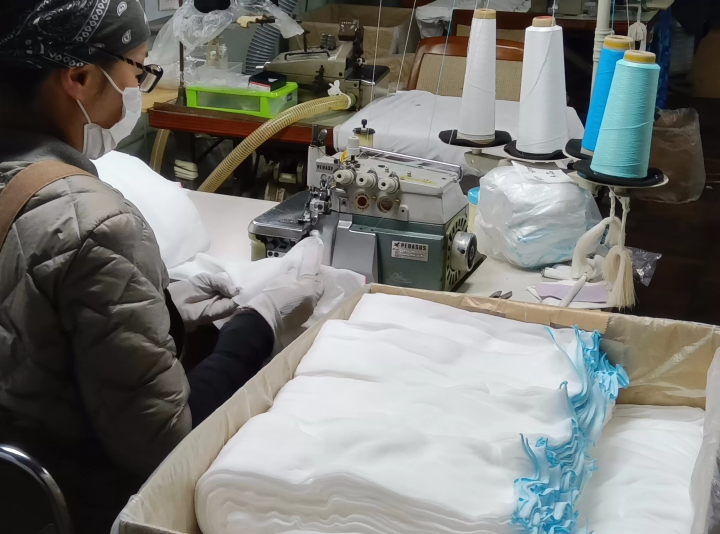
In the sewing stage, where robotics and skilled craftsmanship come together, the toe and crotch sections are stitched together with exceptional precision. This process brings the stocking closer to its final form, shaping both its structure and comfort with high accuracy.
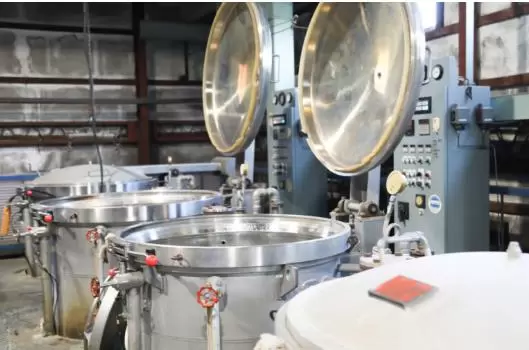
After sewing, the fabric moves on to the dyeing process, where every step—from water supply and dyeing to rinsing and drainage—is carefully controlled by computer systems. Using both liquid-flow and drum-type dyeing machines, the company achieves consistent, high-quality results with minimal color variation.
The process concludes with the setting and finishing stage, which determines the overall appearance and shape of the product. Damp stockings are placed onto molds and exposed to steam to refine their silhouette, resulting in a smooth, well-formed finish.
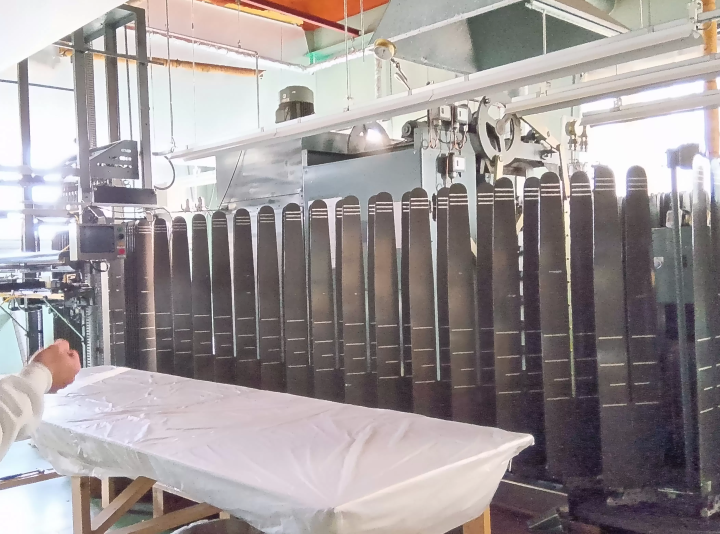
Another key feature of this company’s manufacturing process is its rigorous quality control system. Inspections are conducted twice—once during production and again after completion. While many manufacturers only inspect finished products, this company intentionally incorporates an additional inspection step during the production process. This approach allows for the early detection of potential contamination or defects, ensuring a higher level of safety and product reliability.
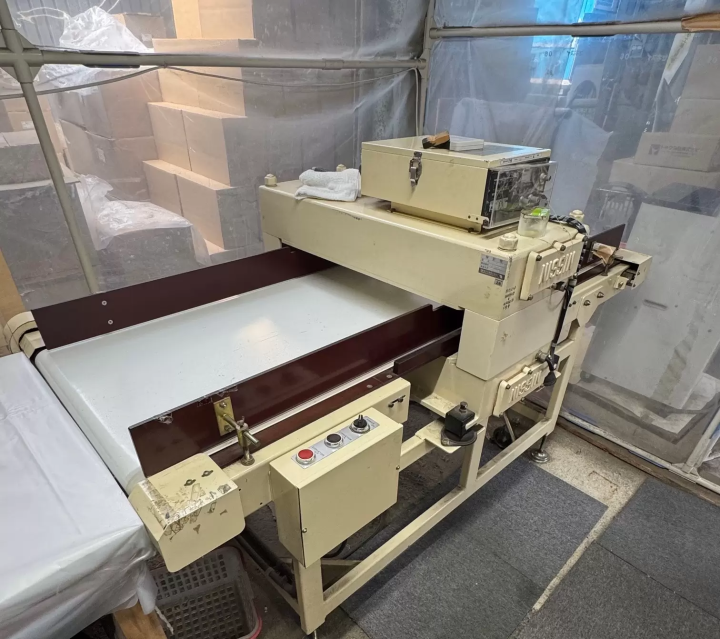
Finally, each product undergoes strict quality checks before moving through the inspection and packaging stage, where it is carefully prepared for delivery. Only after passing these standards is a single product considered complete.
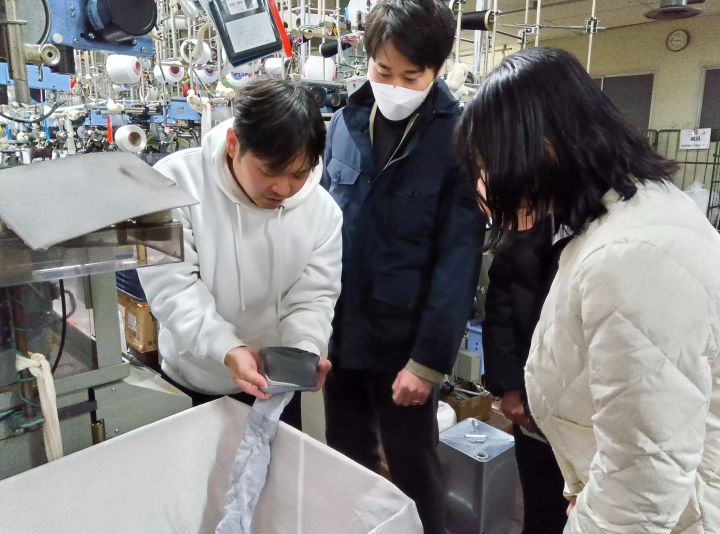
Comments from Participants
Visitor from Taiwan, Ms. H, in her 30s
It was fascinating to see how the stockings I wear every day are made. I was also impressed by the executives' presentations; I was surprised to learn how they adapt their business direction to the times. I felt that this kind of flexible approach is one of the secrets to the company's long-term growth. It was a great experience to be able to tour the manufacturing site, which is not usually open to the public. I would definitely recommend it to others.
Tour Details
This factory tour offers a unique opportunity to explore the advanced knitting technologies behind a wide range of products, including stockings and industrial filters. Visitors can also hear directly from company executives, gaining insight into the philosophy of continuous transformation that has sustained the business for nearly 100 years.
By experiencing the production process up close and learning about the company’s history of innovation, visitors gain valuable perspectives on sustainable business practices and manufacturing excellence. This program is ideal for international visitors, corporate training, and students, and warmly welcomes participants from around the world.
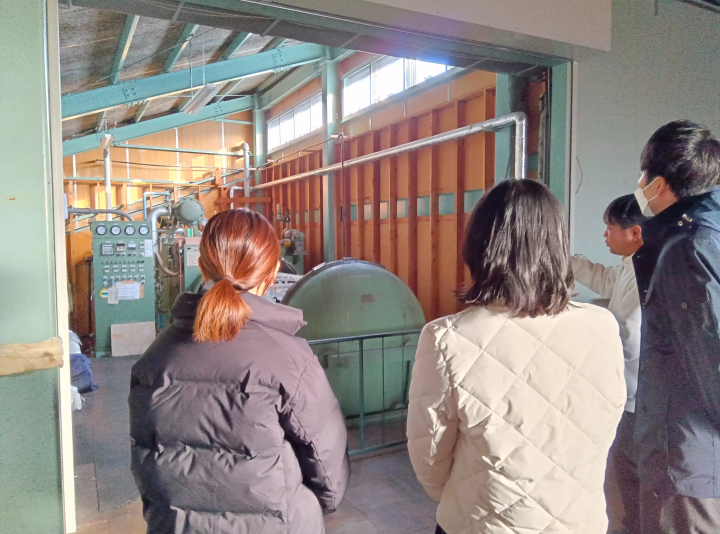
Program Content: Executive Briefing & Factory Tour (Includes production process tours for stockings and industrial filters)
Price: ¥63,300 (tax included)
Group Size: 2–10 participants
Duration: Approximately 60–90 minutes
Booking Deadline: Reservations must be made at least 2 weeks in advance
How to contact us
1. Fill out the form below with the required details.
2. We will contact you within three business days from industrial.tourism@nankai.co.jp.
Please feel free to contact us for any enquiries about available dates or detailed tour information!




![[Tokyo, Shinjuku] Buy Matcha Here! 2 Long-established Japanese Tea Shops Where You Can Get the Authentic Taste!](https://resources.matcha-jp.com/resize/720x2000/2025/09/24-245090.webp)



![[Kyoto Prefecture ] Let's go see Fukuchiyama Castle, the symbol of Fukuchiyama City | Highlights and seasonal events](https://resources.matcha-jp.com/resize/720x2000/2026/02/12-258435.webp)
![[Gozaisho Ropeway] Gourmet Guide](https://resources.matcha-jp.com/resize/720x2000/2025/12/03-251960.webp)