
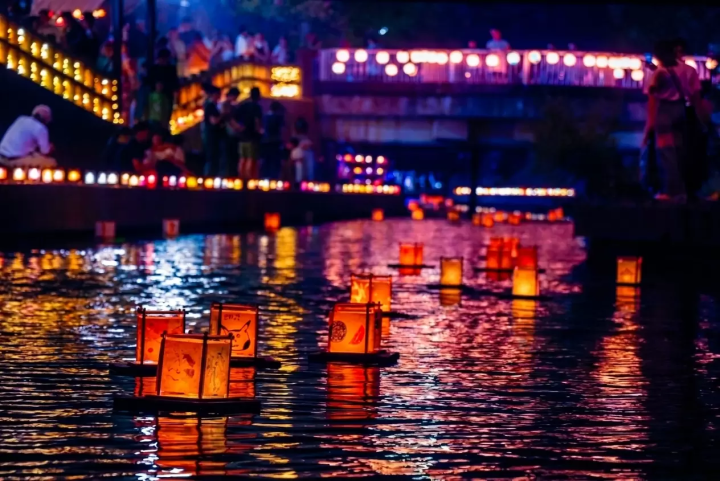
This article introduces the " SUITO Festival ), held annually in early August in Ogaki City , Gifu Prefecture , just 30 minutes from Nagoya . This summer festival features the enchanting MANTO NAGASHI where lanterns illuminate the river's surface, and the "Ogaki Odori" (Ogaki Dance), where citizens dance in a circle. This article will cover the highlights, how to enjoy the festival, and how to get there.

Written by
Located in the center of Nishi Mino in the western part of Gifu Prefecture, Ogaki is blessed with an abundance of groundwater, so much so that it has long been known as the "City of Water." Known as the birthplace of haiku poet Matsuo Basho's travelogue "The Narrow Road to the Deep North," the town is also home to Ogaki Castle, which served as the base of Ishida Mitsunari's Western Army during the Battle of Sekigahara, and Sunomata Ichiya Castle, said to have been built in one night by Toyotomi Hideyoshi. From late March to May, the town is home to boat rides, tub boats, and the Ogaki Festival, which was registered as a UNESCO Intangible Cultural Heritage site in 2016.
-
Table of Contents
- What is the SUITO Festival? A summer festival nurtured by the city's abundant water resources.
- The allure of the SUITO Festival: An unforgettable night crafted by light and dance..
- How to enjoy and recommended ways to spend your SUITO Festival
- Nearby spots
- Basic Information / Access
What is the SUITO Festival? A summer festival nurtured by the city's abundant water resources.
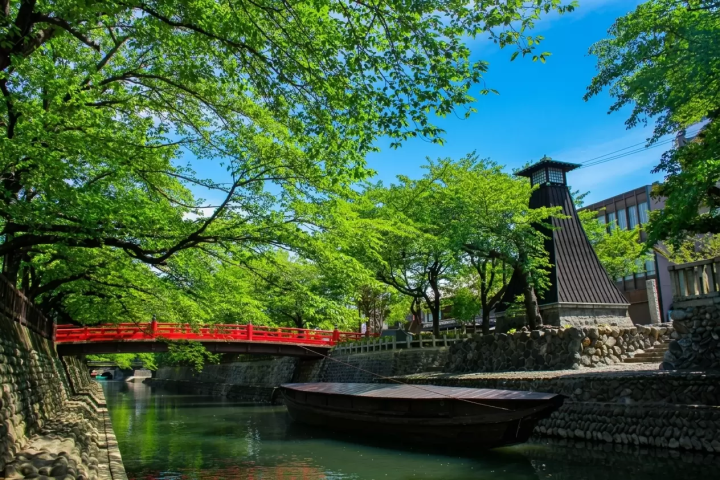
Located in the western part of Gifu Prefecture, Ogaki City has long been known as the "City of Water." Abundant natural springs, with clean waterways and rivers crisscrossing the city, water is deeply rooted in the lives of the local people, supporting agriculture, nurturing culture, and even giving rise to a unique food culture.
The SUITO Festival, as its name suggests, is a festival to give thanks for the blessings of water in Ogaki. It is held over three days in early August every year, with the area Ogaki station street and along the SUIMON River becoming the stage for the festival.
Festival history and cultural background
The SUITO Festival was created with the aim of promoting regional development in Ogaki and fostering interaction among its citizens. Today, it has grown into a major summer event that attracts not only local residents but also many tourists from within and outside Gifu Prefecture. The "Ogaki Bo-Dance Festival," which forms the core of the festival, is a traditional event that has been loved by the local people for over half a century.
Furthermore, the "SUIMON River MANTO NAGASHI" is a historical event that embodies the spirit of the ancient Japanese Obon festival, where handmade lanterns are floated down the river to send off the spirits of ancestors at the end of summer. Obon is a traditional Japanese event held every year in mid-August to welcome the spirits of ancestors into the home and then send them off again.
The allure of the SUITO Festival: An unforgettable night crafted by light and dance..
The breathtaking beauty of the SUIMON River MANTO NAGASHI
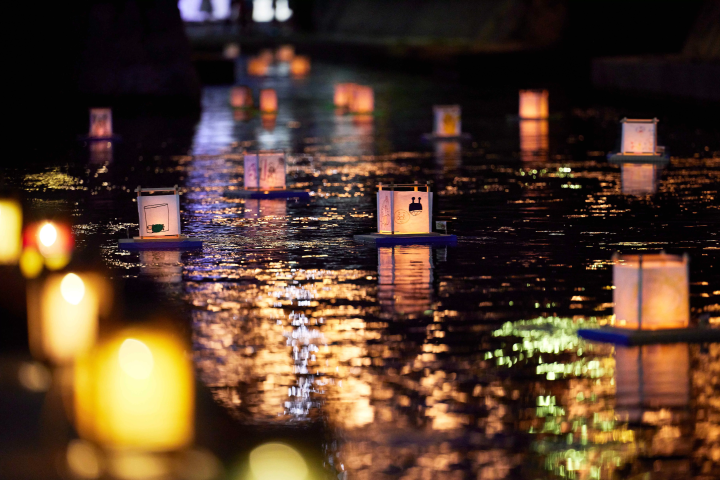
One of the biggest highlights of the SUITO Festival is the "SUIMON River MANTO NAGASHI." "MANTO" are small lanterns made of paper, bamboo, and wood. Countless lights, each imbued with the hopes and wishes of the residents, create a fantastical spectacle of light.
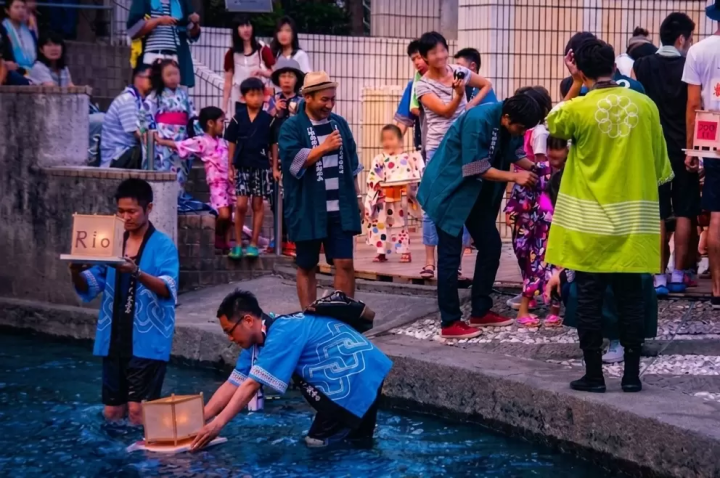
On the evening of the second day of the festival (Saturday), an opening ceremony is held at Kifune Square, and from around 7 p.m. , MANTO are released one after another into the river. The ribbon of light that spreads across the surface of the river is a popular photo spot where many people want to take pictures.
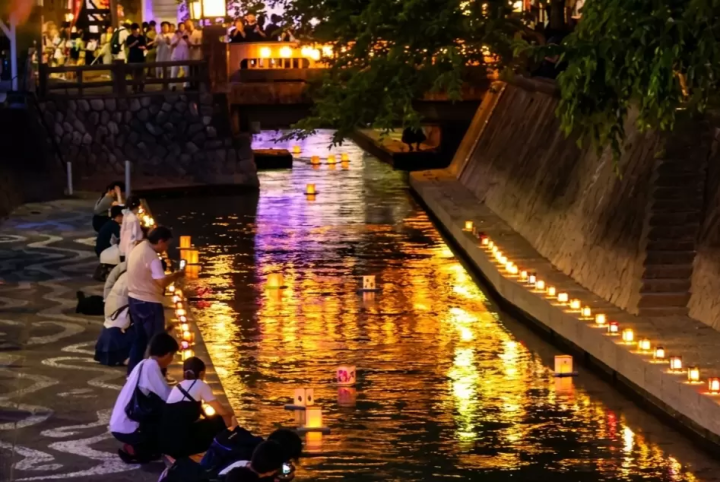
The expressions on the faces of the people watching from the riverbank are also striking. Children's eyes are shining, while adults are quietly lost in thought. You can experience both the smiles of the festival participants and the sacred atmosphere at the same time.
Experience the unique Bon Odori of Ogaki , a dance you can only experience here at the Ogaki Street Festival.
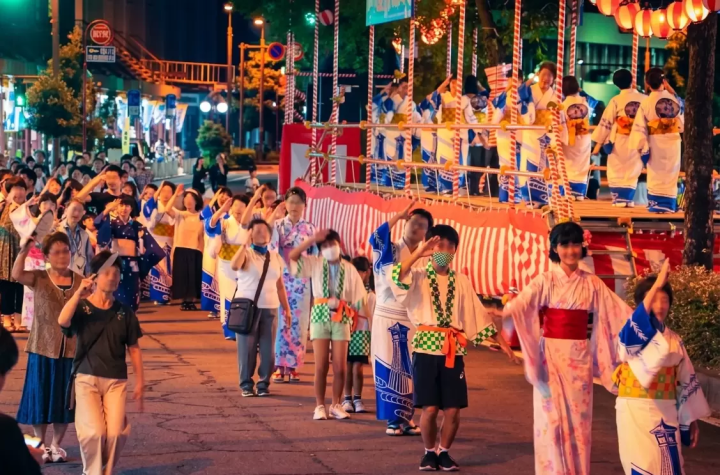
Another highlight of the SUITO Festival is the "Bon Odori."Bon Odori is a traditional Japanese dance performed during the Obon season, and its choreography and music vary from region to region. The Ogaki Ogaki has its own unique rhythm and choreography and has been loved by the citizens for a long time.
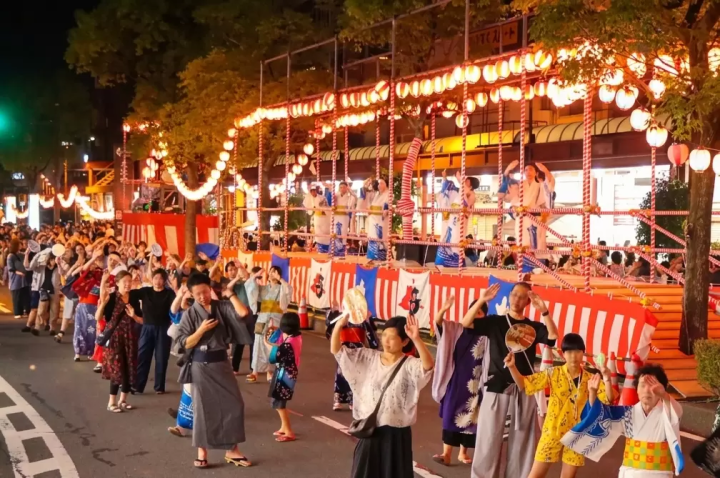
For three days during the festival, dance circles spread along the streets of Ogaki Eki Dori. Corporate teams and local groups, dressed in matching yukata, form lines and dance in perfect unison, creating a truly spectacular sight. Of course, ordinary people and tourists are also welcome to join in. Even if you don't know the choreography, try to join in by watching and imitating. You'll soon be able to dance along to the rhythm of the drums.
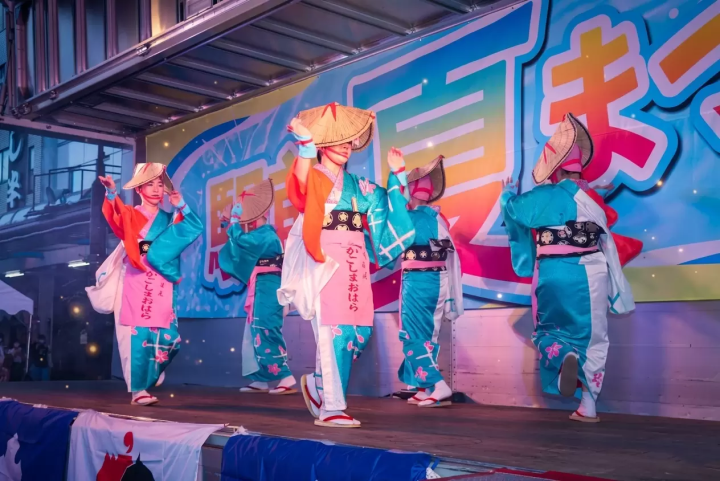
Furthermore, on the second day of the festival (Saturday), as part of the friendly city exchange with Kagoshima City , the " Ohara Tai " from Kagoshima will make an appearance. The dancers will perform a magnificent dance to Kagoshima's representative folk song, "Ohara Bushi," adding to the beauty of the Ogaki night. This collaboration, where dance cultures from different regions intersect, is a unique attraction of the SUITO Festival.
Nighttime food stalls and summer restaurants
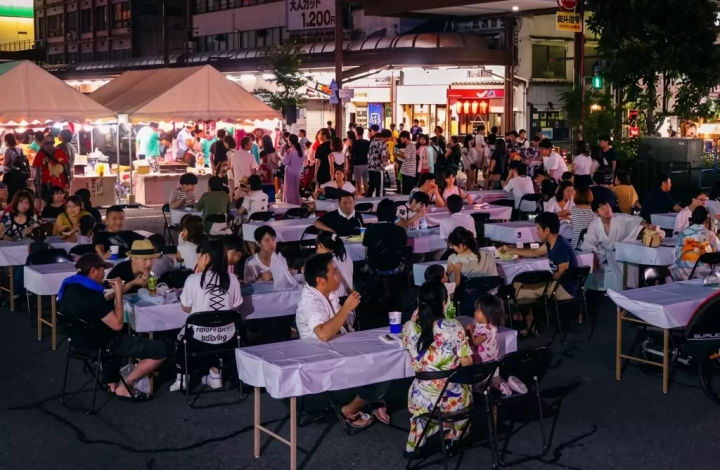
After enjoying the dancing and MANTO, why not satisfy your appetite? During the SUITO Festival, the area Ogaki Station street will be lined with traditional festival restaurants and food stalls. Yakisoba, fried chicken, takoyaki, shaved ice... Be sure to enjoy the classic Japanese summer festival foods.
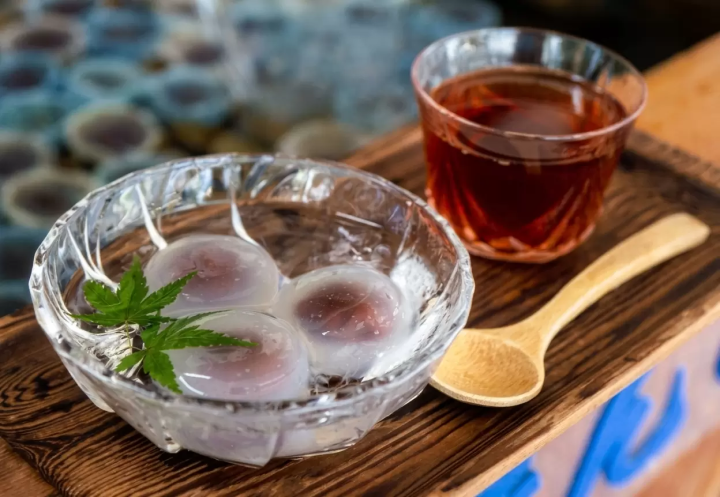
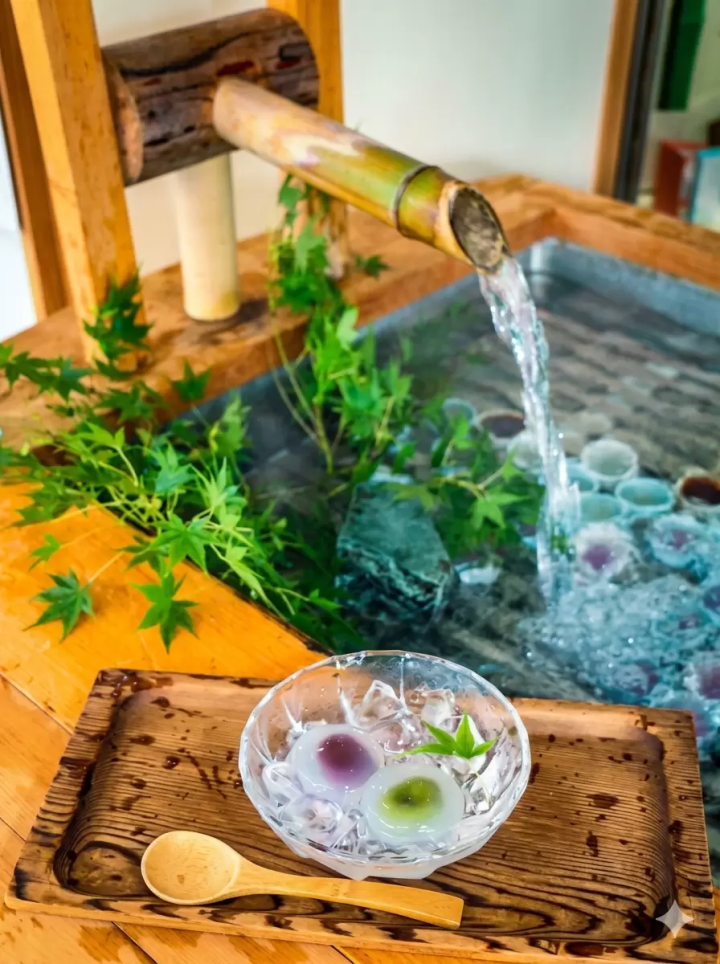
And if you come to Ogaki, you absolutely must try "MIZU MANJU."MIZU MANJU is a refreshing sweet originating in Ogaki City, consisting of a translucent skin made from kudzu starch and filled with sweet bean paste. Served in a glass bowl with cold water, it's visually refreshing. When you put it in your mouth, you'll experience a smooth, slippery texture and a delicate sweetness that gently spreads throughout. This is a Japanese sweet that can only be tasted in this region, nurtured by Ogaki's abundant groundwater.
Summer festival in front of the station
Location: Ogaki station street(North side) Date and Time: 1st day of the festival (Friday) to 3rd day (Sunday), 18:15-21:00
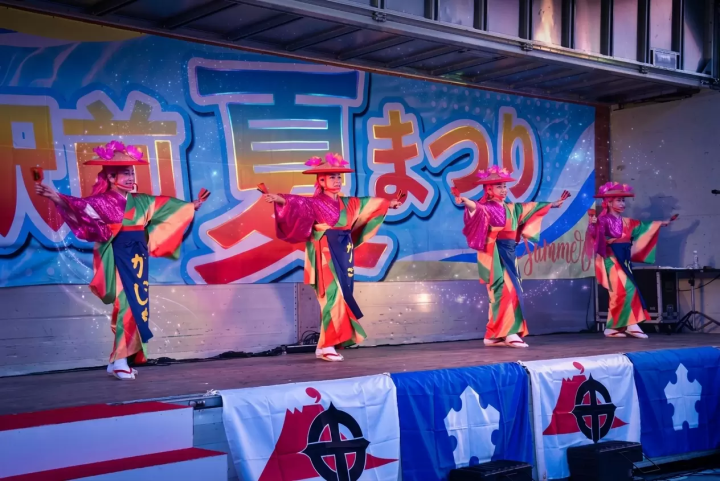
This summer festival takes place in the northern area of Ogaki station street. Concerts and various events will be held on the stage. On the second day of the festival (Saturday), the Ohara Tai from Kagoshima will also make an appearance. You can also enjoy local restaurants, food stalls, and summer restaurants.
Ogaki Dance Festival (Bon Odori)
Location: Ogaki station street (southern part) Date and Time: 1st day (Fri) to 3rd day (Sun) of the festival, 18:30-21:00
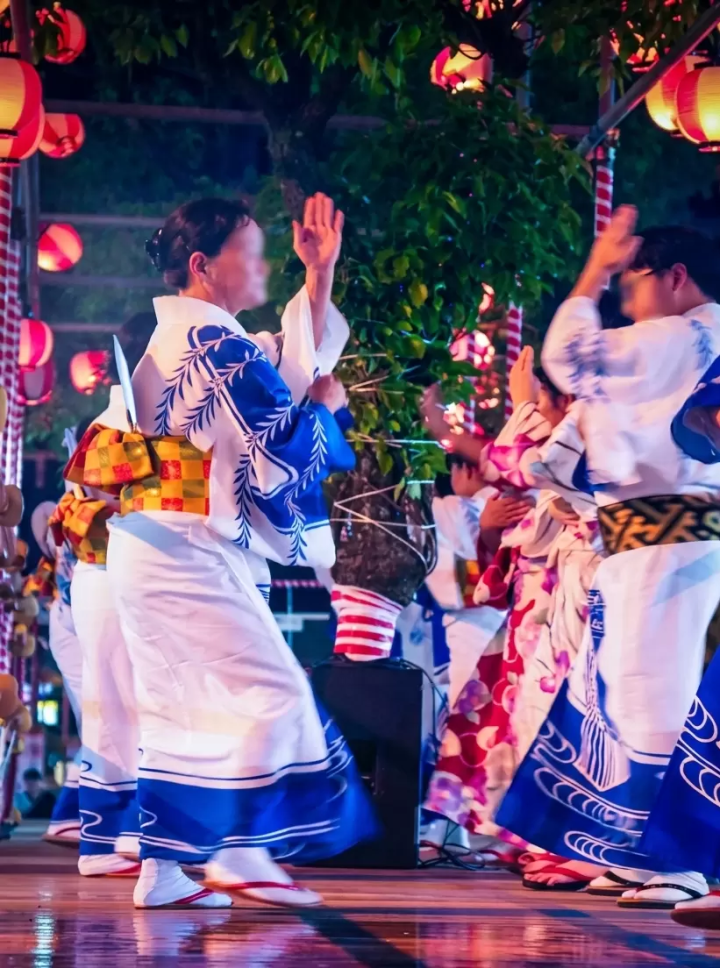
This Bon Odori takes place in the southern area of Ogaki station street . Businesses, organizations, and tourists come together to dance to the rhythm of drums and traditional music. Many people in this area wear yukata, which are sometimes described as summer kimonos. You can also enjoy local restaurants, food stalls, and summer restaurants.
SUIMON River MANTO NAGASHI
Location: SUIMON River(Kifune Shrine to Takaoka Bridge) Date and Time: 2nd day of the festival (Saturday) 18:30-21:00
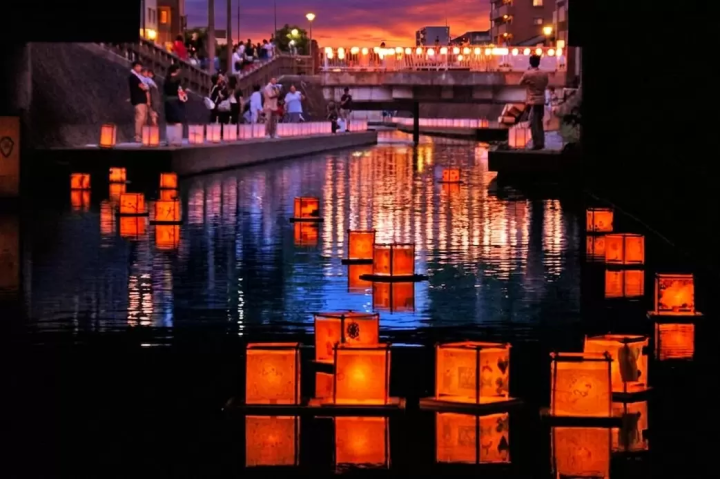
An opening ceremony will be held at Kifune Square, and the floating of MANTO will begin around 7 PM. The sight of the softly flickering lanterns illuminating the surface of the river is truly breathtaking.
How to enjoy and recommended ways to spend your SUITO Festival
Recommended itinerary: A one-day tour of the SUITO Festival
You can fully enjoy the SUITO Festival in just one day. Please refer to the following itinerary.
* The itinerary is set for the second day of the festival (Saturday).
Until evening (until 17:00)
Let's start with sightseeing in Ogaki City . There are many facilities where you can experience the rich history of Ogaki , such as " Ogaki Castle" and the "Oku no Hosomichi Haiku Journey Museum . " Funamachi Kawaminato , located right next to the Oku no Hosomichi Haiku Journey Museum , is a nationally designated scenic spot with a spectacular view, and it is recommended to stroll along the SUIMON River while waiting for the sunset. Seasonal flowers are planted along the river, making it perfect for taking landscape photographs.
Evening (from 17:00)
Feel refreshed in both mind and body with Ogaki's famous "MIZU MANJU," perfect for the hot season. Many Japanese confectionery shops selling MIZU MANJU are scattered throughout the city. In addition to the traditional black bean paste filling, trying the unique flavors and appearances of each shop is a delightful experience unique to Ogaki .
Evening (18:30 onwards)
If you're going on the second day of the festival (Saturday), head to Kifune Square. The opening ceremony of the MANTO NAGASHI will begin, and MANTO will be released onto the river one after another. If you find a spot along the river and watch the lights float away, you'll be enveloped in a charming, old-fashioned Japanese scene.
Evening (from 19:30)
When you get hungry, head to festival restaurants. Enjoy the unique flavors of a Japanese festival outdoors. A cold draft beer enjoyed amidst the sounds of festival music and drums is especially wonderful.
Evening (from 8:00 PM)
Now that our stomachs are full and our energy is recharged, let's try our hand at Bon Odori ( traditional Japanese dance). The dance choreography is surprisingly simple. Since you've come all this way, let's dance together and fully enjoy the festival!
Nearby spots
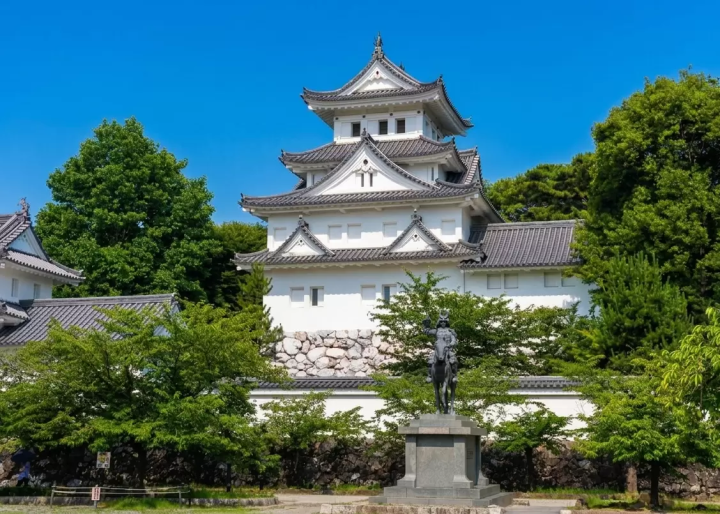
Ogaki Castle
Hours: 9:00 AM - 5:00 PM (Last entry 4:30 PM)
Closed on Tuesdays (or the following day if Tuesday is a public holiday), and during the New Year holidays.
This castle served as the base of Ishida Mitsunari 's forces on the Western Army side during The Battle of Sekigahara (1600). The view from the castle tower is a must-see.
The Oku no Hosomichi Haiku Journey Museum
Hours: 9:00 AM - 5:00 PM
Closed during the New Year holidays.
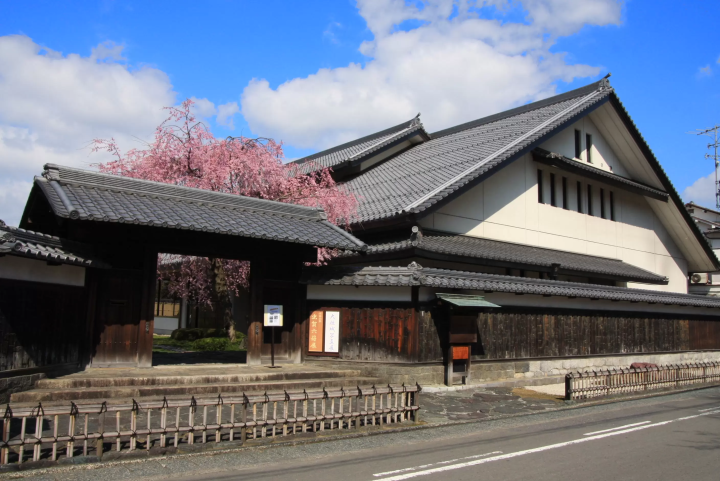
This museum is dedicated to Haiku , the world's shortest traditional Japanese fixed-form poetry. It's a place where you can learn about " Okuno Hosomichi " (The Narrow Road to the Deep North), a work by Matsuo Basho , a master of haiku who was active during the Edo period. You can also buy souvenirs from Ogaki here!
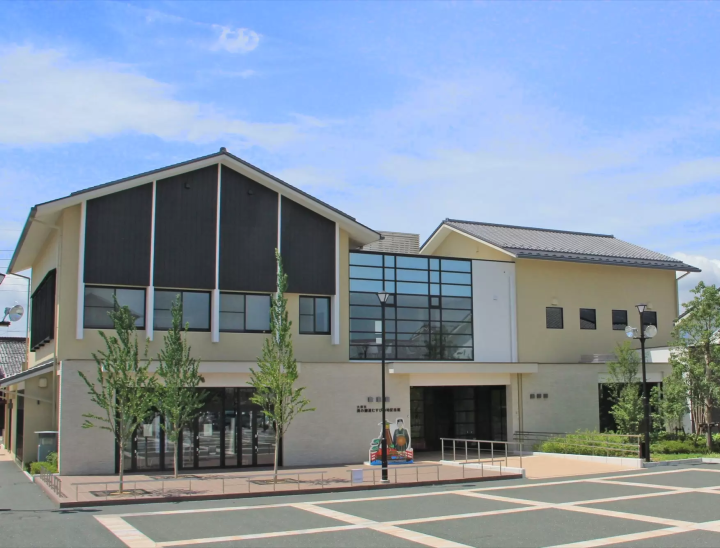
Kyodo Kan(Local History Museum)
Hours: 9:00 AM - 5:00 PM (Last entry 4:30 PM)
Closed on Tuesdays (or the following day if Tuesday is a public holiday), and during the New Year holidays.
This museum displays materials related to the successive lords of the Ogaki Domain, the Toda family, as well as works of art associated with Ogaki, allowing visitors to learn about the history of Ogaki.
MIZU MANJU) shop
There are many Japanese confectionery shops in Ogaki City where you can enjoy MIZU MANJU.
Shops located along Ogaki Eki Dori, which will be the festival venue: TUCHIYA , KINCHOEN SOHONKE(in front of the station) , KINCHOEN SOHONKE(Kakumachi) , MOCHISO
Basic Information / Access
Event Overview
| item | Content |
| name | SUITO Festival |
| Event period | Typically held on Friday, Saturday, and Sunday in early August. |
| Event time | Generally 18:00-21:00 *May vary depending on the event |
| venue | Ogaki Eki Dori, Honmachi Street, Ote Street, and the area around SUIMON River |
| Admission fee | Free (Some content requires payment) |
| Official website | https://www.ogakikanko.jp/event/suitomaturi/ |
access
● Access by train
It takes about 30 minutes from Nagoya Station to Ogaki Station on the JR Tokaido Main Line. The venue is about a 5-minute walk from the south exit of Ogaki Station. Its accessibility from Nagoya in just 30 minutes is one of its attractions.
● Access by car
Approximately 10 minutes from the Ogaki Interchange on the Meishin Expressway. Traffic restrictions will be in place during the festival. Please check the flyer map on the official website for details.
Parking : Please use the paid parking lots (several are available around the venue).
inquiry
503-0923 Gifu Prefecture Ogaki City, Funamachi 2-chome 26-1, inside the Okuno Hosomichi Journey Museum
TEL: 0584-77-1535





![[Tokyo, Shinjuku] Buy Matcha Here! 2 Long-established Japanese Tea Shops Where You Can Get the Authentic Taste!](https://resources.matcha-jp.com/resize/720x2000/2025/09/24-245090.webp)



![[Kyoto Prefecture ] Let's go see Fukuchiyama Castle, the symbol of Fukuchiyama City | Highlights and seasonal events](https://resources.matcha-jp.com/resize/720x2000/2026/02/12-258435.webp)
![[Gozaisho Ropeway] Gourmet Guide](https://resources.matcha-jp.com/resize/720x2000/2025/12/03-251960.webp)