This is an article about the "Uriwari Cycling Tour." The writer is Brian Keith Eastlake, a writer promoting the attractions of the Tsuruga and Wakasa areas of Fukui Prefecture Prefecture.

Written by
We are a voluntary tourism group dedicated to promoting the attractions of the northern Kinki region, specifically the areas of Tamba, Tajima, Tango, and Wakasa. The flavors of northern Kinki are not limited to crab, a representative winter seafood delicacy, but also include oysters, yellowtail, and pufferfish, as well as summer delicacies such as surf clams, rock oysters, and white squid. Mountain delicacies include Tamba chestnuts and Tamba black beans, and summer fruits such as sand dune melons, making it an area where you can enjoy gourmet food all year round. I would be happy if I could share information that allows people to visit this vast northern Kinki region many times and enjoy train travel.
-
Table of Contents
- Yaokumagawa: The gateway to this region
- Uriwari Cycling Tour Basic Information
- Brian's tips for safe and enjoyable cycling
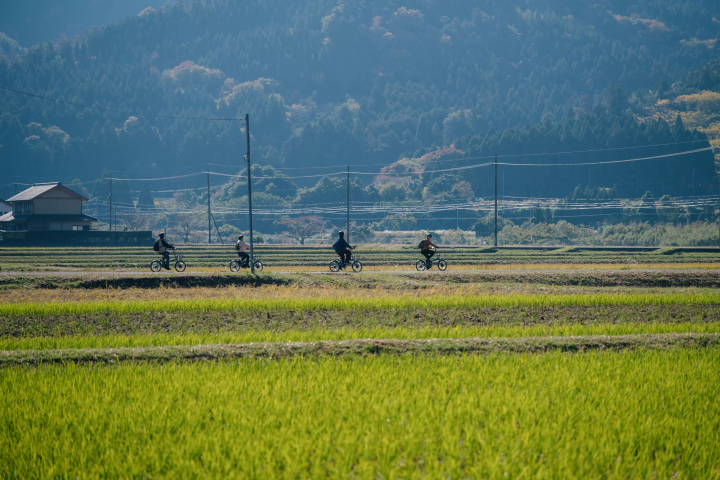
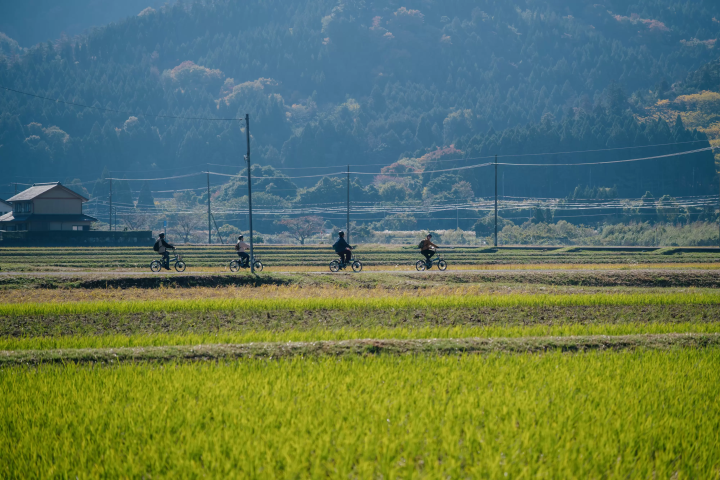
Southern Fukui Prefecture is one of Japan's most secluded and tranquil cycling paradises. Lightly trafficked roads wind gently through rural landscapes, passing through peaceful villages and leading you into scenery shaped by the interplay of history and the daily lives of its people. This area is ideal for exploring by bicycle, allowing you to move slowly in step with nature, surrender to the stillness, and gently touch upon a side of Japan far removed from the hustle and bustle—a landscape that is undeniably rooted in people's lives.
Yaokumagawa: The gateway to this region
One way to deeply experience the charm of this region is through the "Uriwari Cycling Adventure" offered by DEKITA Co., Ltd., which operates accommodations and experiences in the heart of Kumagawa-juku. Based in a carefully restored townhouse, DEKITA goes beyond simply providing lodging, naturally guiding you into the culture, history, and quietly flowing rhythm of daily life in this area. More details about Kumagawa-juku itself can be found at the end of this article.
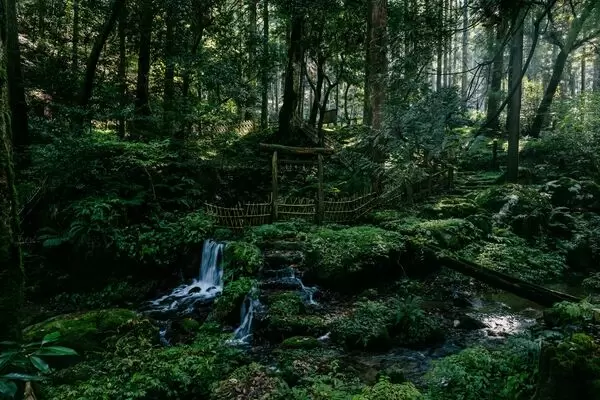
A place to encounter tranquility – Uriwari Falls
The name of this tour comes from Urikiri Falls, a tranquil turnaround point along the way. Upon arriving at this waterfall, which is created by a spring, participants are given time to stroll at their own pace, surrounded by the serenity of the forest and the clear flow of water. For more details about the charm and background of Urikiri Falls, please see our previous article.
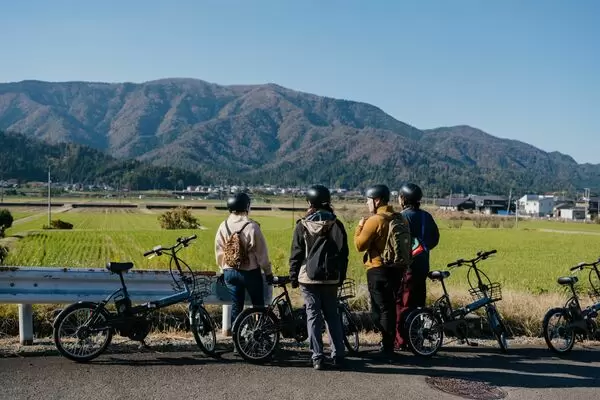
Satoyama – A place where human life and nature intersect.
The essence of this approximately 90-minute cycling trip lies in experiencing the landscape of the satoyama (traditional Japanese rural landscape) up close. Satoyama is a traditional Japanese landscape where human life and nature coexist. Here, rice paddies blend seamlessly into the forest, streams flow quietly beside houses, and people's lives continue in harmony with the rhythm of nature.
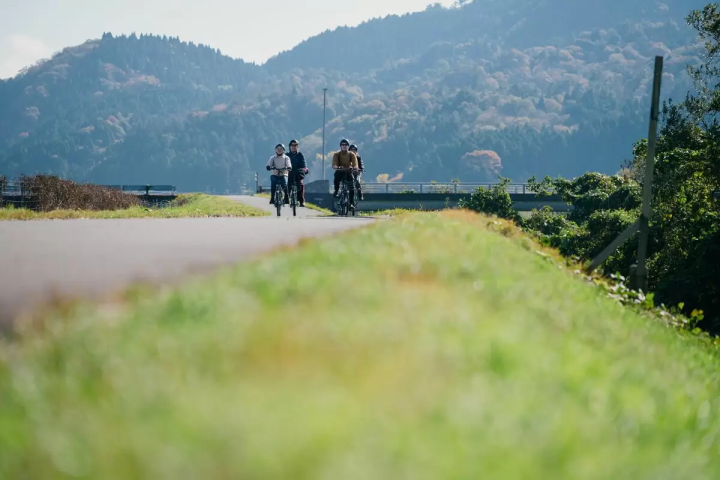
In these "in-between" spaces, human activity and nature blend together softly, and the connection between people and the land transforms from something merely observed into something truly felt. Above all, the charm of this landscape is best brought out when explored by bicycle. It is precisely because of the slow pace that the subtle nuances hidden within gradually emerge.
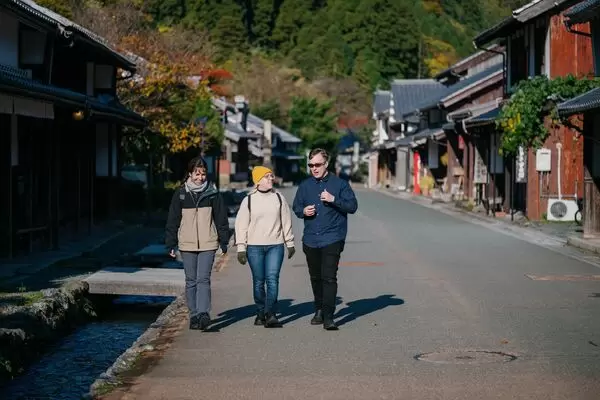
Departure – Ride Overview
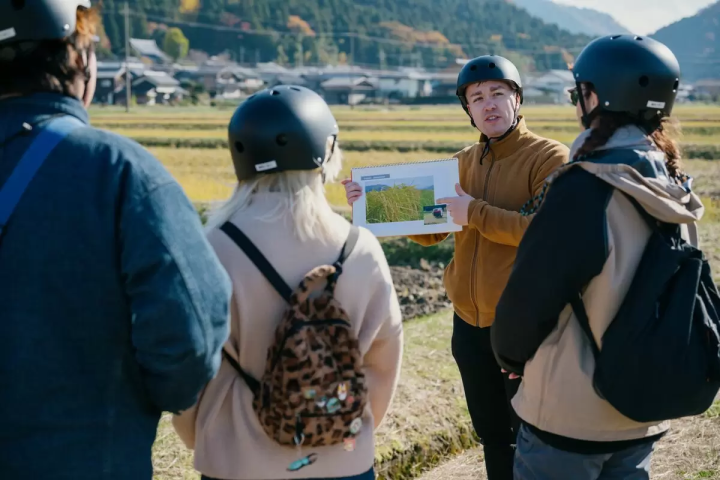
This experience begins at the reception area at Yaokuma River. Here, you will receive an explanation of the tour route and concept. Waterproof jackets, waist bags, and water bottles are provided, all showing thoughtful attention to detail. The water bottle, in particular, will be used later to collect spring water at Urikiri Falls.
Afterward, we walk a short distance through the post town to where the bicycles are waiting. The bicycles provided are electric-assist bicycles, which are easy to operate. Even the slight inclines along the route can be handled without difficulty. They also come equipped with baskets for carrying luggage. After receiving a brief explanation of how to operate the bicycles and safety instructions, our journey finally begins.
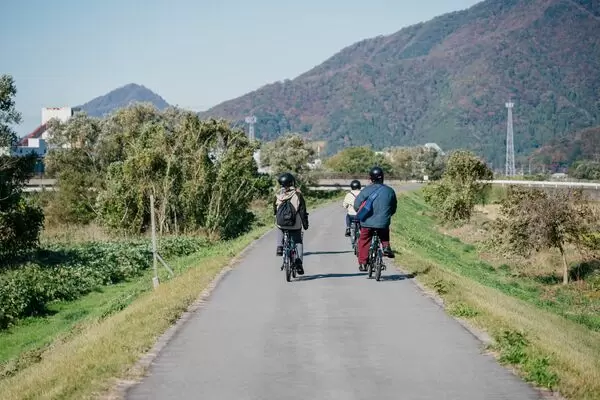
To the village scenery
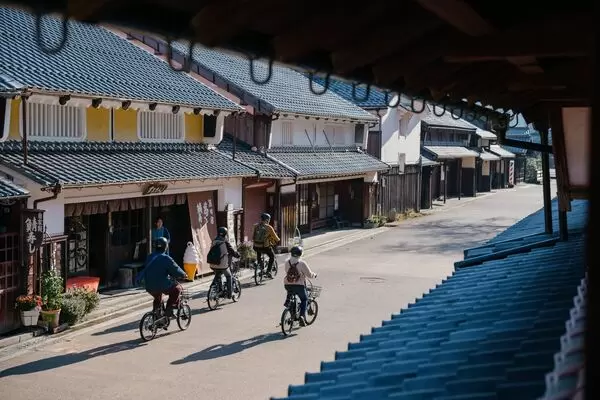
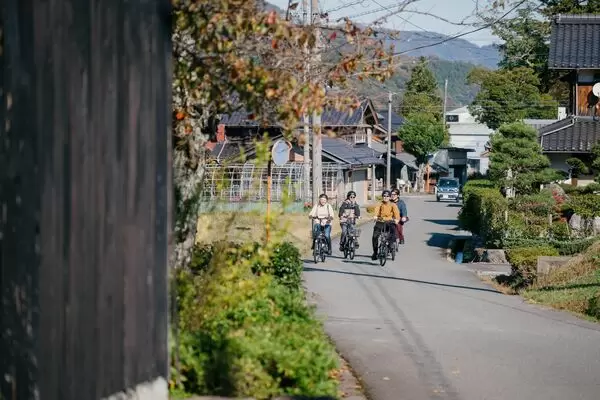
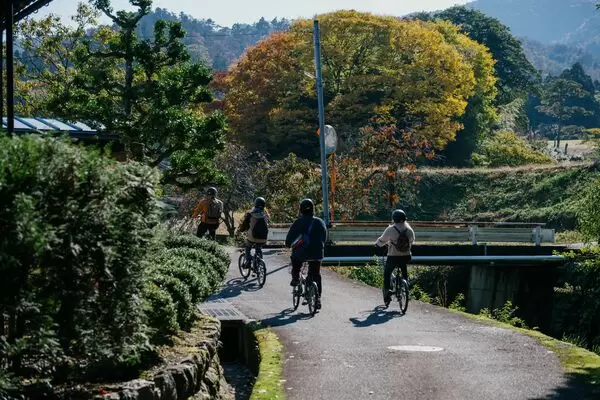
The ride begins quietly, first winding through the narrow alleys and well-preserved buildings of Kumagawa-juku, where traces of the past can still be felt. Eventually, the path transforms into a quiet back road, winding through a landscape dotted with settlements, rice paddies, irrigation canals, and traditional houses.
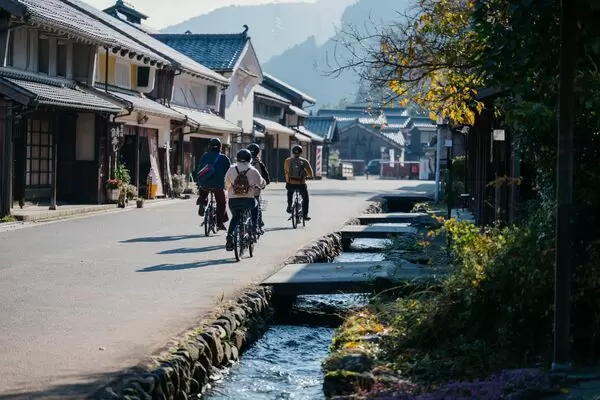
Water is always present in this landscape. It flows alongside the road, irrigates the rice paddies, and passes under small wooden bridges—it's not a conspicuous presence, but you can feel its quiet yet undeniable role in supporting daily life.
The terrain is generally flat, with only gentle undulations. It's easy to run on, but it never feels monotonous. As you follow the river and gaze at the gently rolling mountains in the distance, you'll find yourself relaxing and enveloped in a sense of peaceful time. The number of participants is limited to a maximum of five, ensuring a personal and relaxed experience from start to finish. This creates room for conversation, curiosity, and even the smallest moments that you might normally overlook.
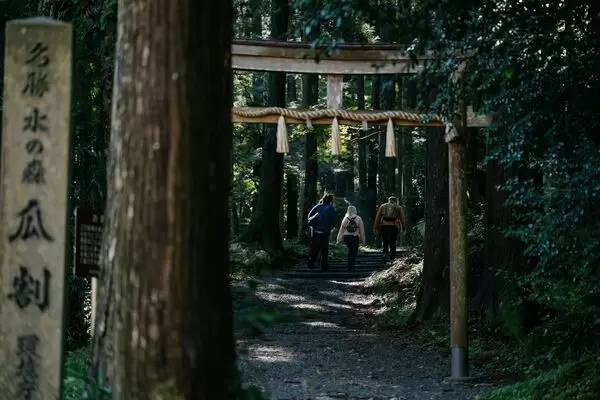
Uwari Falls - A place where water springs forth
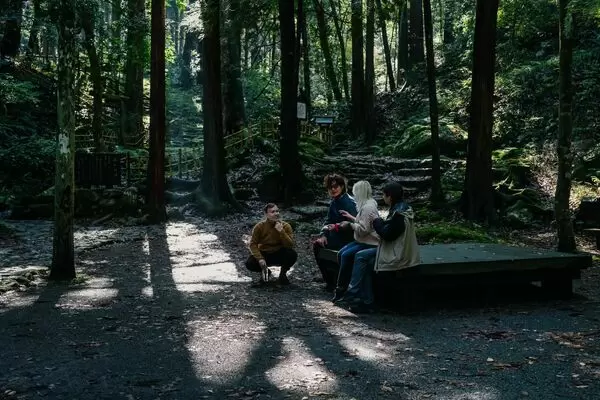
As the path winds into the forest and gradually narrows, the air becomes cooler, and the sound of water begins to quietly resonate between the trees. The waterfall that eventually appears is not flashy, but its clear water flows continuously, creating a modest yet powerfully captivating presence.
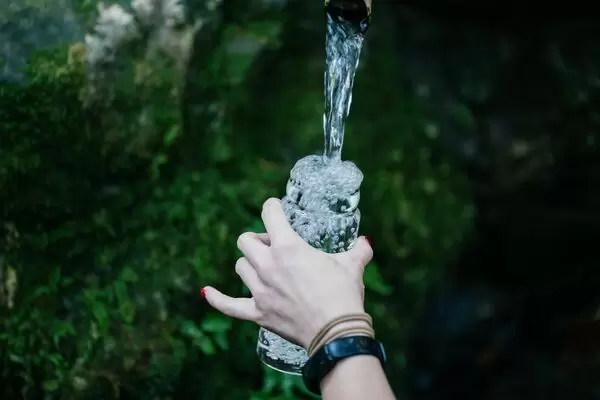
This water source is supported by pure spring water that gushes from underground. Due to its high purity, it has been cherished by the locals since ancient times and is known as one of Japan's finest springs. When you arrive at this place, you feel as if time itself has slowed down.
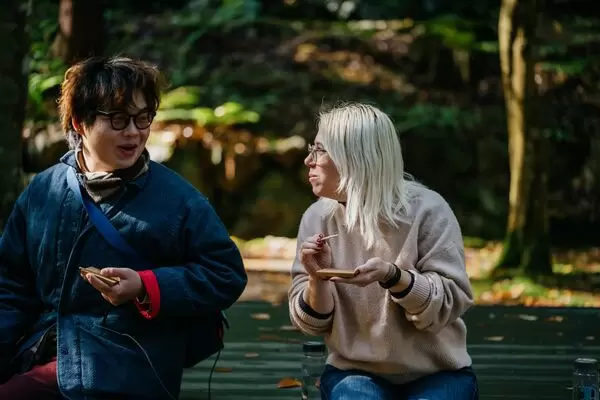
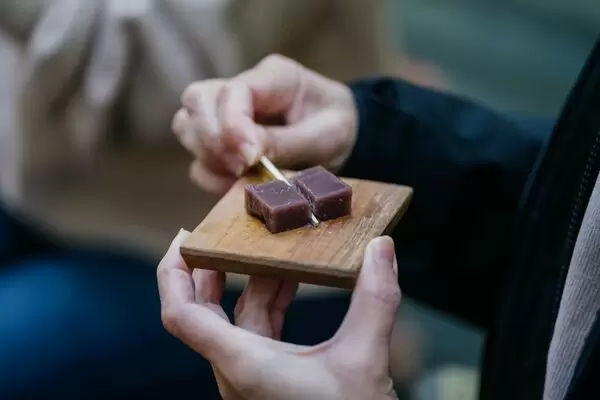
Participants can enjoy this place in their own way, whether by strolling slowly along the forest paths, quietly immersing themselves in the atmosphere, or filling their bottles with spring water. Each of these small actions, while in a way that leaves a deep impression, is truly memorable. Before heading back, a simple dessert prepared by the guide is served, adding a gentle lingering feeling to the journey.
The return journey looks different
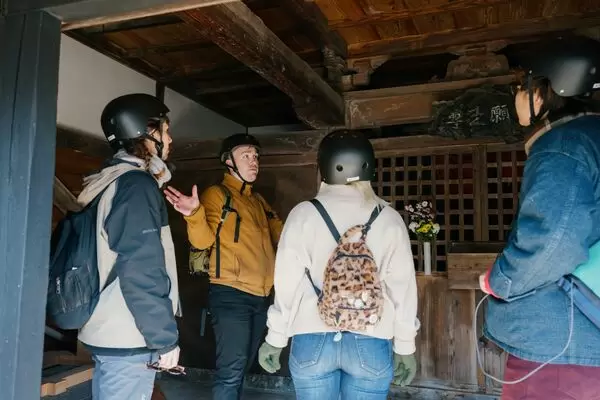
On the way back, we made our way through several small hamlets, heading Oku into the villages where we could feel the presence of life more strongly. There, daily life continued in a quiet and unhurried manner. Along the way, there were small, unforced moments, such as casual greetings, brief exchanges of words, or glimpses of people going about their daily lives, which made us feel a gentle connection to the community.
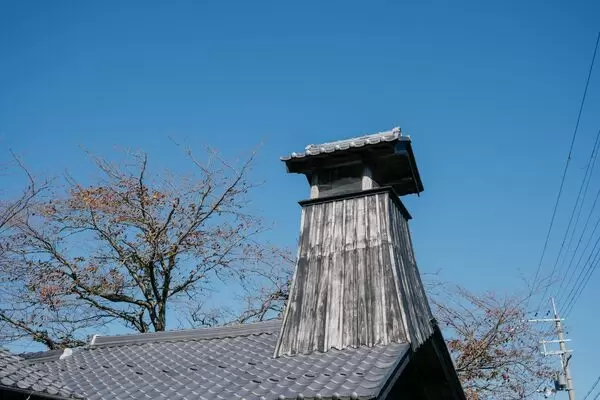
Along the way, one thing that catches your eye is the fire lookout tower in Miyake district. It was once used to watch for smoke and warn the residents, but now it stands quietly, watching over the village. It is a humble symbol that conveys to the present day the sense of shared responsibility and human connection that was once deeply rooted in rural communities.
For everyone seeking a leisurely journey
This trip is an experience recommended for a wide range of people, from casual cyclists to those who want to experience the region more deeply. The route is designed to be easy to ride using electric-assist bicycles, so even first-timers can enjoy it with peace of mind.
Rather than pursuing distance or a sense of accomplishment, this tour unfolds slowly through observation, conversation, and a quiet engagement with the rural landscape.
Why is this experience so memorable?
In today's travel landscape, often dominated by speed and checking off items on a checklist, experiences like this offer a quieter, more lasting moment. The Urikiri Cycling Tour is not simply about covering distance; it's a journey of deepening your awareness of the place, its history, and the delicate relationship between people and the land. It's a journey that will be remembered not by what you saw, but by how you came to feel and perceive things.
Uriwari Cycling Tour Basic Information
Period: March to November Price: 10,000 yen per person (tax included) *Please pay at check-in before departure.
Number of participants Minimum number of participants: 2 Maximum number of participants: 5 *Single participants are welcome, but the fee will be for two people.
Duration: Approximately 3 hours (10:00 AM - 1:00 PM)
What is included
• Electric-assist bicycle
• Helmet • Waist pouch (for smartphone and wallet)
• Water bottle (for collecting spring water)
• Light snacks (Japanese sweets, etc.)
What to bring: ・Comfortable clothing (suitable for cycling)
• Cash (for purchasing souvenirs, etc.)
• Sunglasses or hat required. • In case of bad weather, the tour may be cancelled. Please check with staff in advance.
• Participants are responsible for their own safety during the tour. We recommend purchasing travel insurance.
About Kumagawa-juku
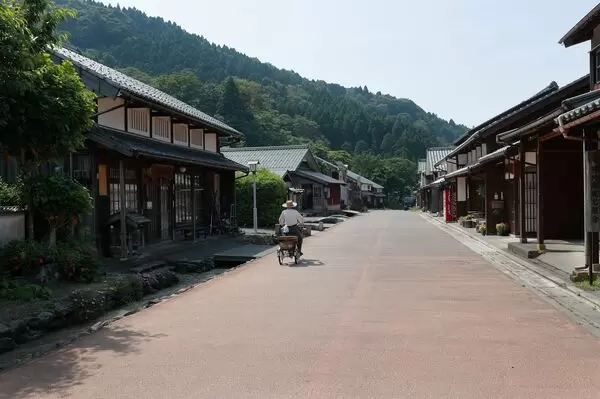
Kumagawa-juku is a place that exudes a quiet sense of historical weight. It once flourished as a key point on the Saba Kaido (Mackerel Road) connecting Wakasa and Kyoto , playing a vital role in transporting seafood, especially mackerel, to the capital.
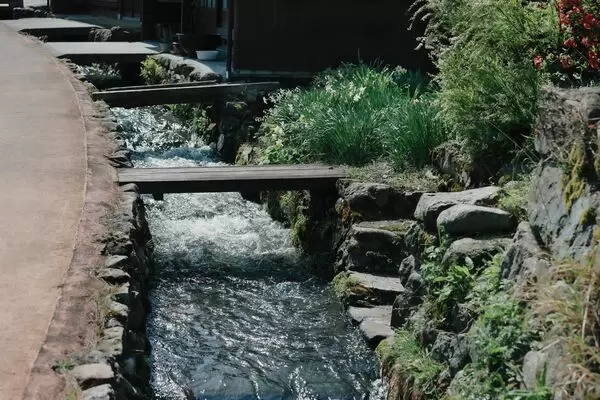
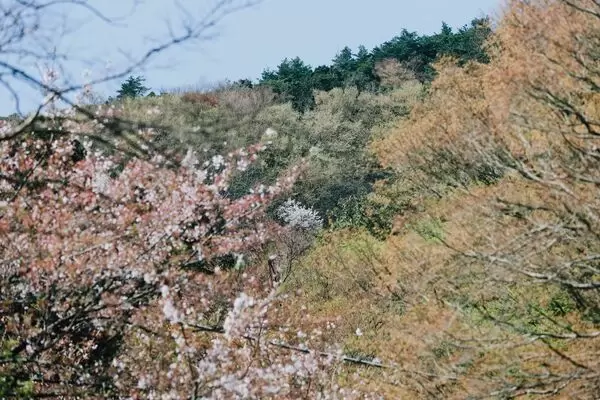
Even today, traces of its past remain vividly present in the narrow streets and preserved buildings. Rather than feeling like a recreated version, there's an atmosphere that suggests a natural connection from the past to the present. As one of the best-preserved post towns in the region, it conveys a relaxed, grounded way of life to the present day.
Brian's tips for safe and enjoyable cycling
The course is relatively gentle and easy to run on, but by keeping a few points in mind, you can enjoy it with greater peace of mind.
Maintain a slow pace and avoid rushing. The charm of this ride lies in its gentle rhythm. In Japan, traffic is generally on the left, so always ride on the left side and pay particular attention to local vehicles, especially on narrow roads within settlements. In residential areas, ride with consideration for the quiet lives of the community. Avoid loud conversations and do not trespass on private property. Hold the handlebars firmly and steadily, without gripping them too tightly. Be especially careful in areas with unstable road shoulders or irrigation canals, as there are places where you may suddenly drop into rice paddies or waterways. Electric-assist bicycles offer a comfortable ride, but caution is needed when accelerating from a standstill. Initially, focus on getting used to the feel. And most importantly, try to focus on the present moment. You can appreciate the beauty of the scenery more deeply when you notice not only what is ahead, but also what is quietly unfolding around you.
Yaokumagawa, 30-6-1 Kumagawa, Wakasa-cho, Mikata-Kami-Naka- Wakasa Town, Fukui Prefecture 919-1532
TEL: 0770621777
URL: https://yao-kumagawa.com/
Brian Keith Eastlake, Writer promoting the charms of the Tsuruga and Wakasa areas, Fukui Prefecture Regional Revitalization Cooperation Team
I also share my daily reporting and the charm of the nature, culture, and experiences in the Wakasa area on Instagram.
Please be sure to check them out as well.
Instagram








![[Tokyo, Shinjuku] Buy Matcha Here! 2 Long-established Japanese Tea Shops Where You Can Get the Authentic Taste!](https://resources.matcha-jp.com/resize/720x2000/2025/09/24-245090.webp)

![[Obama City] The first Obama Hojo Festival](https://resources.matcha-jp.com/resize/720x2000/2026/10/09-272230.webp)