One of the must-experience aspects of Japanese bathing culture is a hot spring resort (onsen), public bathhouse (sento), and regular bath. This article clearly explains the differences between onsen and public bathhouses, unique Japanese bathing methods, essential etiquette, and how to enjoy them during your trip, all from a Japanese perspective.

Written by
We introduce the lesser-known charms and unique local experiences of various regions throughout Japan, including Gero Onsen. Hot springs, sake, local cuisine, beautiful nature, and encounters with local people. We introduce trips that go beyond simply "seeing" tourist destinations, allowing you to experience the local lifestyle and culture.
-
Table of Contents
- The difference between hot springs, public baths, and baths
- Bathing is a part of daily life for Japanese people.
- Does any natural spring water qualify as a "hot spring"?
- A public bathhouse is a place where you can experience the everyday life of Japanese people.
- Which is better for travel: a hot spring or a public bathhouse?
- Even if it's your first time, it's okay! Basic instructions for using hot springs and public baths.
- What if I have tattoos?
- There's one more thing I want you to know about: the Japanese culture of "hot spring therapy."
- Stay in a town with hot springs and experience Japan's bathing culture.
- Gero, one of Japan's three most famous hot springs
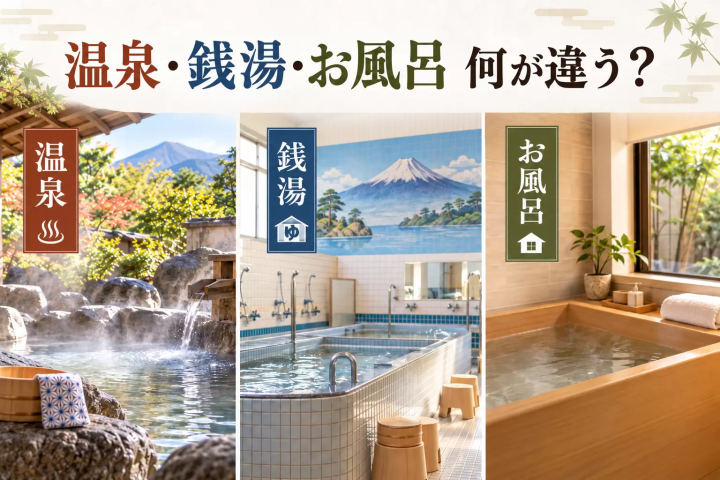
When traveling in Japan, you may come across similar words such as "onsen" (hot spring), "sento" (public bath), "daiyokujo" (large public bath), and "ofuro" (bath) .
but,
"What's the difference between a hot spring and a public bath?"
"Are all the large public baths in the hotel hot springs?"
"Do you go into public baths naked too?"
Many people probably wonder about this.
Actually, even though they're all large bathtubs, each one has a slightly different meaning.
Knowing the differences will make your bathing experience during your trip to Japan even more enjoyable.
The difference between hot springs, public baths, and baths
To summarize roughly, it looks like this.
| words | meaning | point |
| bath | Bathing and the bathroom/bathtub in general | This includes bathrooms in homes. |
| hot spring | Water that springs from underground and meets Japanese standards. | Describes the properties of hot water. |
| public bath | A local public bath that anyone can use by paying a fee. | Represents "facility" |
| Public bath | A large bathroom that can accommodate many people | It's not necessarily a hot spring. |
| Super public bath | A large facility where you can enjoy baths, saunas, meals, and more. | Some facilities use hot springs. |
The most important thing to remember here is,
"Hot springs" and "public baths" are fundamentally different in their classification criteria.
That's the point.
Onsen (hot spring) primarily refers to the properties of the water, while sento (public bathhouse) refers to the type of facility, a bathhouse used by everyone.
Therefore, some public bathhouses use natural hot spring water.
Conversely, even if a hotel or inn has a large public bath, the water there is not necessarily from a hot spring.
Bathing is a part of daily life for Japanese people.
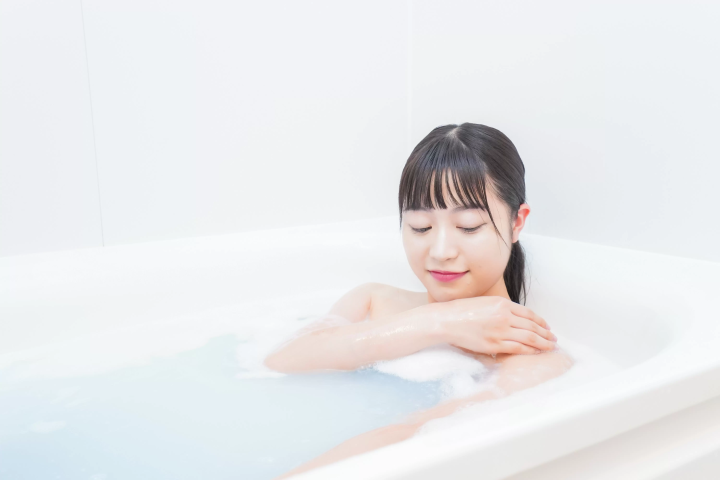
"Ofuro" is a word used in the broadest sense.
The bathroom in a home is also called a "bath," and taking a bath is also called "taking a bath."
In Japan, it's customary to fill a bathtub with hot water and warm your body, rather than just taking a shower.
Furthermore, Japanese bathrooms have some characteristics that are slightly different from bathrooms in other countries.
The area for washing your body and the area for soaking in the bathtub are separate .
Instead of washing your body with soap while in the bathtub, first wash your body outside the tub, and only get into the tub once you're clean.
This is basically the same whether you're using a bathtub at home, a public bathhouse, or a hot spring.
For Japanese people, the bathtub is not so much a place to wash their bodies, but rather a place to warm their clean bodies and relax at their leisure .
Does any natural spring water qualify as a "hot spring"?
Actually, not everything can be called a "hot spring" in Japan.
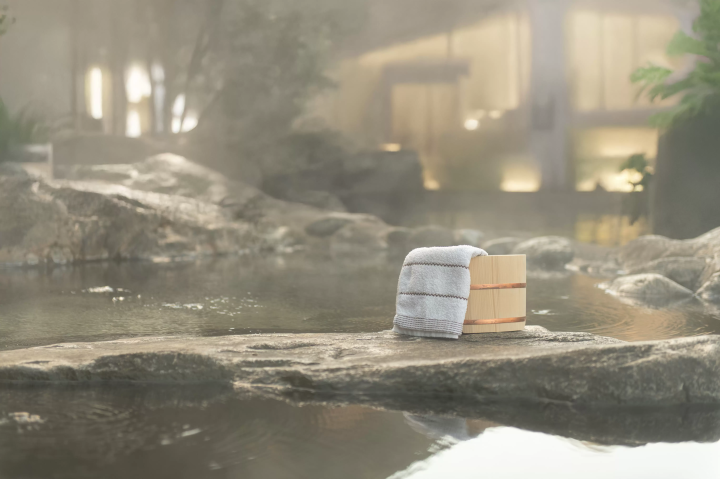
According to Japan's Hot Spring Law, the conditions for a spring to be considered a hot spring include that the water gushing from underground is 25°C or higher at the source, or that it contains a certain amount of components specified by law .
Here's something interesting:
"Hot springs" don't always mean "the water is hot from the start."
thing.
Even if the temperature is below 25℃, if it contains certain components, it may be classified as a hot spring in Japan. Conversely, even if warm water comes out from underground, its treatment varies depending on the conditions.
One of the joys of a Japanese hot spring trip is that the water quality, color, scent, and texture vary from one hot spring resort to another.
A public bathhouse is a place where you can experience the everyday life of Japanese people.
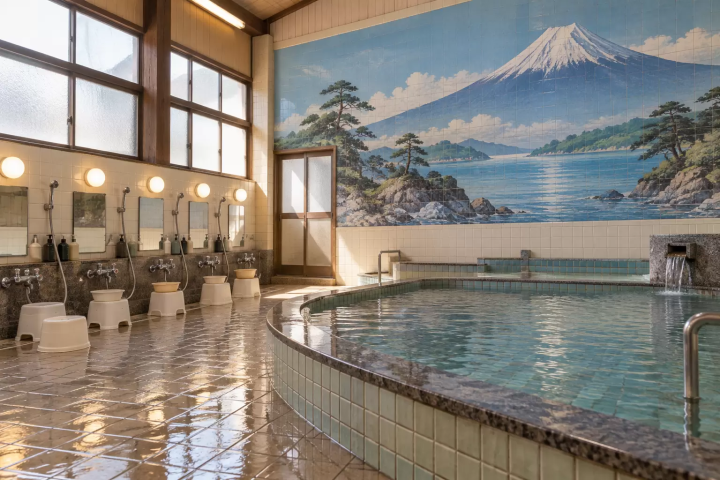
While hot springs are often enjoyed as a travel destination, public bathhouses (sento) were originally communal baths that were an integral part of the daily lives of local people .
In Japan, during a time when bathrooms were not common in homes, many people used public bathhouses.
Even today, some people still go to public bathhouses to relax in a large bath or enjoy a sauna.
Legally, public bathhouses are positioned as general public baths necessary for the daily lives of local residents.
Not just famous tourist spots,
"I want to experience what everyday life is like for Japanese people."
For travelers like that, a public bathhouse can also be an interesting experience of Japanese culture.
Traditional public bathhouses can still be found in cities like Tokyo, Osaka, and Kyoto.
Which is better for travel: a hot spring or a public bathhouse?
Neither is superior to the other.
Choose based on what you want to experience.
If you want to enjoy a truly Japanese hot spring trip, then "onsen" (hot springs) is the way to go.
I'll go to a hot spring resort surrounded by nature, stay at a traditional inn, soak in the hot springs, and eat local cuisine.
For those who want to enjoy a leisurely trip, hot springs are highly recommended.
Unlike a typical trip around Japan visiting multiple cities, you can experience a different kind of pace of life in the provinces.
If you want to experience the daily life of a Japanese person, try a "sento" (public bathhouse).
After sightseeing in cities like Tokyo, Kyoto, and Osaka, I went to a public bathhouse, mingling with the locals.
This is one way to experience Japan in a way that you can't get just by visiting tourist attractions.
For those who have visited Japan multiple times, a trip that allows you to enjoy "everyday life in Japan" like this might be particularly interesting.
Even if it's your first time, it's okay! Basic instructions for using hot springs and public baths.
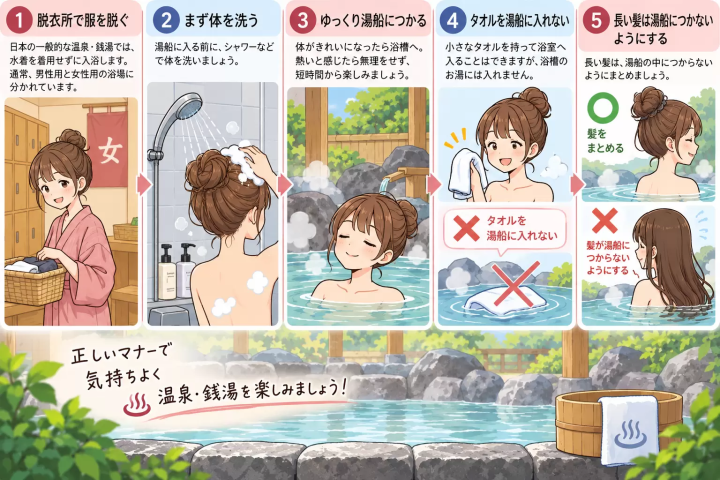
Whether it's a hot spring or a public bathhouse, the basic way to use them is pretty much the same.
1. Take off your clothes in the changing room.
In typical Japanese hot springs and public baths, swimwear is not required. Baths are usually separated into men's and women's sections.
2. First, wash your body.
Before getting into the bathtub, wash your body with a shower or similar.
3. Soak in the bathtub slowly.
Once your body is clean, get into the bathtub. If it feels too hot, don't force yourself; start with a short soak.
4. Do not put towels in the bathtub.
You can bring a small towel into the bathroom, but you cannot put it in the bathtub water.
5. Keep long hair out of the bathtub.
If you have long hair, it's best to tie it up for peace of mind.
Also, you should generally avoid using smartphones or cameras in the bathroom.
In hot springs and public baths, you share the same water with other people. It's not so much a rule as it is...
"We want to make sure the next person can enter comfortably as well."
Considering this, Japanese bathing etiquette might be easier to understand.
What if I have tattoos?
In Japan, the rules regarding bathing for people with tattoos vary from facility to facility.
Some facilities may be able to handle this with cover seals or similar methods, but the rules vary from place to place.
It's recommended to check the official websites of each facility before your trip.
There's one more thing I want you to know about: the Japanese culture of "hot spring therapy."
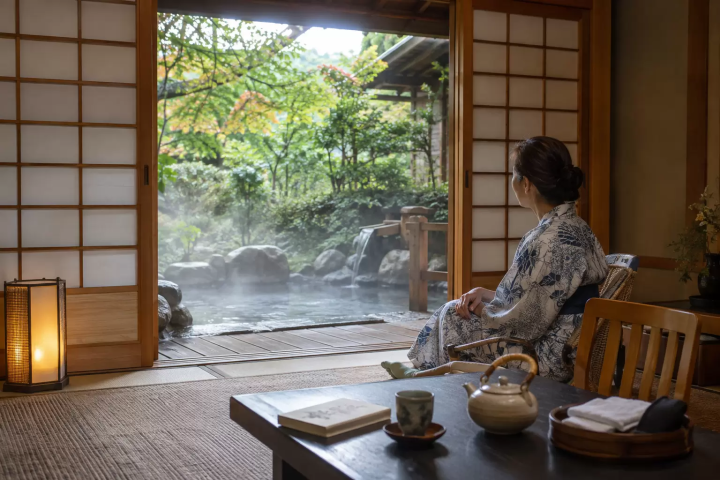
In Japan, there is a culture called "toji," where people don't just go into a hot spring and leave immediately, but instead stay in a hot spring resort, soaking in the water multiple times to slowly rest their mind and body.
For Japanese people, hot springs are not just tourist attractions.
Staying in a hot spring resort,
I took a bath in the hot springs.
We ate a meal,
Take a walk,
I'm going to take another dip in the hot springs.
Travel that focuses on enjoying the time itself has been a tradition for a long time.
In recent years, travel that goes beyond simply bathing in hot springs has gained attention, as it involves staying in a hot spring resort and leisurely enjoying local cuisine, sightseeing, and the unique culture of the area .
If you've already visited popular tourist destinations like Tokyo, Osaka, and Kyoto several times, why not venture a little further afield on your next trip to Japan and stay in a town with hot springs?
Soaking in a hot spring, strolling through town, enjoying delicious food, and then going back to the hot springs again—experiencing this quintessentially Japanese way of life might reveal a slightly different side of Japan's charm.
Stay in a town with hot springs and experience Japan's bathing culture.
Learning about Japan's bathing culture can slightly change how you view the experience of "taking a bath in a hot spring."
Experience the everyday life of Japanese people at a local public bathhouse.
I spent some quiet time in the hot springs at the inn.
Stay in a hot spring town and soak in the hot springs multiple times to relieve the fatigue of your journey.
These are all ways to enjoy bathing that are unique to Japan.
Gero, one of Japan's three most famous hot springs
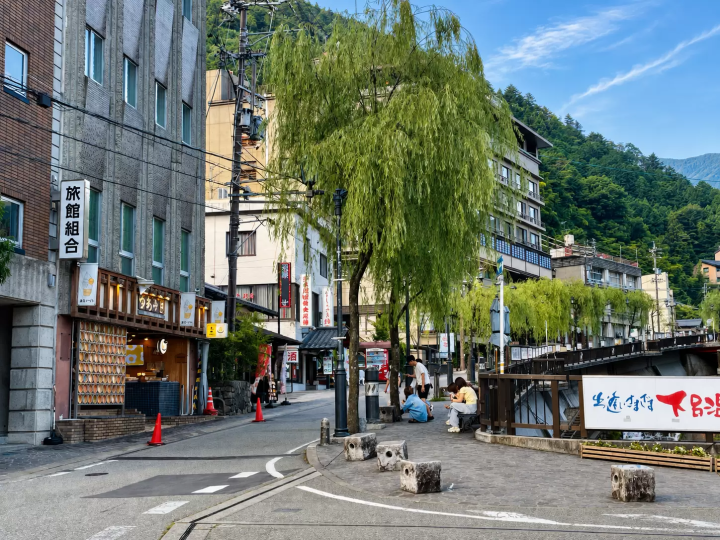
One travel destination where you can experience Japan's hot spring culture is Gero Onsen in Gifu Prefecture . Gero Onsen is known as one of Japan's "Three Great Hot Springs," along with Arima Onsen and Kusatsu Onsen.
For those who have visited Japan many times, why not try experiencing Japan not just as a tourist destination, but by staying in a town with hot springs and relaxing while soaking in the hot waters?
My next trip to Japan will be to Gero Onsen, one of Japan's three most famous Gero springs.




![[Tokyo, Shinjuku] Buy Matcha Here! 2 Long-established Japanese Tea Shops Where You Can Get the Authentic Taste!](https://resources.matcha-jp.com/resize/720x2000/2025/09/24-245090.webp)

![[2027] 7 Recommended Tourist Spots in the Fuji Five Lakes Area at the Foot of Mount Fuji in Winter | Skiing, Hot Springs, and Scenic Views](https://resources.matcha-jp.com/resize/720x2000/2023/10/12-148419.webp)