
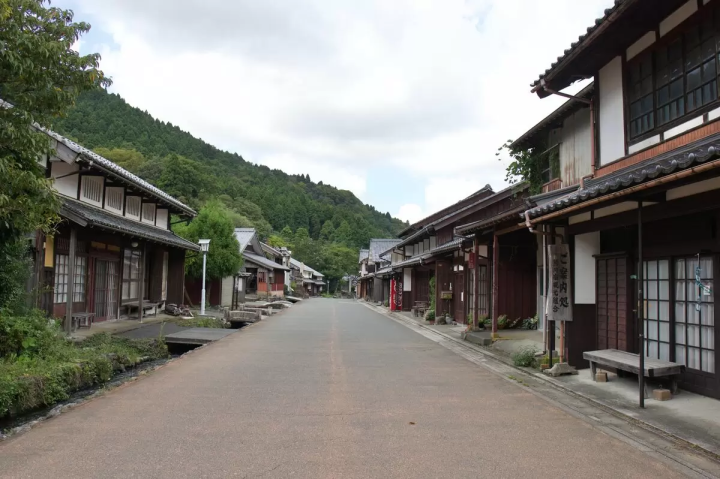
The wood carving experience at Kumagawa-juku is a full-fledged two-hour workshop where you can learn everything from how to read wood grain and use carving tools to sharpening your tools, all under the guidance of woodcarver Yuichi Niino. In the atmosphere of a historic post town, you can experience the techniques of traditional crafts and the joy of creation through carving spheres and making bread plates.

Written by
We are a voluntary tourism group dedicated to promoting the attractions of the northern Kinki region, specifically the areas of Tamba, Tajima, Tango, and Wakasa. The flavors of northern Kinki are not limited to crab, a representative winter seafood delicacy, but also include oysters, yellowtail, and pufferfish, as well as summer delicacies such as surf clams, rock oysters, and white squid. Mountain delicacies include Tamba chestnuts and Tamba black beans, and summer fruits such as sand dune melons, making it an area where you can enjoy gourmet food all year round. I would be happy if I could share information that allows people to visit this vast northern Kinki region many times and enjoy train travel.
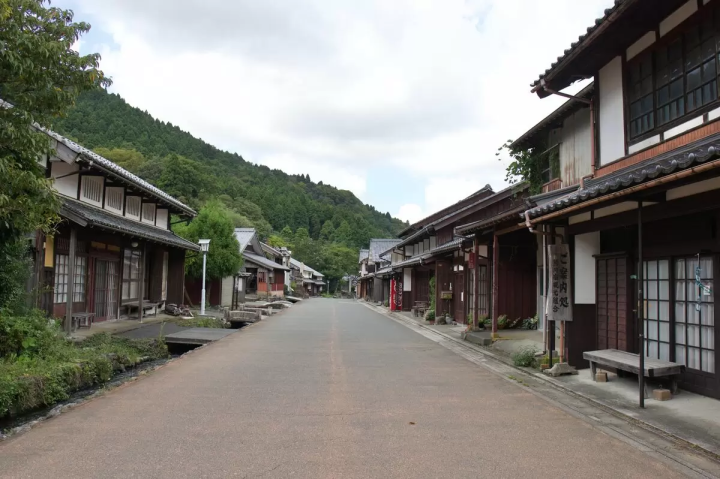
Walking through the historic streets of Kumagawa-juku, you feel as if you've stepped into a different era. The old buildings, quiet streets, and traditional atmosphere evoke the past when it flourished as an important post town along the Saba Kaido, a historic road connecting the Nihon Sea and Kyoto.
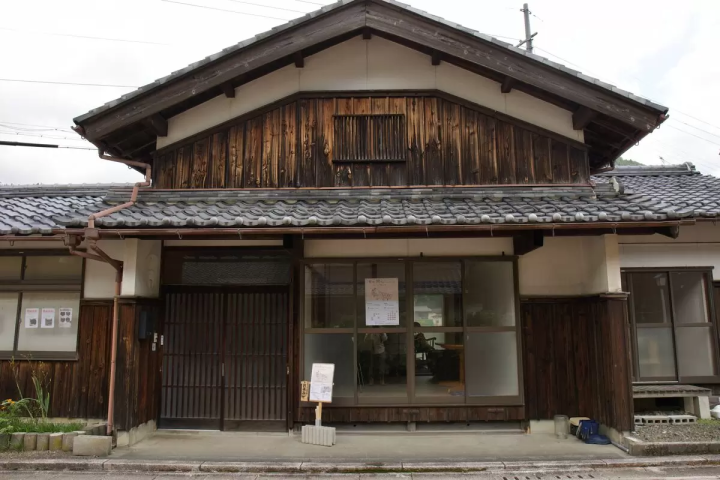
One of the workshops where wood carving classes are held.
However, the charm of Kumagawa-juku lies not only in the historical atmosphere preserved in its townscape. Traditional crafts, passed down in one of Japan's leading woodcarving towns, have found a new base in this area. Today, under the guidance of skilled woodworkers, you can experience the charm of this unique traditional craft firsthand through woodcarving workshops.
This two-hour wood carving experience allows you to learn the fundamentals of wood carving from scratch. Starting with carving simple shapes, you will learn how to use various woodworking tools and how to read wood grain, acquiring the basics for shaping a work of art while working with wood. Furthermore, you will learn about tool maintenance and sharpening, providing an opportunity to gain a deeper understanding of the skills and knowledge of craftsmen who support traditional crafts.
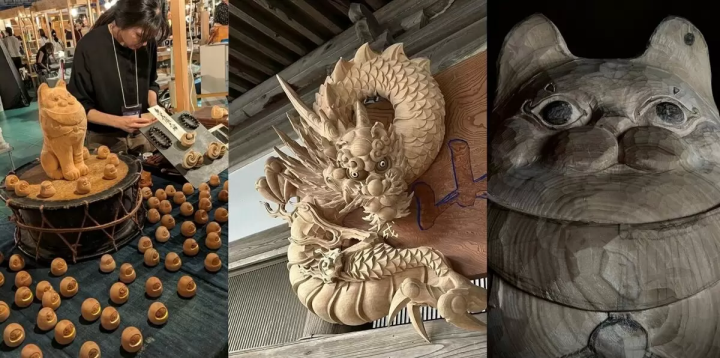
A collection of magnificent works by woodcarver Mr. Niino.
At the heart of this experience is woodcarver Yuichi Niino. Niino's journey into woodcarving began when he was captivated by the beauty of the transom carvings in his home from a young age. After studying architecture at Tsuruga Technical High School, he moved to Inami in Toyama Prefecture, a town nationally known for its woodcarvings, and spent five years training under a master.
Currently based in Kumagawa-juku, Niino creates a wide range of wood carvings, from Buddhist statues and intricate temple and shrine sculptures to nameplates and smaller pieces. His work is imbued with the skills he cultivated through many years of training, his deep knowledge of wood grain, and his meticulous approach to each and every piece.
About the experience
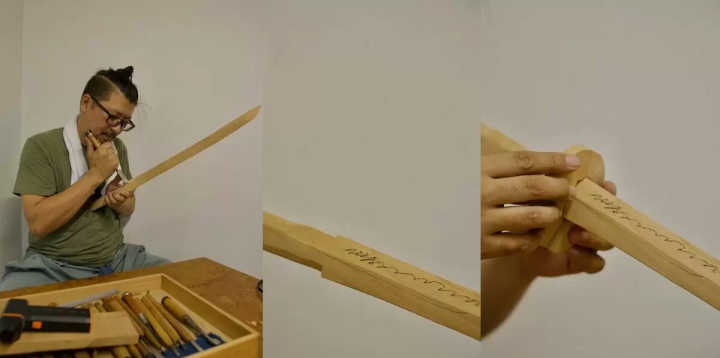
Woodcarver Niino is helping students finish their wooden swords.
In this two-hour wood carving experience, you can learn the basics of wood carving from scratch, from carving simple shapes to using various woodworking tools and how to read wood grain. You will also learn about the proper care and sharpening of tools, deepening your understanding of the skills and knowledge of craftsmen who support traditional crafts.
Classes are held twice a month at the craftsman's workshop or a nearby rental workshop. Even beginners can participate, as instruction is provided carefully from the basics, so you can join with confidence even if you have no prior experience in wood carving.
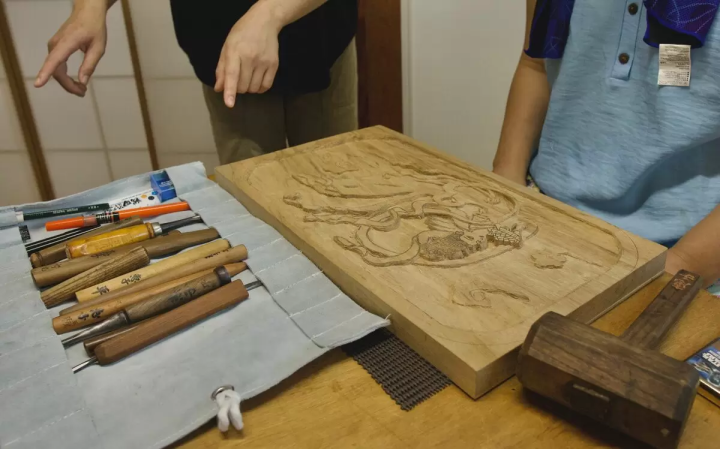
Students bring their own artwork to the classroom. From the intricate relief of a Japanese goddess, the skills and creative possibilities that can be acquired in the classroom are evident.
I had some prior experience with woodworking, but this time I participated in the class as a beginner, just like the other participants. On the other hand, those with experience are also welcome, and you can bring your own designs and work on creating original pieces in the workshop.
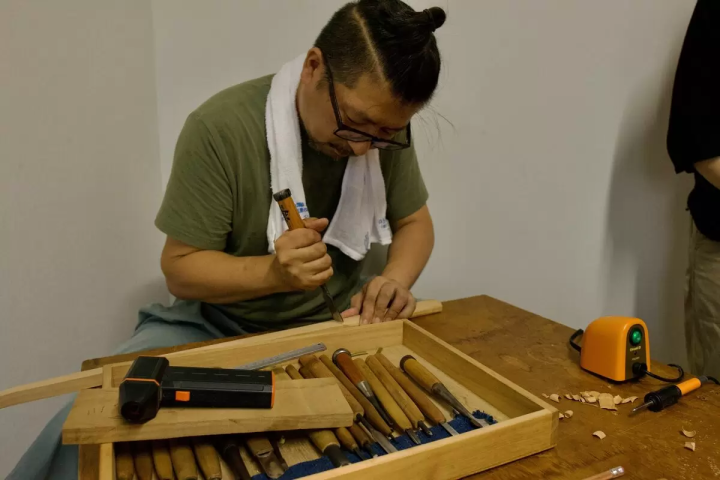
All the necessary tools are provided, so you can participate empty-handed and start wood carving right away.
First installment – Starting from the simplest things
The first lesson begins with carving a seemingly very simple "sphere." At first glance, this might seem like an unexpected way to start wood carving, but by creating a smooth, rounded shape, you can learn various basic techniques necessary for wood carving. While learning how to read the wood grain and how to apply the angle and pressure of the carving tools, you will gradually shave the wood and finish it into a uniform shape.
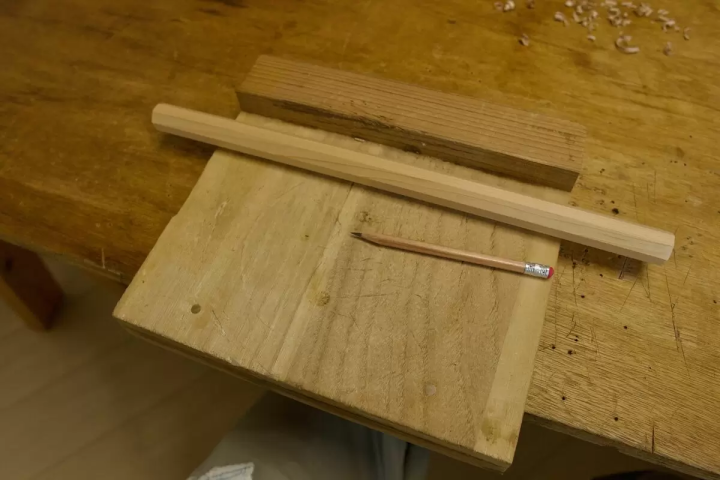
Using hexagonal wood, you will learn how to carve a simple sphere.
Instead of simply carving along a predetermined shape, you'll work while feeling how the wood reacts to each cut. By the end of the lesson, a simple block of wood will transform into a sphere, and you'll have learned fundamental techniques that can be applied to carving more complex shapes, all while having fun.
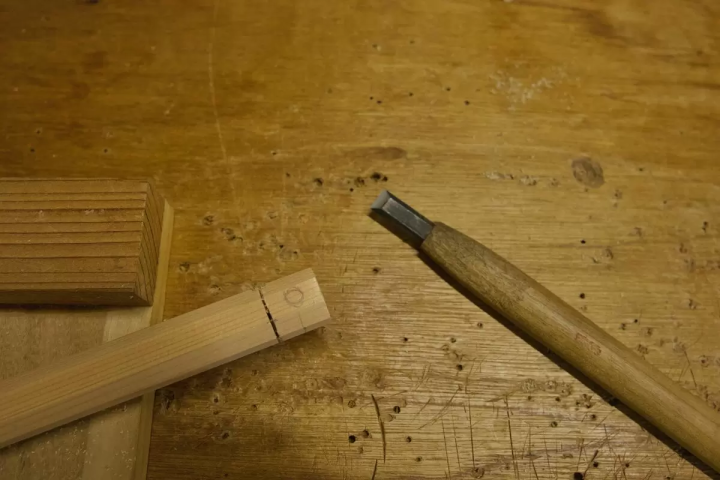
First, draw the basic shape and size of a sphere on the wood with a pencil, and clearly mark the center. Using this as a guide, you can finally begin carving the wood. The instructor will guide you carefully through the process, but you will be responsible for drawing the lines and marking the wood yourself.
Because this style involves actually working with your own hands, you can experience the feeling of creating a work of art from scratch. Furthermore, by experiencing firsthand the process of a shape gradually emerging from a block of wood, you can gain a deeper understanding of how shapes are created.
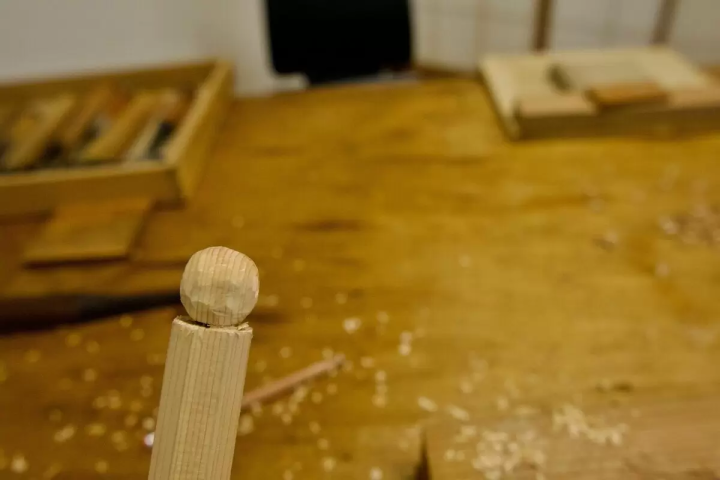
After carving the wood for about 30 minutes, the basic shape of a sphere will gradually become visible, although it will still be somewhat irregular. The key is to carve slowly and carefully, rather than trying to remove a large amount at once. By carving along the grain and frequently rotating the wood to check the shape, you can gradually create a well-balanced sphere. As you get closer to the finished product, you can refine the shape little by little by carving more finely and lightly.
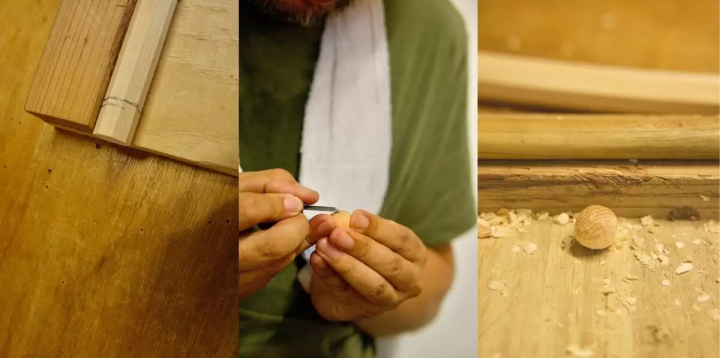
From the beginning of production to completion: Until the sphere takes shape
Second Class
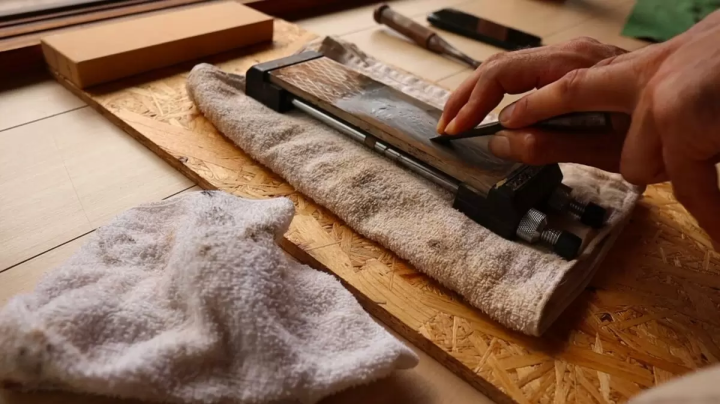
In the second lesson, we tackled another essential task in woodworking: sharpening tools to maintain their sharpness. This time, we learned how to sharpen carving tools using a whetstone, and how to create a clean, sharp edge by maintaining the blade at the correct angle and sliding it smoothly across the whetstone. Sharpening may seem like a small task in wood carving, but it is one of the essential skills for any craftsman who works with wood.
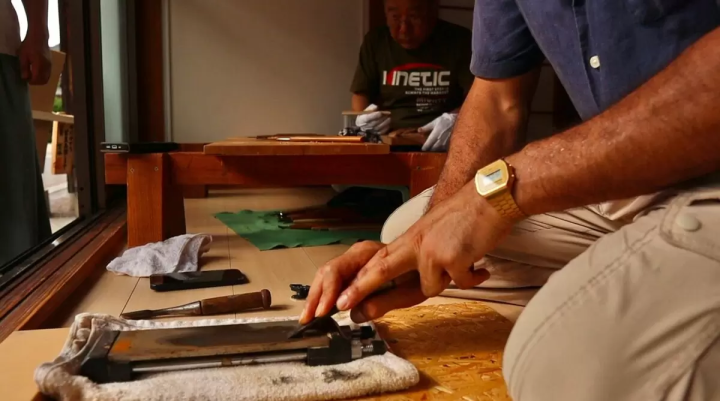
A well-sharpened carving tool not only allows for finer movements and more precise work, but also makes the wood carving process itself smoother and more enjoyable. By actually learning these traditional techniques, I gained a renewed appreciation for the care and importance that woodcarvers put into maintaining their tools every day.
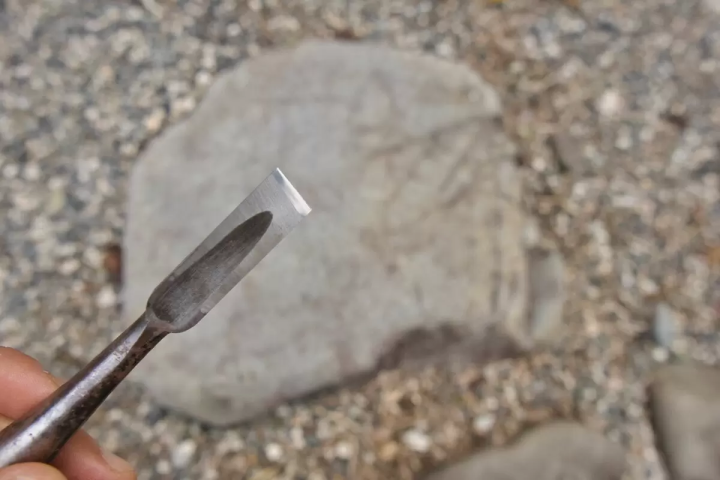
From a dull blade to a finely honed tool
The appeal of this class isn't just about learning to carve your own artwork. By seeing what kind of pieces other participants are working on, you can learn that even with the same wood carving technique, each person has a different approach.
Another unique appeal of this class is the opportunity to learn directly from the master, Mr. Niino, and his disciples. By experiencing their respective experiences and techniques, you can gain new inspiration and stimulation for your own creative work.
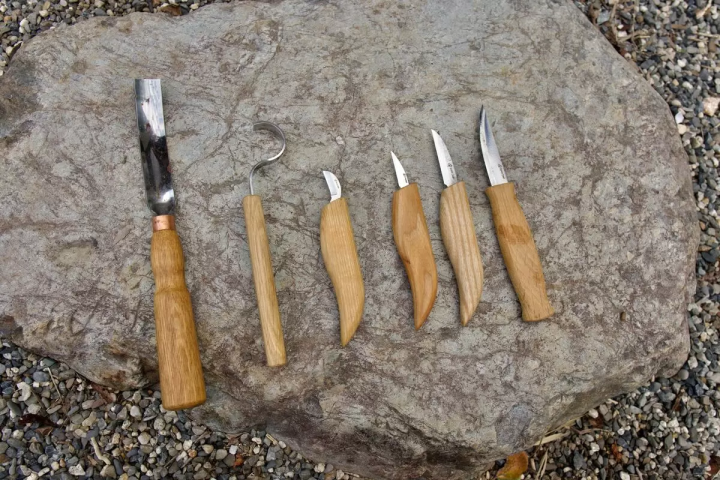
Some of the Western-style carving tools I brought to the experience.
The wood carving class is also a place to share techniques and knowledge. In the second class, I brought the Western-style carving tools that I usually use, and learned about the differences in techniques and approaches between Western and Japanese wood carving. By comparing them, I was able to deepen my understanding of the different styles of techniques and the traditions that have been passed down through generations.
Carve your own wooden bread plate
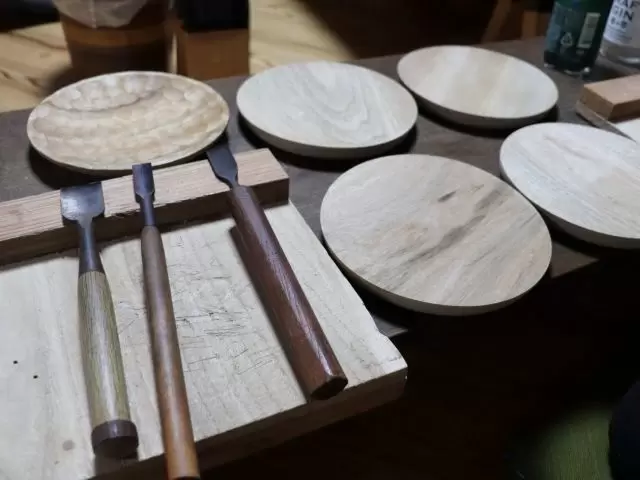
For those who want to try wood carving in a casual setting, we recommend the wooden bread plate making workshop hosted by Mr. Niino. Over approximately two hours, you will use carving tools to create a round or square wooden bread plate with a diameter of 18 cm, tailored to your liking. You can take advantage of the natural wood grain and add your own patterns, creating a one-of-a-kind original piece.
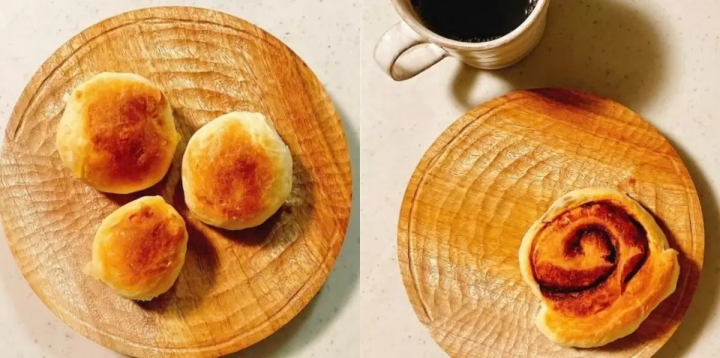
You can book this experience directly through Jalan.net via the details provided at the end of this article.
A special moment enjoying wood carving and Kumagawa-juku.
Whether you're looking to start wood carving as a casual hobby or want to acquire more serious skills, this experience will be a fulfilling introduction to the world of wood carving. Under the guidance of woodcarver Mr. Niino, you will learn basic techniques, gain practical knowledge about how to use tools and wood carving methods, and enjoy the pleasure of creating a work of art with your own hands.
What makes this experience even more special is Kumagawa-juku, the setting for the workshop. In the historic townscape that once flourished as a post town, you can learn about wood carving, which is deeply connected to Japan's woodworking culture, while enjoying the slow pace of time and the old-fashioned atmosphere. After spending time working with wood, we recommend leaving the workshop and strolling through the quiet streets of Kumagawa-juku, its historical buildings, and its abundant nature. For those interested in wood carving, this will be a special experience where you can enjoy not only the charm of traditional crafts but also the atmosphere of historic Kumagawa-juku.
Wood carving classes and experience information
[How to book an experience]
Please contact us first via the following page: https://www.niinochoukoku.com/
Sculpture class (regularly held): 2,500 yen (tax included) *This class is for those who wish to attend multiple times, so participants are generally expected to bring their own tools.
Sculpture class (single session): 5,000 yen (tax included) *Includes rental of tools.
〇Experience time: Approximately 2 hours
Materials: Includes equipment rental fee
Number of participants: Participation is possible from 1 person.
Location: 16-36 Fukui Prefecture, Wakasa Wakasa Town-Kami-Naka-gun, Fukui Prefecture
[Wooden Bread Plate Carving Experience]
〇Experience Details: You will use carving tools to carve your favorite wood grain pattern onto a plate with a diameter of 18cm (round or square), large enough to hold bread. This is an immersive experience in a quiet space surrounded by nature. You will use carving tools to create your desired pattern. The wood grain will change depending on the tools you use, so it will be fun to see the various patterns that emerge.
〇Experience time: 13:30 - 15:30 (approximately 2 hours)
〇Experience fee: 6,000 yen per person (tax included)
Materials: Includes equipment rental fee
Location: 16-36 Fukui Prefecture, Wakasa Wakasa Town -Kami-Naka-gun, Fukui Prefecture
Number of participants: Participation is possible from 1 person.
Brian Keith Eastlake, Writer promoting the charms of the Tsuruga and Wakasa areas, Fukui Prefecture Regional Revitalization Cooperation Team
I also post daily on Instagram. Please check it out!
Instagram: https://www.instagram.com/wakasabayexplorer/









![[Tokyo, Shinjuku] Buy Matcha Here! 2 Long-established Japanese Tea Shops Where You Can Get the Authentic Taste!](https://resources.matcha-jp.com/resize/720x2000/2025/09/24-245090.webp)



![[Kyoto Prefecture ] Let's go see Fukuchiyama Castle, the symbol of Fukuchiyama City | Highlights and seasonal events](https://resources.matcha-jp.com/resize/720x2000/2026/02/12-258435.webp)
![[Gozaisho Ropeway] Gourmet Guide](https://resources.matcha-jp.com/resize/720x2000/2025/12/03-251960.webp)
![[October/November 2026, near Tokyo Station] An event where you can buy popular souvenirs from all over Japan!](https://resources.matcha-jp.com/resize/720x2000/2026/10/14-272472.webp)