2026.09.30
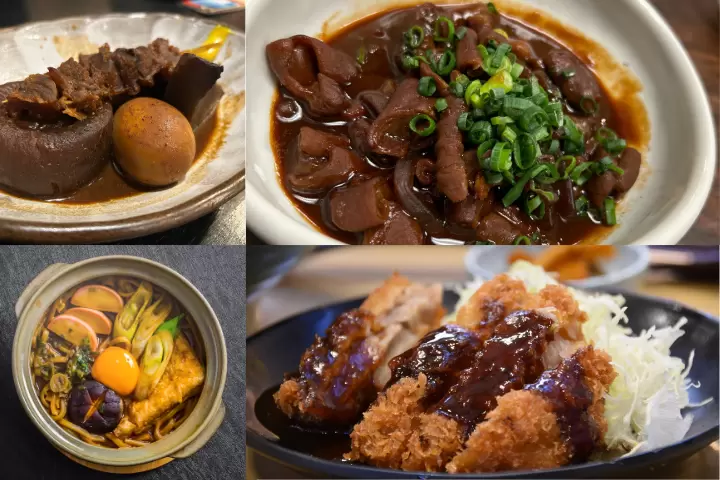
When visiting Nagoya, miso dishes are something you simply cannot miss! From miso katsu and miso nikomi udon to miso oden, Nagoya is home to a wide variety of dishes featuring miso. Discover the rich flavors of Nagoya's famous miso, said to have been loved by samurai, through all five senses!
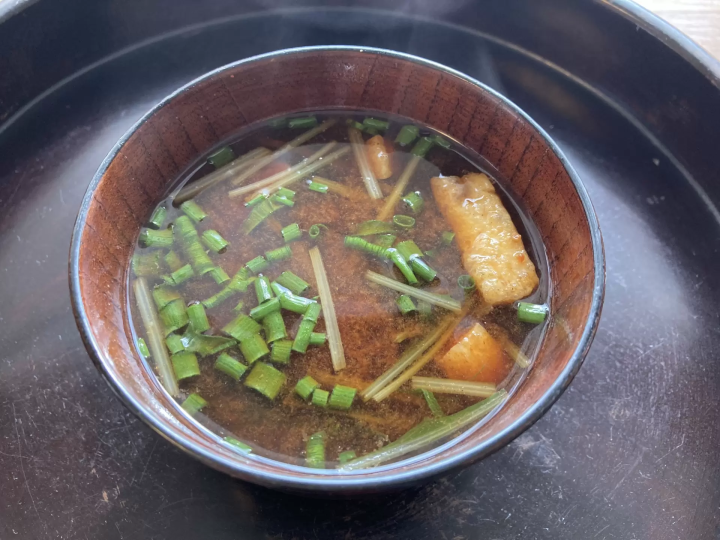
If you've visited Japan, chances are you've tried miso soup at least once. But first-time visitors to Nagoya are often surprised by one thing: its color!
A miso soup made by blending standard rice miso with the soybean miso commonly associated with Nagoya. Known as “Aka-dashi” (red miso soup), it is often served at sushi restaurants.
Why is it so dark?
The answer lies in the type of miso used in Nagoya cuisine: soybean miso (mame miso). Made from soybeans, salt, and water, it undergoes a long maturation process, resulting in a color much darker than most other miso varieties. Beyond its appearance, it is known for its rich umami flavor. In fact, the longer it is cooked, the more delicious it becomes. That's exactly why it is perfect for dishes such as miso nikomi udon and miso oden.
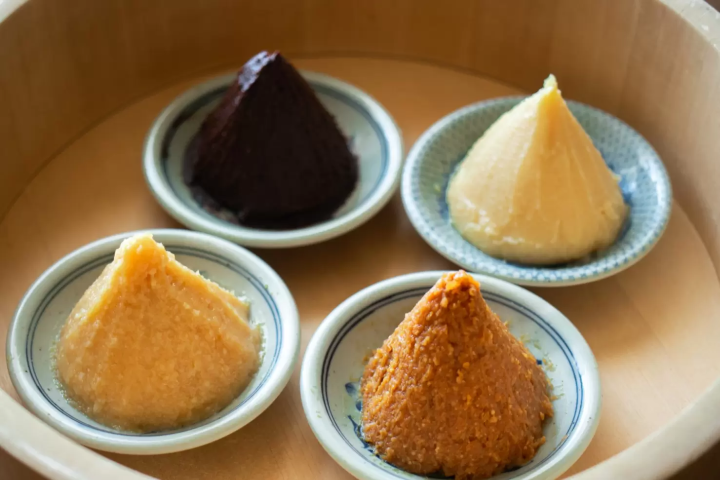
Miso is a traditional Japanese seasoning made primarily from rice, barley, soybeans, and salt. Differences in ingredients, production methods, and aging periods create a wide variety of flavors. The darker miso shown at the back is soybean miso.
If you're exploring Nagoya's fermented food culture, simply eating the dishes isn't enough. By learning about the history, culture, and daily lives behind each dish, you'll gain an even deeper appreciation for soybean miso.
When talking about Nagoya's soybean miso, it's impossible to ignore its connection to the samurai.
Aichi Prefecture, where Nagoya is located, is known as the "home of the samurai." It gave rise to many famous warriors, including Oda Nobunaga, Toyotomi Hideyoshi, and Tokugawa Ieyasu, who helped unify Japan. During the Warring States period, soybean miso was valued in this region as a highly preservable food and is said to have served as an important source of nutrition during military campaigns.
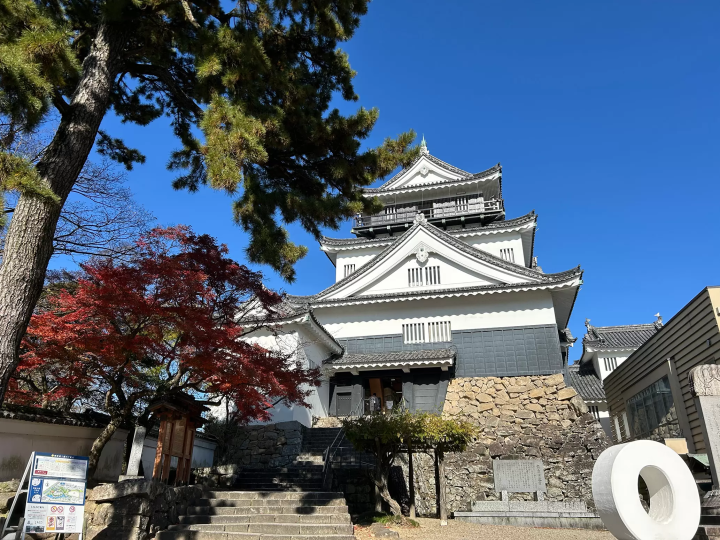
Okazaki Castle, said to be the birthplace of Tokugawa Ieyasu.
Among these historical figures, Tokugawa Ieyasu, who established more than 200 years of peace, is said to have been particularly fond of soybean miso. Known for his focus on health, he lived to the age of 75 in an era when average life expectancy was around 37 to 38 years. Some even say he regarded soybean miso as an essential food and closely protected its production methods from being shared outside the region.
Of course, we cannot claim that samurai were strong simply because they ate soybean miso. However, understanding that this long-lasting and nutrient-rich food supported warriors through years of conflict offers a fascinating new perspective on miso.
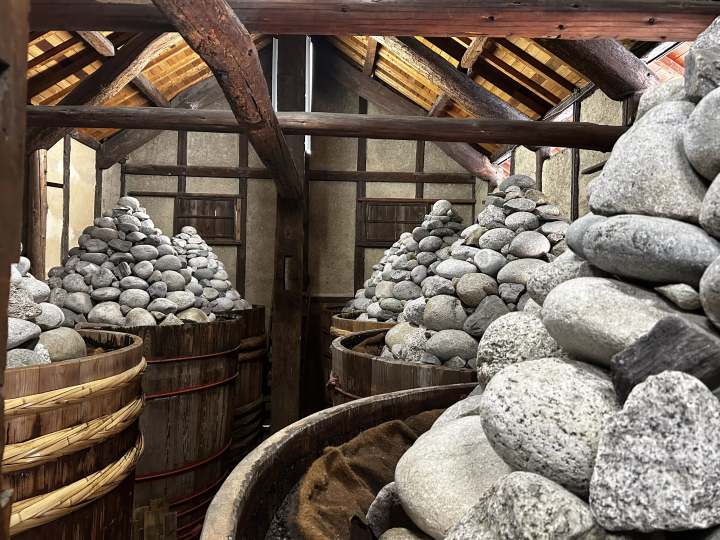
Hatcho Miso from Okazaki (Maruya Hatcho Miso), aged for approximately three years under a stack of stones weighing as much as three tons.
And this food culture did not end with the samurai era. Soybean miso brewing continued in Nagoya and eventually evolved into what is now known as Nagoya Meshi, Nagoya's distinctive food culture.
The next time you enjoy a miso dish in Nagoya, take a moment to reflect on a culinary tradition that has endured for more than 400 years.
The appeal of soybean miso goes far beyond making miso soup. In Nagoya, it shapes the character of entire dishes.
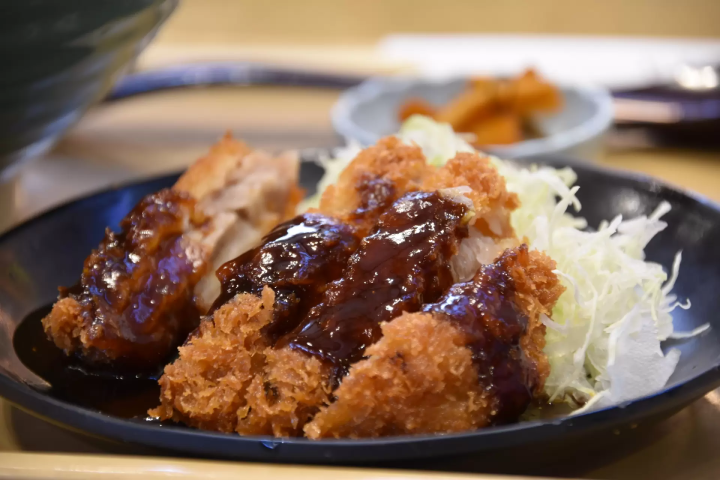
Even if you think soybean miso tastes a little strong, adding sweetness can completely transform it. That's why miso katsu, one of Nagoya's signature dishes, is the perfect introduction. Crispy pork cutlets are generously topped with a sweet and savory sauce made from soybean miso. Every restaurant has its own take on the sauce, making it fun to compare different versions.
460-0008 3-4-110 Sakae, Naka-ku, Nagoya, Aichi Prefecture
Founded in 1949, Ajidokoro Kano is the birthplace of Nagoya's local gourmet miso katsu (pork cutlet with miso sauce). Miso katsu originated from an idea of the previous owner, who was inspired by the sauce in tendon (tempura rice bowl). According to him, "If you can make a tempura rice bowl with soy sauce, you should be able to do the same thing with miso.'' Since then, we have been using Hatcho miso from Nagoya.
The current second-generation owner, Norio Sugimoto, noticed immediately after taking over the shop that there was a difference in the number of customers in the summer and winter. He works hard to make miso cutlets that are easy to eat in any season. This is done by adjusting the miso flavor daily depending on the climate and temperature.
They are so particular about this process that they even ask the brewery that makes the bean miso to cooperate with them. "I would like you to take the miso from the end of the barrel where the soybean miso is stored,'' he requested while working intently on making the miso katsu.
You would think that the fried cutlet would be finished with a miso sauce, but the cutlet is simmered in the miso. This step allows the miso to seep into the batter, resulting in a juicy and flavorful miso cutlet.
When you eat it, the flavor of miso gradually spreads in your mouth, and you can directly feel the texture of the cutlet. The sweet miso sauce goes well with the white rice and egg, and you'll find yourself eating intently.
Ajidokoro Kano serves the most delicious miso katsu based on the mood of the moment. Please come to the store where miso katsu originated and enjoy exquisite products that are constantly evolving.
Okazaki Kakukyu Hatcho Village (Restaurant directly operated by K...
69 Hacchocho, Okazaki City, Aichi Prefecture, 444-0925
This restaurant is operated by Kakukyu Hatcho Miso, the brewery of Hatcho miso.
It's located on the Kakukyu premises, so you can stop by after a factory tour.
Why not try some of the carefully prepared dishes made by a brewery that knows everything about Hatcho miso?
500-8878 Gifu Prefecture , Gifu City City, Kamurocho 1-39 Rembrandt Bu...
Founded in 1963, Misokatsu Sanwa is now run by second-generation owner Atsuko Nagaya, who carries on her father’s legacy. She learned the art of cooking by carefully observing her father’s every move, determined not to disappoint the customers who remember the original flavors.
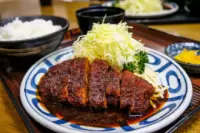
The restaurant’s most popular dishes are the Thick-Sliced Loin Misokatsu Set and the Fillet Misokatsu Set, both served with rice, miso soup, a generous portion of shredded cabbage, and pickles.
At Misokatsu Sanwa, the cutlets are generously drenched in miso sauce — almost like a soup. “My father believed that people wouldn’t enjoy it if it wasn’t completely covered in sauce, and I’ve continued that tradition,” says Nagaya. The signature sauce is made using miso from Imokei, a brewery in Gifu City.
For the finishing touch, a sprinkle of Japanese pepper adds a sharp, fragrant accent. The pepper gives the misokatsu a refreshing kick, balancing the richness of the sauce and enhancing the juicy flavor of the cutlet. The slightly sweet and savory miso sauce makes the rice and cabbage disappear in no time.
The restaurant operates in two sessions — a lunch session starting at 11:15 AM and a dinner session starting at 5:30 PM, with a break in between. Since they close early once the rice and miso soup run out, it’s best to arrive early to ensure you don’t miss out.
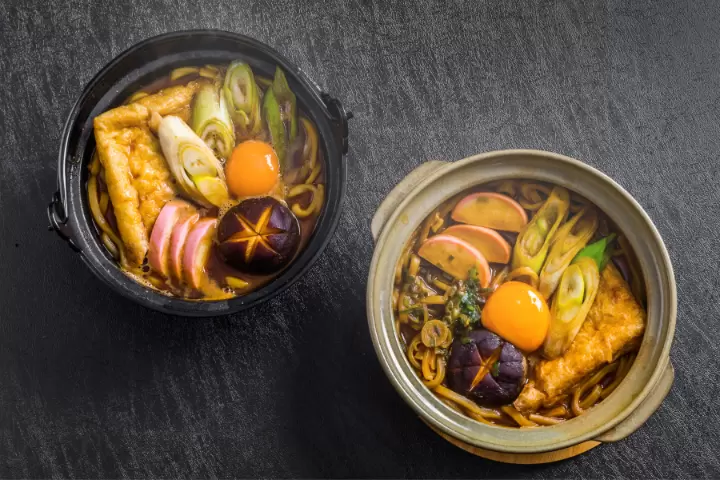
Another must-try dish is "miso nikomi udon". Even after simmering in a clay pot over high heat, the bold flavor of soybean miso remains intact, a quality unique to this style of miso. Specially made noodles are cooked and served piping hot.
Hojicho 1-5, Tokoname City, Aichi Prefecture, 479-0827
This long-established udon restaurant was founded in Showa as "Asahiya." The distinctive triangular building, surrounded by roads on three sides, eventually came to be known as "Sankaku Udon." Over time, the restaurant changed its name to "Sankakuan," and today the third generation owner continues to preserve the traditional flavor.
The smooth, chewy udon noodles attract not only local regulars but also visitors from far and wide. Be sure to try the flavorful ramen, which is flavored with the aroma of horse mackerel and bonito broth, showcasing the skill of the udon chef.
464-0854 5-9-2 Okute, Chikusa Ward, Nagoya City, Aichi Prefecture
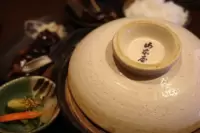
Yamamotoya is a long-established misonikomi udon restaurant that has been loved by many people in and around Nagoya since it was founded in 1925 in Osu, Nagoya. It continues to preserve the traditional taste of Nagoya that has been passed down since the Taisho era.
The fermented seasoning miso is made from Hatcho miso from a long-established miso brewery, and is blended with several other types of miso, including the local specialty white miso, using a unique method, and then slowly simmered until it becomes glossy. This exquisite gourmet dish combines the dashi stock carefully prepared for the stewed udon noodles early every morning with the udon noodles, which are all handmade and well-mixed with the miso, giving them a unique texture.
A day at Yamamotoya begins with the chefs preparing miso while thinking of their customers. They start early in the morning, before the sun has even risen, and work with the miso, dashi stock, and other ingredients they have procured, feeling the humidity of the day's weather and the difference in the moisture content of the ingredients.
Then, they cook the ingredients slowly and carefully, thinking about the guests who will be visiting that day.
This is a tradition that has been passed down through five generations of Yamamotoya since the Taisho era. Please come to Okute Yamamotoya to enjoy this traditional taste.
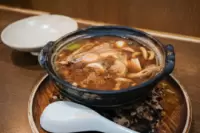
460-0008, 3-12-19 Sakae, Naka-ku, Nagoya, Aichi Prefecture
At Yamamotoya Sohonke Honke, you can enjoy miso nikomi (stewed) udon, a signature Nagoya dish. It is an exquisite gourmet dish that combines fermented seasoning miso, carefully prepared dashi stock, and chewy udon noodles.
Yamamotoya Sohonke was founded in 1925. It will turn 100 years old in 2025.
Yamamotoya Sohonke's miso nikomi udon is characterized by its chewy texture. The product is served simmering with a satisfying texture. Apparently, some customers who don't like hard noodles choose not to eat them right away, but rather let them steam for a while with the lid on.
When slurping a mouthful of noodles, you can sense the wonderful elasticity and flavor of noodles that have absorbed just the right amount of soup. It has a rich wheat aroma, so it feels like you're eating wheat rather than udon.
The original blended miso is so addictive that you can gulp it down after finishing the noodles and toppings. Once the umami of the ingredients and the noodle flavor have been transferred to the soup, you'll feel like it would be a waste to leave it behind.
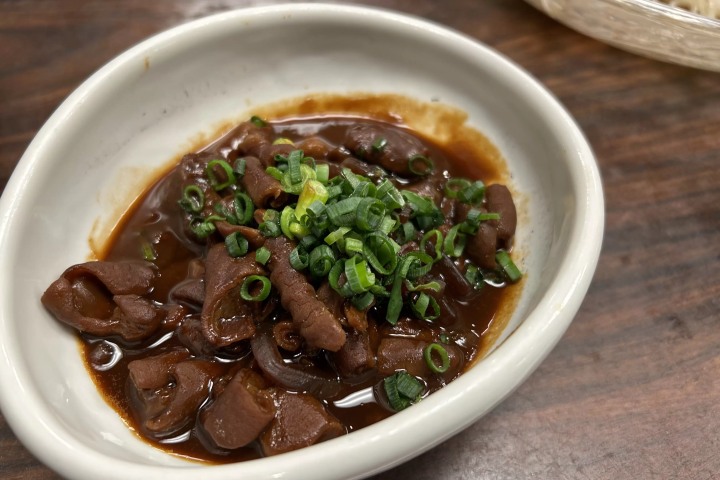
In addition, the beef tendon, which can be ordered from just one stick, has a different taste from the miso nikomi udon even though it is made with the same miso. The beef tendon has a smooth texture with a hint of sweetness, and the melt-in-your-mouth texture and rich aroma of miso are irresistible. It pairs well with rice and udon, making it a must-order dish.
You can place orders from 11:00 to 15:30. It is closed on Tuesdays and Wednesdays, so don't forget to check the regular holidays when visiting. (*Operating hours are subject to change if it is a holiday)
There's even more to discover, including miso oden, doteni (slow-simmered beef tendon stew), and miso dengaku. In Nagoya, the rich umami of soybean miso is used in different ways, poured over dishes, simmered into stews, or served as a dipping sauce.
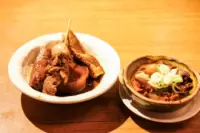
〒460-0003 3-18-18 Nishiki, Naka-ku, Nagoya, Aichi Prefecture Prefect...
Nishiki is a representative downtown area and business district of Nagoya. Nagoya Dai Sakaba Daruma stands proudly at the entrance to Nishiki.
Nishiki is a lively area with a wide variety of people coming and going even on weekdays, offering various attractions such as tourism, business, and entertainment. Nagoya Dai Sakaba Daruma opened in 2008 for people visiting Nishiki to enjoy Nagoya food. It has been loved as a large izakaya with 4 floors and a total of nearly 200 seats.
The store's greatest appeal is that you can enjoy Nagoya's famous gourmet dishes all at once, including "Miso Oden," "Grilled Chicken," and "Miso Dote Nikomi." In addition, the various menus at "Daruma no Obanzai" are perfect for enjoying Nagoya food little by little as a group while enjoying beer and sake.
The restaurant's favorite is miso oden, which uses miso from Aichi Prefecture. The oden is simmered in a huge pot inside the store and soaked in flavor, making it pair perfectly with beer!
The rich and creamy miso clings to the ingredients, allowing you to directly taste the umami of the vegetables and meat simmered together.
Nagoya Dai Sakaba Daruma has a friendly atmosphere that will make you smile just by visiting. This is a restaurant you should check out as a spot for enjoying Nagoya food in one go.
TOFU DENGAKU KUSUMURA (Nagoya Airport/NGO)
479-0881 1-1 Centrair, Tokoname City, Aichi Prefecture, Terminal 1, 4t...
Sharing the regional cuisine of Aichi prefecture "Nameshi Dengaku" with the world!
Kusumura, a tofu specialty store established in 1918, offers "Nameshi Dengaku" with a focus on tofu and quality ingredients. Open for dining as well as buying tofu products.
Once you've experienced the deliciousness of soybean miso, it's time to visit the breweries where it is made.
To truly understand soybean miso, consider visiting a brewery in person. Beyond the birthplace of Haccho Miso, Aichi Prefecture is home to many soybean miso breweries.
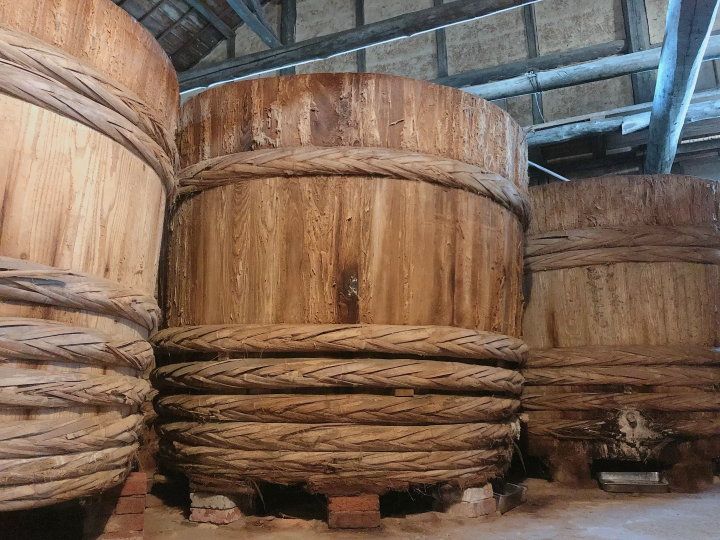
A brewery tour allows visitors to experience the time, craftsmanship, and dedication behind the product, things that cannot be understood by tasting alone. Enjoy a miso dish, then visit the brewery where the miso is made. The aroma of the brewery and the sight of traditional wooden barrels reveal that soybean miso is much more than a seasoning. It is a living part of the region's history and culture.
Haccho Miso originated in Okazaki City, Aichi Prefecture. Its name comes from the fact that it was produced approximately eight cho (about 870 meters) from Okazaki Castle, the birthplace of Tokugawa Ieyasu.
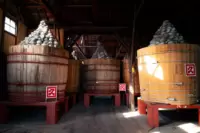
The two historic producers, Maruya Hatcho Miso and Kakukyu Hatcho Miso, have operated since the Edo period. One of their most impressive sights is the enormous wooden barrels topped with towering stacks of stones. Made from soybeans, salt, and water, soybean miso is aged for approximately three years.
Both breweries offer free tours without reservations, making them easy for travelers to visit.
52 Hacchocho, Okazaki City, Aichi Prefecture 444-0925
Founded in 1337, it is located approximately 870 meters west of Okazaki Castle along the Tokaido road.
The traditional techniques and manufacturing methods of Hatcho miso, which began in the Edo period, continue to be strictly followed to this day. This has allowed the deep, historic, and original flavor of Hatcho miso to be passed down to the present day. There is a direct sales store where you can purchase a wide range of products, including Hatcho miso and sweets made with miso. You can also take a tour of the brewery to learn about the traditional miso manufacturing methods.
Kakukyu Hatcho Miso (Hatcho Miso Village)
69 Hacchocho, Okazaki City, Aichi Prefecture, 444-0925
While it was founded in the early Edo period, its history is said to date back to the Sengoku period. As a long-established Hatcho miso store, it continues to use traditional methods to preserve the flavor of Hatcho miso to the present day. In addition to touring the storehouse to see how it is made, there is also a restaurant where you can taste dishes made with Hatcho miso on the spot.
Rows of wooden barrels that have been in use for over 100 years (Nakasada Shoten).
Nakasada Shoten in Taketoyo Town is a brewery founded in 1879. Using domestic soybeans and salt, it continues to produce naturally brewed miso and tamari soy sauce. Learning about tamari, which is said to have originated during soybean miso production, helps visitors understand how miso and soy sauce are deeply connected through the region's fermentation culture.
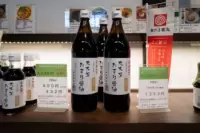
51 Komukae, Taketoyocho, Chita, Aichi, 470-2343
This region, blessed with a warm climate and quality water, inspired a conviction that excellent miso and tamari could be produced using these resources. Thus, a miso and tamari brewery was founded in June 1879.
Tamari soy sauce is said to have originated from the liquid that seeped out during the soybean miso-making process, accumulating at the bottom of the barrel before being collected.
It can be considered the origin of soy sauce. Its characteristics include a lower salt content compared to other soy sauces and a rich, full-bodied flavor.
Since its main ingredient is soybeans, it is rich in protein and glutamic acid, an essential amino acid for the human body and a component of umami flavor.
Made with only domestic soybeans and salt, they have been producing traditional miso for 140 years. The brewery is committed to natural fermentation, drawing out a rich umami flavor through long-term aging without any unnecessary additives.
Miso-making classes and brewery festivals are also popular.
Imokei in Gifu City offers brewery tours in English. The brewery combines traditional production methods with modern management systems, creating a unique blend of old and new. Its well-stocked shop is worth visiting even if you are only interested in shopping.
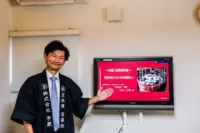
500-8234 Gifu Prefecture Gifu City Prefecture, 2-14-15 Imoshima
Founded in 1877, Imokei is a long-established manufacturer of bean miso and tamari soy sauce.
Imokei’s bean miso is crafted using a hybrid method that blends the unchanging traditions of skilled craftsmanship and wooden barrel fermentation with the changing innovations of modern technology. For example, while machines handle the sorting and steaming of soybeans, the temperature of the koji is carefully monitored using a smartphone. After the koji mold is applied, the fermentation and aging processes take place in traditional wooden barrels, with skilled artisans making meticulous adjustments day and night, carefully watching how the koji develops.
“Making bean miso is like raising children,” says Yoichiro Kikata, the President and Representative Director of Imokei, with a smile.
Imokei offers factory tours where visitors can learn about the miso and soy sauce-making processes. Guests can also tour the storage warehouse to see the massive wooden barrels used for fermentation. Some tours even include a miso ball-making workshop, making it a great experience for parents and children alike.
A direct sales store is located about a 5-minute walk from the warehouse, offering a wide variety of Imokei products. Alongside their signature bean miso and tamari soy sauce, the store sells specialty products like pickling miso and dressing sauces. Product descriptions are also available in English, making it easy for international visitors to shop.
Sato Jozo, located just 20 minutes by taxi from Nagoya Station, offers tours of its naturally brewed soybean miso brewery with traditional wooden barrels. Visitors can also enjoy bread, sweets, and other products made using its miso.
2743 Yasumatsu Agata, Shippo-cho, Ama, Aichi Prefecture, 497-0011
Founded in 1874, this long-established miso and soy sauce brewery in Ama, Aichi Prefecture, preserves the traditional wooden barrel brewing method and continues to produce soybean miso and tamari soy sauce that takes advantage of the "brewery’s unique microbial character" created by the yeast and lactic acid bacteria that live in the brewery. You can learn about fermentation culture and miso-making while touring the charming brewery, and also enjoy a miso ball making workshop. After the workshop, you can purchase fermented products such as Shippo Miso and soy sauce at the direct sales store.
As your journey comes to an end, consider bringing some soybean miso home as a souvenir.
The best choice is soybean miso itself. Once back home, you can use it in miso soup, stir-fries, meat dishes, and more to relive the flavors of your trip. The article below introduces simple soybean miso recipes that go beyond Japanese cuisine. Be sure to give them a try after returning home.
If cooking sounds a bit challenging, processed products made with miso are also excellent souvenirs. Aji no Kura Taketoyo offers a wide range of products made with soybean miso and tamari soy sauce from Taketoyo Town and the Chita Peninsula. There are even sweets such as miso castella cake that make wonderful gifts.
Roadside Station Ajinokura Taketoyo
11-1 Chushiroda, Taketoyo-cho, Chita, Aichi, 470-2512
This shop sells miso and tamari products from six breweries that continue to preserve traditional brewing methods: Izuman Brewery, Ito Shoten, Marumata Shoten, Nakasada Shoten, Kakuto Brewery, and Minamigura Shoten.
After strolling through the town of miso breweries and exploring its brewing history, be sure to pick up some of the products shaped by that history as souvenirs.
There are also many local and seasonal flavors available, from locally grown vegetables, fruits, and rice to traditional Japanese sweets, original desserts, and bread.
At the food court, you can enjoy light snacks such as mitarashi dango and yakisoba made with Taketoyo's miso and tamari, as well as seafood dishes prepared with fresh catches from the Chita Peninsula.
In Nagoya City, Pipitto! Aichi is conveniently located and offers a variety of fermented seasonings from Aichi, including soybean miso, tamari soy sauce, white soy sauce, and vinegar. It's an ideal place for last-minute souvenir shopping.
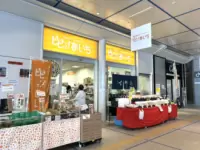
B1-5, Oasis 21, 1-11-1 Higashisakura, Higashi-ku, Nagoya, Aichi 461-00...
Located in the heart of Nagoya’s Sakae district, Pipitto! Aichi is a must-visit destination for travelers who want to efficiently explore Aichi’s rich food culture.
With its excellent accessibility, it is easy to stop by while sightseeing or shopping, and experience a wide range of Aichi’s unique flavors in one place. One of the store’s biggest attractions is its extensive selection of Aichi’s renowned brewed seasonings, including mame miso (soybean miso), tamari soy sauce, white soy sauce, and vinegar. These products allow visitors to take home the authentic flavors of a region deeply rooted in fermentation culture.
The store also offers a wide variety of products, including fresh vegetables from across Aichi Prefecture, processed fish and meat products, sweets, dried foods, pickles, local sake, and prepared dishes, making it an ideal place to shop for Aichi food souvenirs.
A tourism brochure corner is also available, where visitors can gather regional travel information. In addition, special events and seasonal promotions are regularly held, making each visit an opportunity to discover something new about Aichi.
Please note that gift bags and souvenir packaging are limited. It is recommended that visitors bring their own bag or eco-bag for purchases. Plastic shopping bags are available at the register for ¥15 each (tax included).
And if you forget to buy souvenirs, don't worry! Chubu Centrair International Airport also offers a selection of soybean miso products.
Meihinkan (Nagoya Airport/NGO)
479-0881 1-1 Centrair, Tokoname City, Aichi Prefecture, Terminal 1, 3r...
A variety of Japanese confectionery representing the Chubu area. Well-known and popular sweets such as Akafuku, Bankaku Sōhonpo's Yukari, Ryoguchiya Korekiyo's Senari, and more. We have a wide selection.
Enjoy miso katsu, savor miso nikomi udon, visit breweries to see how soybean miso is made, and bring home your favorite product. What may first appear to be nothing more than a dark-colored miso can, through seeing, touching, smelling, and tasting, become a gateway to Nagoya's history, culture, and everyday life.



![[Recipe Included] Enjoy Nagoya even after your trip: A guide to using white soy sauce, Mikawa mirin, and soybean miso paste.](https://resources.matcha-jp.com/resize/200x2000/2026/06/27-266117.webp)