Ishikawa Prefecture is home to many traditional crafts with long histories, both in Kanazawa and the surrounding areas. This article introduces three crafts from the Hakusan and Kaga areas: Kaga ganpi paper, a type of handmade washi; Kutani ware, known for its colorful decoration; and Yamanaka lacquerware, renowned for its woodturning and lacquering techniques. KOGEI is a Japanese term for arts and crafts that combine traditional techniques, skilled craftsmanship, and artistic expression.

-
Table of Contents
- 1. Kato Washi | Hand-making experience of "Kaga Ganpi Paper," a tradition dating back to the Edo period.
- 2. KAM Nomi City Kutani Ware Museum | Experience the vibrant world of Kutani ware.
- 3. CRAFTOUR | Workshop tour to visit Yamanaka lacquerware artisans
- Discover Ishikawa's KOGEI: See, Learn, and Experience Traditional Japanese Crafts.
Ishikawa Prefecture boasts numerous traditional craft centers with long histories, not only in Kanazawa but also in its surrounding areas. These include Kaga Ganpi paper, a type of handmade Japanese paper; Kutani ware, characterized by its vibrant paintings; and Yamanaka lacquerware, where the skills of woodturning and lacquering are passed down through generations. All of these crafts have developed in close connection with the local nature and way of life. This time, we will introduce three spots in the Hakusan and Kaga area. Visit workshops to observe artisans at work, or try your hand at creating your own unique piece. Let's embark on a journey to see, learn about, and experience traditional crafts.
1. Kato Washi | Hand-making experience of "Kaga Ganpi Paper," a tradition dating back to the Edo period.
Washi paper making nurtured by the pure waters of the Tedori River
Located in Kawakita Town , Ishikawa Prefecture , "Kato Washi" is a workshop that produces " Kaga Ganpi Paper," a traditional Japanese paper that has been made since the Edo period. The papermaking techniques have been passed down since the time of the first generation, Ichibei Kato, and the current owner, Makiko Kato, is the ninth generation. The history of papermaking, which is said to have started in 1783, spans more than 240 years.
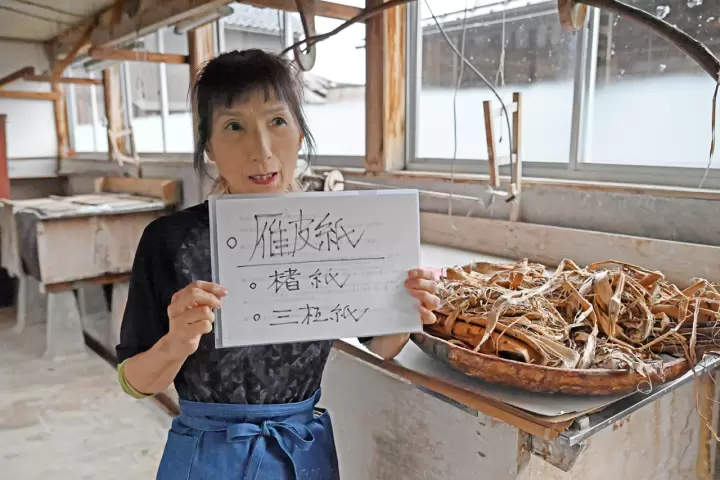
The Tedori River, which originates in the mountains around Mount Hakusan, flows near the workshop. According to Makiko Kato, a monk visiting from Kyoto is said to have recognized the area’s abundant water and naturally growing papermaking materials and encouraged local people to make washi here. These natural resources have supported papermaking in the region for generations.
Kaga Ganpi paper, known as the "king of washi paper."
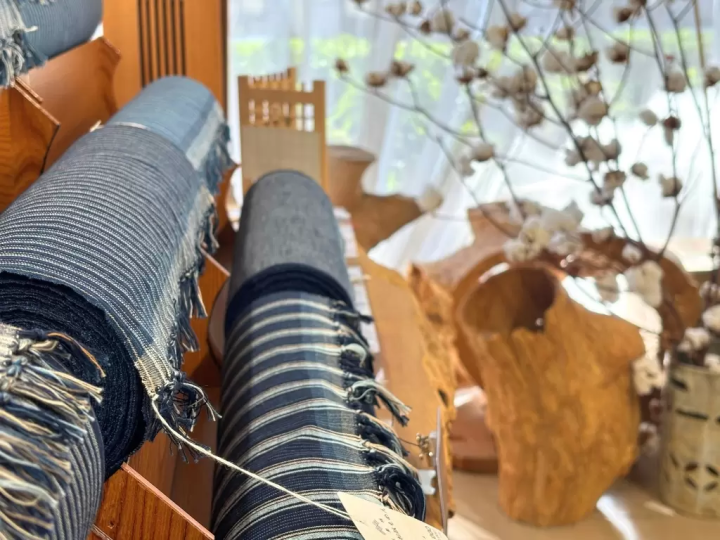
Traditional Japanese washi is mainly made from three plant fibers: kozo (paper mulberry), mitsumata (Edgeworthia chrysantha), and ganpi (Diplomorpha sikokiana).
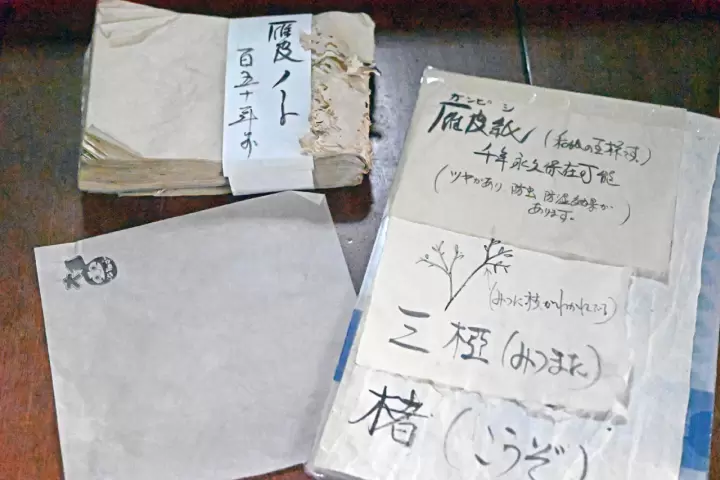
Kato Washi specializes in ganpi paper, which is made from the bark of a deciduous shrub belonging to the genus Ganpi in the family Thymelaeaceae. Its fibers are very fine, making it strong even when thin, and resulting in a paper with a smooth surface and beautiful luster. It is also resistant to insect damage and discoloration, making it suitable for long-term storage, and is therefore known as the "king of washi paper."
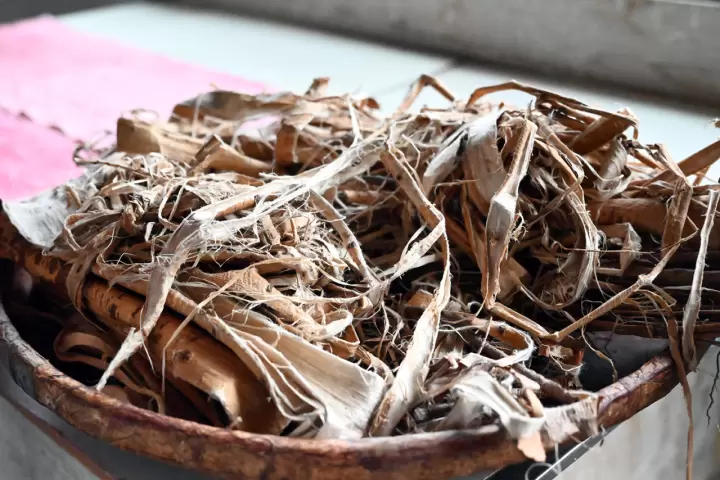
Gampi is a deciduous shrub that grows wild in the mountains and fields, and it is difficult to secure a large quantity of its raw material. At the workshop, they use fibers extracted from the bark of ganpi trees that grow wild in the mountains, and painstakingly make paper using this method. Gampi paper has been used since ancient times as paper for preserving important records, and even today it is used as paper for restoring cultural properties, calligraphy paper, and printmaking paper.
Traditional techniques that have supported Kanazawa gold leaf behind the scenes
An essential part of understanding the history of Kato Washi is its relationship with Kanazawa's traditional craft, "gold leaf." Gold leaf is made by hammering gold to an astonishingly thin thickness of about 1/10,000th of a millimeter. "Hakuuchigami" is the paper used to hold the gold in place during this process, withstanding the repeated hammering while ensuring it is thin and uniform.
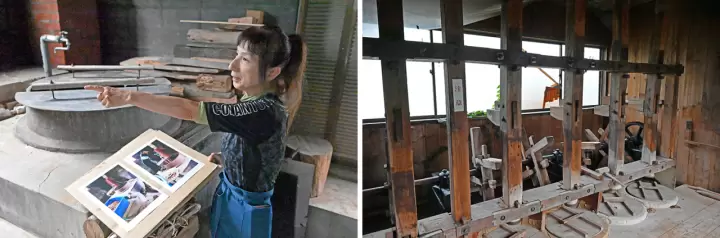
Kato Washi has been manufacturing gold leaf beating paper since the late Taisho era, playing a vital role in the development of Kanazawa gold leaf. Although the demand for gold leaf beating paper decreased as the types of paper and techniques used in gold leaf production changed, the workshop has explored new applications. They are now working on creating products that suit modern lifestyles, such as washi paper bags, accessories, and interior goods.
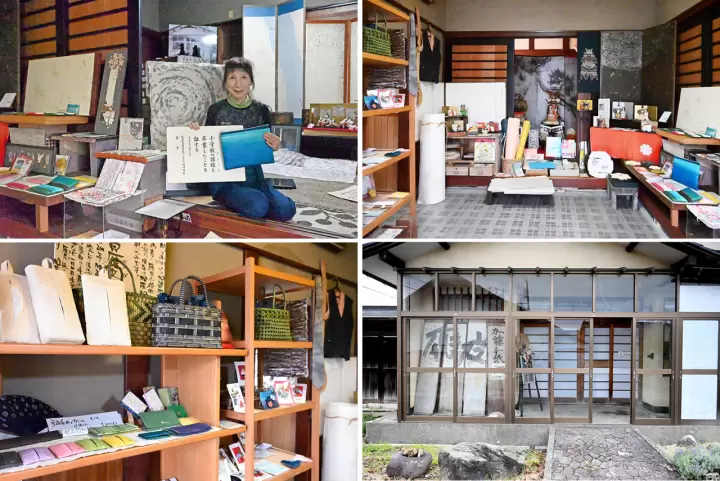
Hands-on Workshop | Create Your Own Handmade Washi Paper
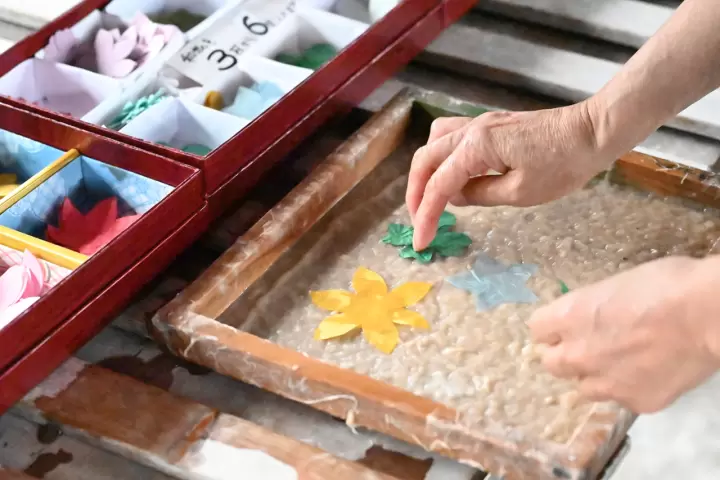
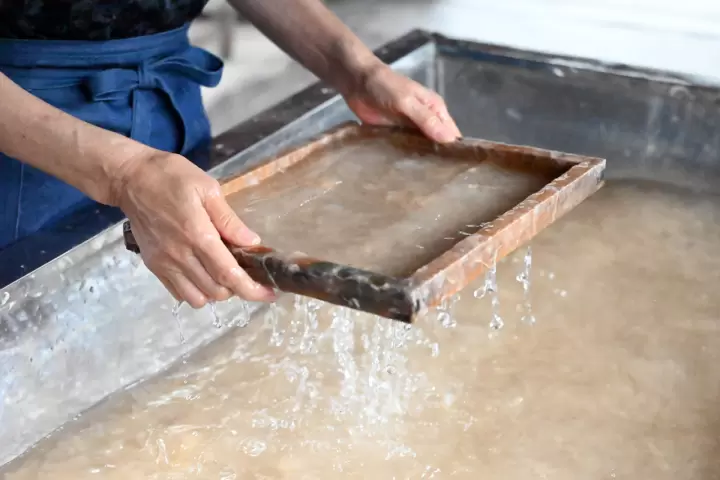
At Kato Washi, you can learn about the traditional Japanese papermaking process while observing the artisans at work. There are many steps involved in making paper, from extracting fibers from tree bark, boiling them, soaking them in water, and loosening them. The technique of hand-making involves scooping up the fibers dispersed in water using a bamboo screen and finishing them to a uniform thickness.
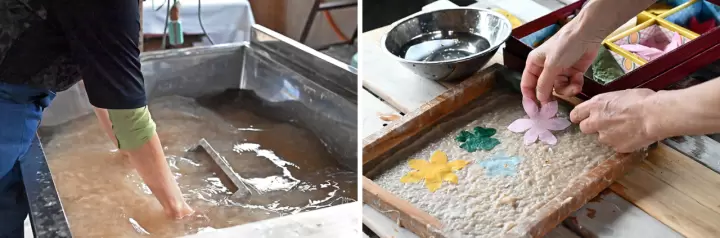
In the washi paper-making experience, you can try making original postcards and decorative paper using a pulp made from a mixture of three types of paper: ganpi, kozo, and mitsumata. The workshop also offers unique material combinations, such as using gold leaf. You can take your finished work home the same day, and after dewatering and partially drying the washi paper, stick it to a windowpane or similar surface to dry completely for a beautiful finish.
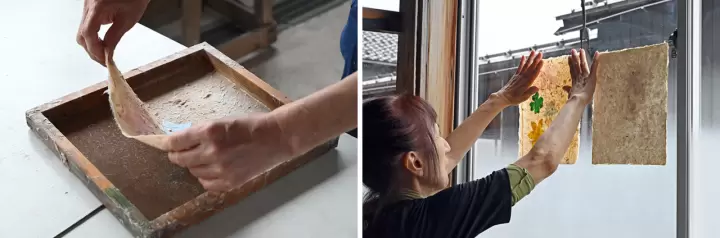
Workshop experiences Papermaking Experience 2,200 yen (1 sheet of colored paper) / Duration 1-2 hours *Reservations required by phone or email https://www.hot-ishikawa.jp/spot/detail_4971.html
Kato Washi 152-1 Nakajima, Kawakita-machi, Nomi-gun, Ishikawa Prefecture | Tel: 090-4689-6055 | Hours: 10:00–16:00 | Visits by appointment only.
2. KAM Nomi City Kutani Ware Museum | Experience the vibrant world of Kutani ware.
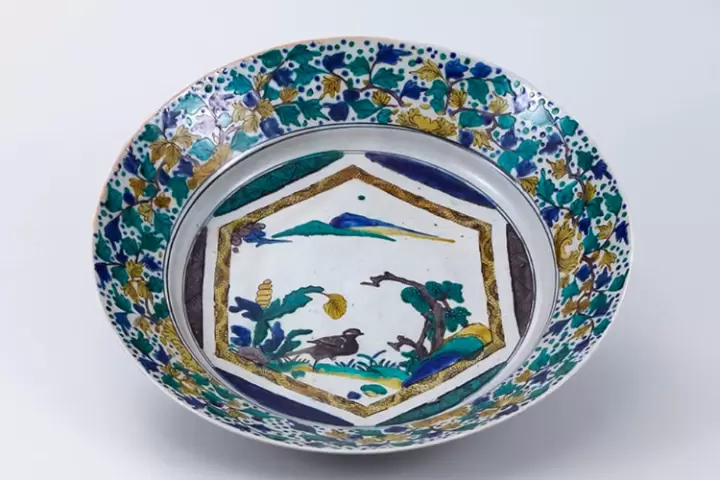
Experience the history and craftsmanship firsthand in the birthplace of Kutani ware.
Nomi City in Ishikawa Prefecture is one of the major production centers of Kutani ware, a traditional Japanese style of porcelain. Kutani ware is said to have originated in the 17th century in what is now Kaga City, Ishikawa Prefecture. It is known for its vivid colors and bold designs, particularly the five traditional Kutani colors: green, yellow, purple, red, and dark blue.
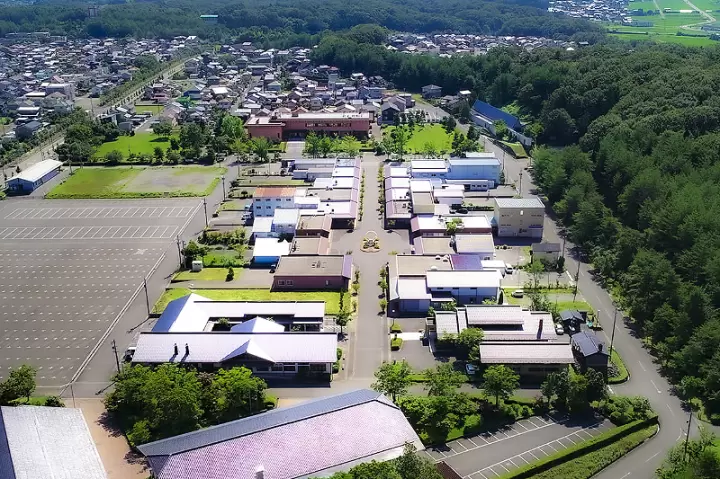
For those who want to learn about the history of Kutani ware, purchase pieces, or experience pottery making, we recommend "Kutani Pottery Village" in Nomi City. The vast grounds bring together Kutani ware workshops, shops, and museums, allowing visitors to experience the diverse charms of Kutani ware.
See, learn, and touch at KAM Nomi City Kutani Ware Museum.
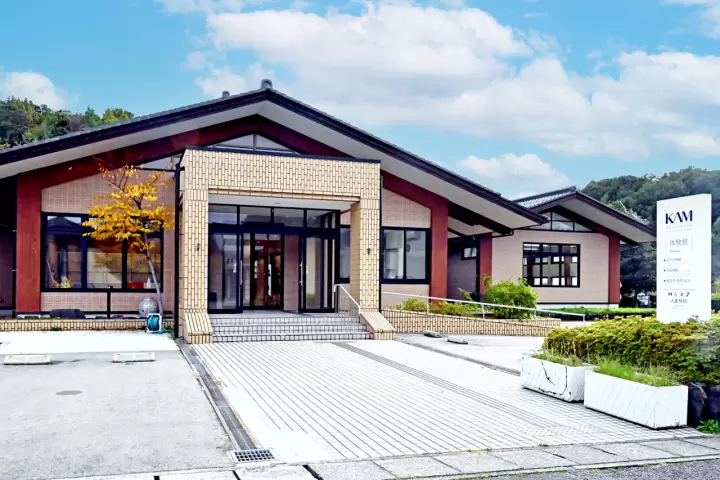
At the heart of Kutani Pottery Village is KAM Nomi City Kutani Ware Museum. Its facilities include Gosaikan, which introduces the history and masterpieces of Kutani ware; the Asakura Isokichi Memorial Museum, which displays works by the second-generation ceramic artist Asakura Isokichi; the Craftsmen’s Workshop, where visitors can see artisans at work; and the Experience Center, where visitors can try pottery painting and making.
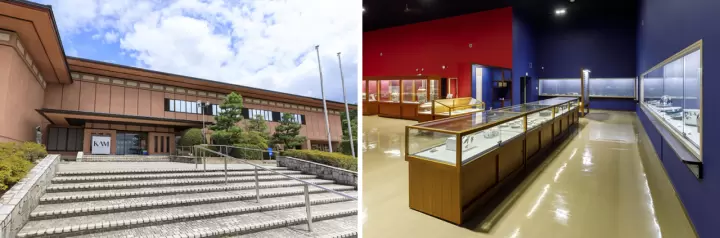
Gosaikan, one of the museums on the grounds, has five exhibition areas inspired by the traditional Kutani colors: green, yellow, purple, red, and dark blue. It displays masterpieces dating back to the Edo period and also holds special exhibitions.
The Asakura Isokichi Memorial Museum primarily exhibits works by the second-generation ceramic artist Asakura Isokichi, a Nomi City native who received the Order of Culture. The museum’s distinctive architecture and the adjacent 12.9-meter-tall Kutani Big Monument also make this a popular photo spot.

"KAM Nomi City Kutani Ware Museum & Craftsman's Workshop" is located in an area lined with Kutani ware specialty shops. Here, you can catch a glimpse of Kutani ware craftsmen at work and also purchase their pieces.
Visit the KAM Nomi City Kutani Ware Museum Experience Center to see a traditional climbing kiln.
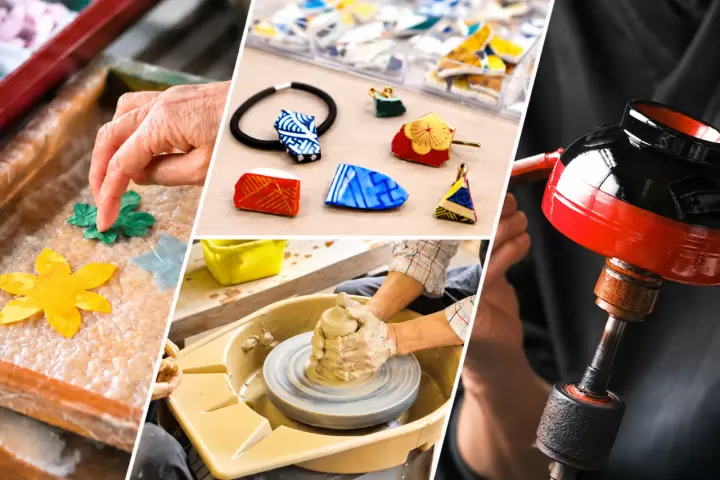
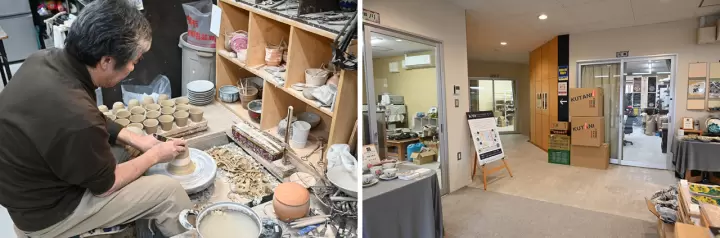
And there's another thing: the KAM Nomi City Kutani Ware Museum has an "Experience Center" where you can try your hand at pottery. Here, you can easily experience the joy of pottery. In addition to painting experiences and pottery making experiences using hand-building or a potter's wheel, they also offer pottery classes where you can learn pottery seriously.
And when you visit the experience center, you should definitely take a look at the traditional "climbing kiln" adjacent to the facility. A climbing kiln is a kiln that uses a slope to arrange multiple firing chambers in a stepped fashion. Firewood is burned from below, and the heat is sent to the firing chambers above to fire the ceramics. During the Edo period, multi-chambered climbing kilns were developed that increased thermal efficiency and made mass production possible.
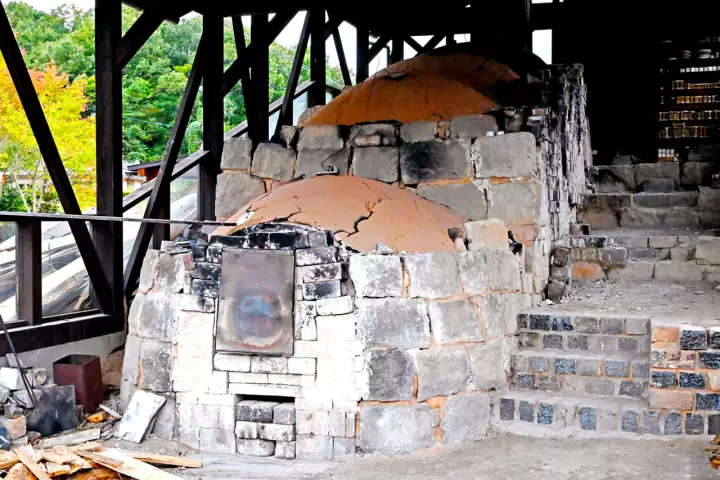
This climbing kiln is still in active use today, using firewood such as red pine as fuel and firing for a long time until it reaches a high temperature of approximately 1300 degrees Celsius. Although electric and gas kilns are now the mainstream, the climbing kiln is a valuable example that conveys the way pottery was made in the past.
Experience Workshop | Create your own unique Kutani ware by painting or using a potter's wheel.
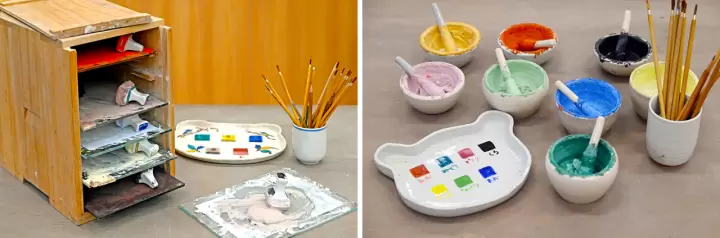
At the experience center, people of all ages, from children to adults, can enjoy pottery making. For beginners, we recommend the "painting experience," where you can freely draw patterns on pre-prepared pottery using Kutani ware paints. You can try out traditional Kutani ware color schemes or draw your favorite designs to create a one-of-a-kind piece.
The lobby's display cases are filled with a wide variety of tableware and blanks that can be painted, including Western and Japanese tableware, as well as items featuring popular characters. There are also types of tableware with pre-drawn outlines for painting, and types of plain tableware that you can paint freely.
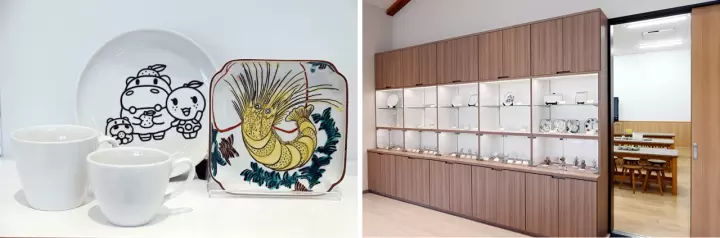
You can choose between traditional Kutani overglaze enamels and modern Western-style paints. The traditional palette features five Kutani colors: green, yellow, purple, red, and dark blue, producing the rich, glossy appearance associated with Kutani ware. The Western-style paints come in eight colors: blue, pink, black, green, red, light green, yellow, and gold.
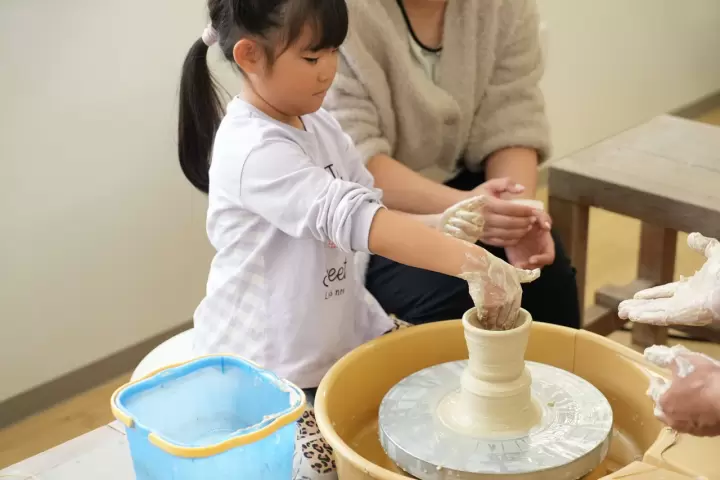
For those who want to enjoy pottery more seriously, we also recommend the "pottery making experience." You can shape clay by hand or create vessels using a potter's wheel. Expert instructors will teach you carefully, so even beginners can create wonderful works of art.
You can pick up your finished piece at the workshop at a later date, or have it delivered to you within Japan for an additional shipping fee. Painted pieces take about two weeks to fire, while pottery making takes about two months from bisque firing to glazing and firing. If you are staying in Japan for an extended period, please inquire about shipping to your hotel.
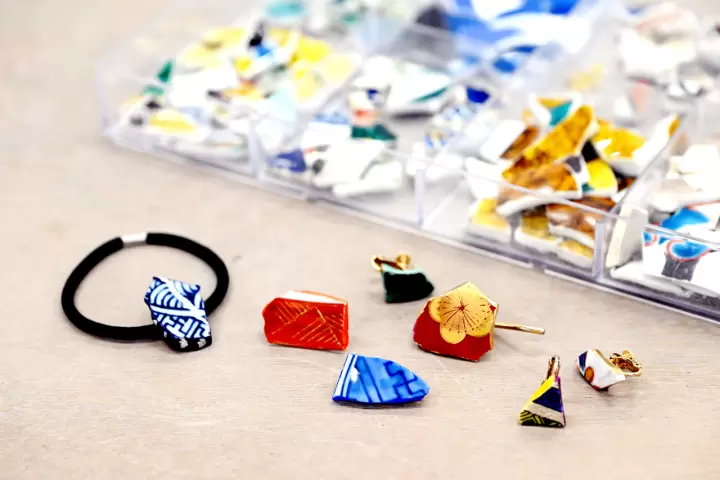
For visitors looking for a short activity or a souvenir they can take home the same day, the Kutani ceramic-shard workshop “Happiece” is a great option. Broken or chipped Kutani ware pieces that cannot be sold are repurposed into accessories and small items.
Workshop experiences Painting: approximately ¥900–¥2,000 / about 1 hour; Pottery making: hand-building ¥2,000, potter’s wheel from ¥2,500 / about 2 hours; Kutani ceramic-shard “Happiece”: ¥500 / about 30 minutes. Reservations required by phone or via the website: https://www.kutaniyaki.or.jp/about_museum/taiken.html
KAM Nomi City Kutani Ware Museum Experience Center 9 Minami, Izumidai-machi, Nomi City, Ishikawa Prefecture | Tel: 0761-58-6300 | Hours: 9:00–17:00 (last admission for activities: 16:00) | Closed: Mondays (or the next weekday if Monday is a public holiday), December 29–January 3 | Admission: Free to enter the Experience Center (separate admission fees apply to other museum facilities).
3. CRAFTOUR | Workshop tour to visit Yamanaka lacquerware artisans
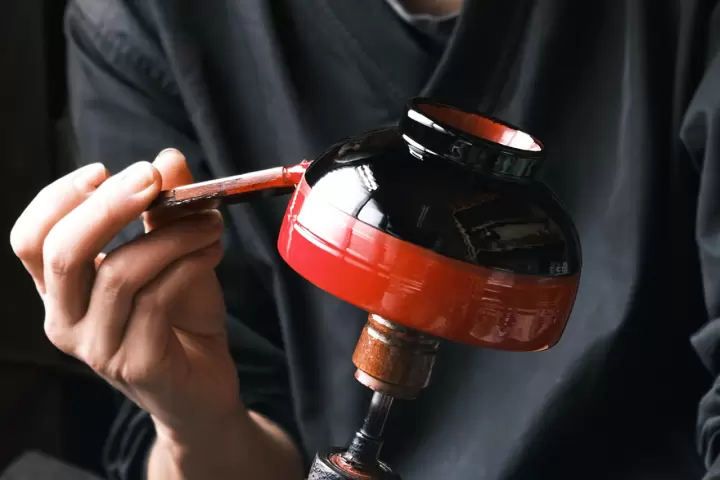
A tradition passed down in Yamanaka Onsen, a town known for its woodturning.
Yamanaka Onsen in Kaga City , Ishikawa Prefecture , is a production area for "Yamanaka lacquerware," which has a history of approximately 400 years. A characteristic of Yamanaka lacquerware is the advanced technique of "kijibiki," in which wood is rotated on a lathe and shaped with cutting tools. The resulting vessels showcase the beauty of the wood grain and feature thin, delicate shapes.
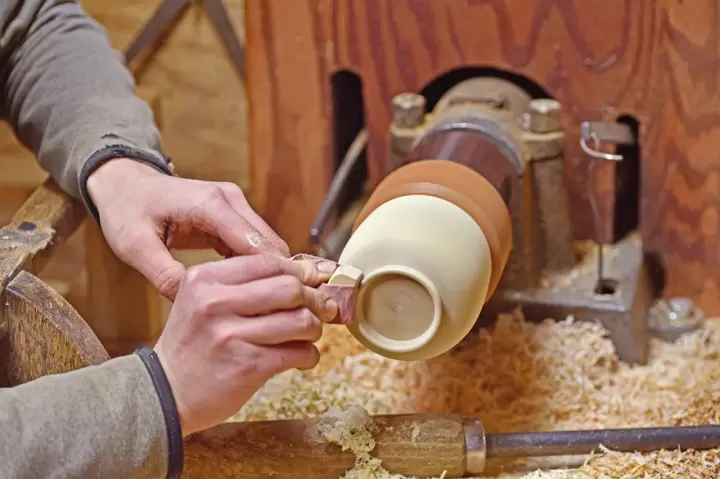
The creation of lacquerware involves many craftsmen, including woodworkers, lacquerers, and maki-e artists who apply decorations. A single piece of lacquerware is completed through the division of labor among these craftsmen, each possessing their own specialized skills.
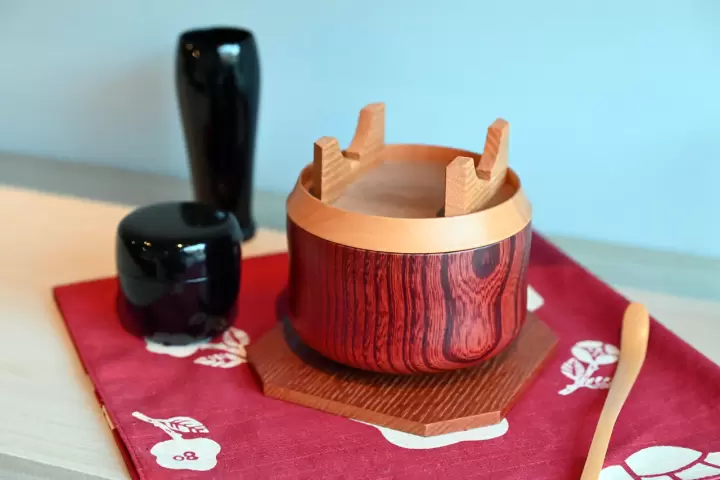
Visit the craftsman's workshop and hear their story directly.
CRAFTOUR offers an in-depth introduction to Yamanaka lacquerware craftsmanship. Its guided tours take visitors into workshops specializing in woodturning, lacquering, and maki-e (decorative lacquer techniques), where they can observe artisans at work and hear their stories firsthand.
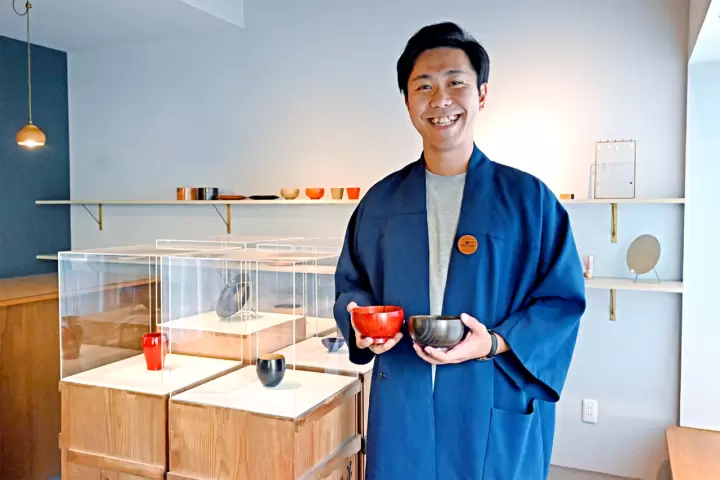
"Visitors find great value in being able to talk with the artisans," says guide Kenji Shinozaki. Shinozaki wanted to convey the charm of Yamanaka lacquerware, so he devised a concierge-like system to coordinate workshop visits and started the tours in 2021. Many participants come from overseas, and they visit not only to purchase finished products, but also to learn more about the culture and techniques behind them.
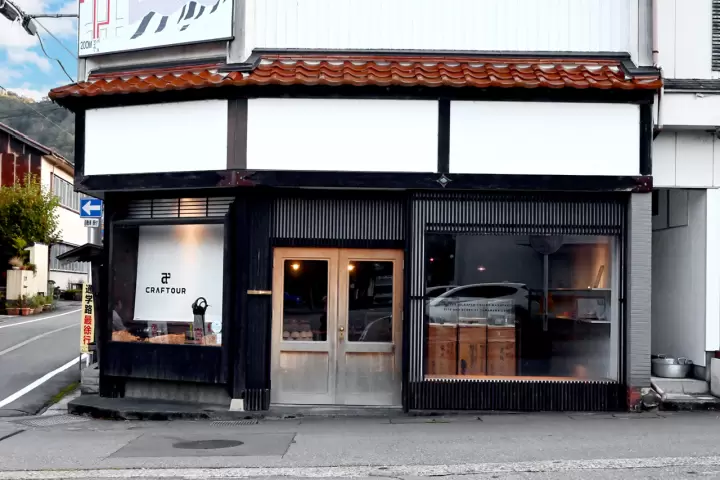
The CRAFTOUR shop is located at the entrance to the Yamanaka Onsen hot spring resort area, and tours depart from here. The shop also functions as a gallery and shop for Yamanaka lacquerware, displaying and selling items selected by Ms. Shinozaki that are suitable for modern living, primarily focusing on works from partner workshops that can be visited on the tours.
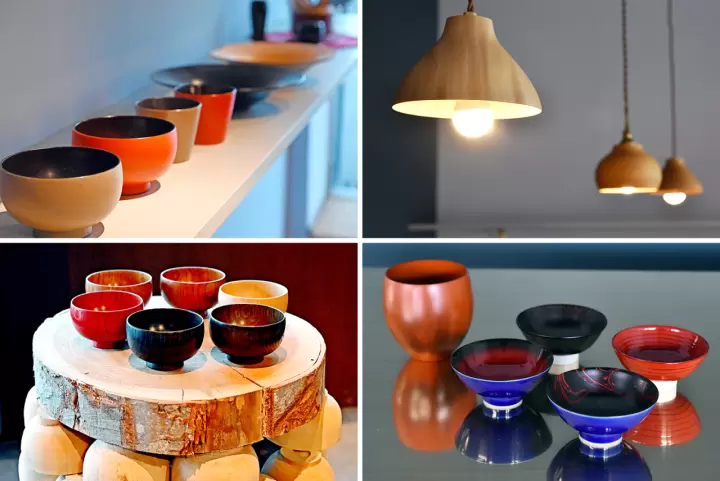
Experience Tour | An experience you can only get at the manufacturing site
The tour allows you to observe woodworkers shaping wood on a lathe, lacquerers applying lacquer with delicate handiwork, and maki-e artists adding decorations. CRAFTOUR partners with multiple workshops and coordinates visits to suit participants' interests.
The most popular course is the one where you can learn about the process of making Yamanaka lacquerware. You can experience techniques that you can't understand just by looking at the finished product, such as how the wood gradually takes the shape of a vessel and the unique texture created by applying multiple layers of lacquer.
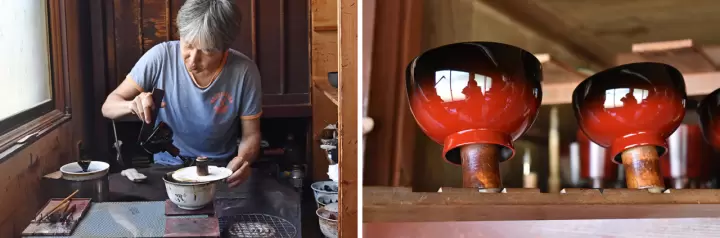
What CRAFTOUR values is not simply giving tours of workshops. They provide time for participants who want to talk in depth with the artisans, and allow those who want to enjoy the quiet atmosphere of the workshop to do so. "I believe my job is to match customers with artisans," says Shinozaki. The presence of the guide, who acts as a bridge between participants and artisans, enriches the experience.
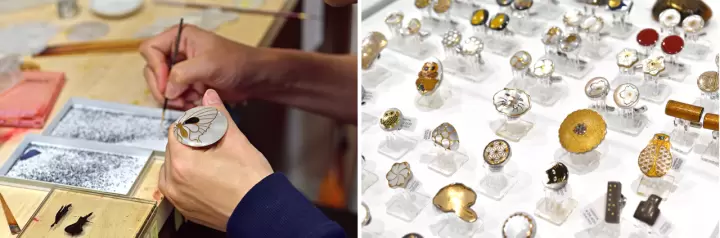
The basic tour lasts approximately two to three hours and combines visits to workshops specializing in woodturning, lacquering, and maki-e. The itinerary can be tailored to participants’ interests, and hands-on activities may also be arranged. A guide accompanies each group, and interpretation can be arranged if needed, making the tours accessible to international visitors.
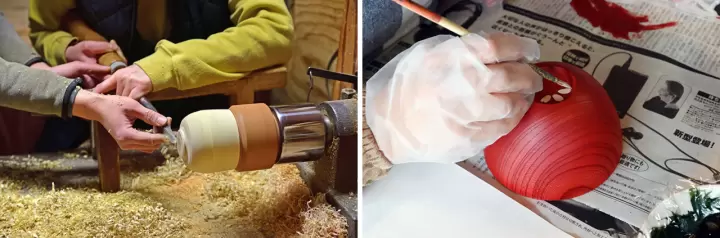
Beyond the beauty of the finished lacquerware, learning about the skill and passion of the craftsmen who created each piece might change your perspective on Yamanaka lacquerware.
Workshop experiences & Tour Tour fee: From 16,500 yen per person / 2-hour course We can also discuss creating a custom course based on the number of people and content (price will be discussed depending on the content) *Reservations required via website (at least 3 days in advance) https://craftour.jp
CRAFTOUR 1-21 Higashimachi, Yamanaka Onsen, Kaga City, Ishikawa Prefecture | Tel: 0761-75-7394 | Hours: 10:00–17:00 | Closed: Irregular holidays | Admission: Free entry to the gallery shop.
Discover Ishikawa's KOGEI: See, Learn, and Experience Traditional Japanese Crafts.
Washi paper, ceramics, and lacquerware. These three crafts differ in materials and manufacturing methods, but all are deeply connected to the nature and history of their respective regions and have been passed down through generations of artisans. Kato Washi offers a glimpse into washi paper making that has developed alongside the blessings of Hakusan. Nomi City Kutani Ware Museum presents the vibrant world of Kutani ware. CRAFTOUR showcases the skills and passion for craftsmanship of Yamanaka lacquerware artisans.
Beyond simply admiring handcrafted items, you can experience traditional Japanese culture more intimately by actually working with your hands and talking with artisans. Why not extend your trip to the Kaga- Hakusan area in conjunction with your Kanazawa sightseeing?