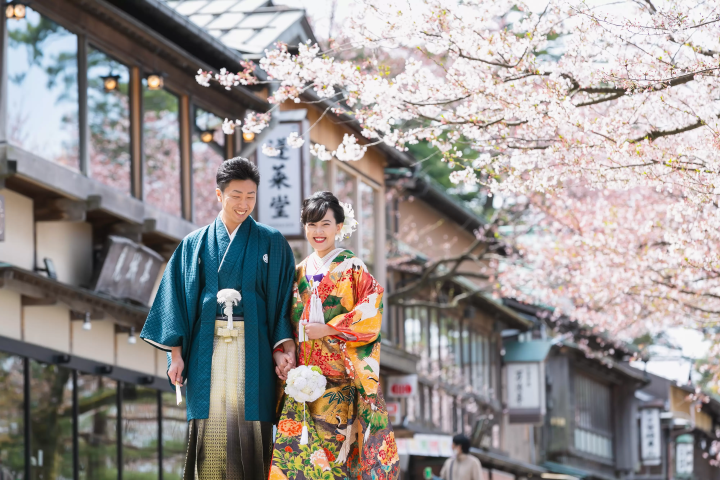
Just 30 minutes by train from Nagoya, Gifu Prefecture Ogaki City offers a quiet and profound beauty of Japan, distinct from the famous spots that go viral on social media. This article will give you a complete understanding of Ogaki's photogenic charm. So, grab your camera and let's go on a journey!

Written by
Located in the center of Nishi Mino in the western part of Gifu Prefecture, Ogaki is blessed with an abundance of groundwater, so much so that it has long been known as the "City of Water." Known as the birthplace of haiku poet Matsuo Basho's travelogue "The Narrow Road to the Deep North," the town is also home to Ogaki Castle, which served as the base of Ishida Mitsunari's Western Army during the Battle of Sekigahara, and Sunomata Ichiya Castle, said to have been built in one night by Toyotomi Hideyoshi. From late March to May, the town is home to boat rides, tub boats, and the Ogaki Festival, which was registered as a UNESCO Intangible Cultural Heritage site in 2016.
What kind of city is Ogaki? A castle town, a city of water, and the final resting place of a great haiku poet.
A small, deep castle town nurtured by water.
Located in the western part of Gifu Prefecture, Ogaki City is a medium-sized city with a population of approximately 160,000. However, the depth of its history far surpasses that of its size.
Ogaki flourished as a castle town about 400 years ago during the Edo period (1603-1868). Samurai residences and merchant houses lined the streets around Ogaki Castle, and it prospered as an important post town on the Nakayama(a major highway connecting Edo and Kyoto) and the Mino Road. The streetscape from that time still quietly lives on in the city center, Akasaka district, and Sumimata district.
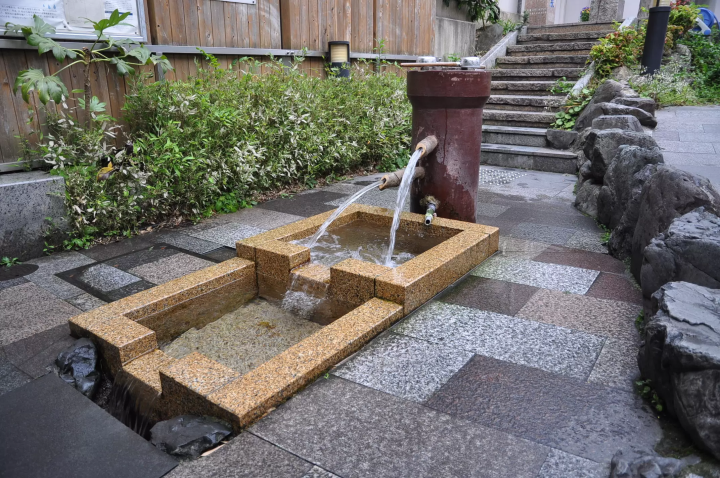
Another facet of Ogaki is its reputation as a "city of water." Abundant pure groundwater, filtered through limestone layers, springs forth, and numerous "spring water spots" are scattered throughout the city. Citizens still use this spring water for daily life, and the city's famous confection, "MIZU MANJU," was born from this abundant water. These Japanese sweets, swaying gracefully in a transparent container, are visually appealing and a very popular photo spot for foreign visitors tourists.
Furthermore, Ogaki is known as the final destination of the journey of Matsuo Basho(1644-1694), one of Japan's most representative haiku poets. Basho completed his journey of approximately 2,400 km, known as "Okuno Hosomichi), in Ogaki. A statue of Basho stands quietly along the river, welcoming travelers. Capturing the beautiful scenery in photographs while experiencing Japanese literature and history—that is the true charm of a trip to Ogaki.
Access Information
From Nagoya Station, take the JR Tokaido Main Line (Rapid) for about 30 minutes and get off at Ogaki Station. From Tokyo, take the Tokaido Shinkansen to Nagoya, and then transfer to another train to reach your destination.
A Complete Guide to Instagrammable Spots in Ogaki
Ogaki boasts a diverse array of Instagrammable spots, from year-round attractions to seasonal scenic wonders. Here, we'll introduce just a few of Ogaki's best, carefully selected for each season.
Spots that can be enjoyed all year round
Ogaki Castle
The most iconic landmark in Ogaki is undoubtedly Ogaki Castle . Construction of this historic castle, which is said to have begun in 1535, served as the base of Ishida Mitsunari 's forces during The Battle of Sekigahara (1600). It was once an impregnable fortress surrounded by a moat. The current keep was rebuilt in 1959, but the contrast between the white keep and the blue sky is truly photogenic. From inside the castle, you can enjoy a panoramic view of Ogaki, and at night, you can capture its fantastical appearance when it is lit up.
Sunomata "One-Night" Castle
Sunomata "One-Night" Castle
1742-1 Sunomata, Sunomata-cho, Ogaki City, Gifu Prefecture 503-0102In 1566 (Eiroku 9), Sunomata “One-Night” Castle was said to have been built overnight by Kinoshita Toukichirou, later known as Toyotomi Hideyoshi. At the site of the original castle, not a simple fortress but a reconstructed castle keep was established as the Sunomata One-Night Castle Historical Museum, which opened in April 1991 (Heisei 3).
Regarding the historical facts, until then, knowledge was limited to vague outlines found in records such as the Taikoki and fragmented documents. However, in 1977 (Showa 52), valuable documents related to Sunomata One-Night Castle were discovered in the ancient Maeno family archives of Konan City, Aichi Prefecture, revealing the full story.
Based on these materials, the Sunomata One-Night Castle Historical Museum organizes exhibitions focusing on the construction of Sunomata Castle and the path taken by Hideyoshi. The museum serves as a broad learning space about Taikou (the title given to Hideyoshi) and Hideyoshi himself.
Sunomata"One-Night" Castle is known for the legend that it was built in a single night. It is said that Toyotomi Hideyoshi (then known as Kinoshita Tokichiro) built the fort in just one night in 1566, making it a spot that encapsulates the romance of Japanese history. The current castle was built in 1991 as a historical museum, but its location along the Saikawa River is beautiful, and picturesque scenery unfolds throughout the four seasons.
Nakasendo Akasaka-juku
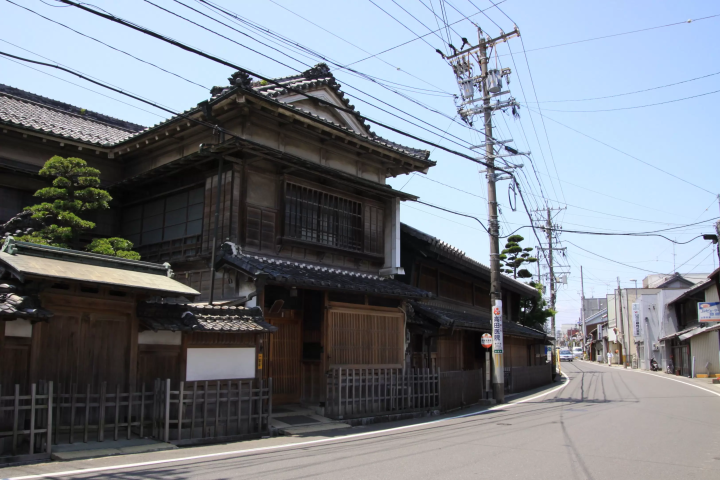
Akasaka-juku on the Nakasendo road is the site of a post town that saw many travelers and daimyo processions passing through during the Edo period. Traditional merchant buildings remain along the alleys, allowing you to take photos that feel like you've stepped back in time. While not flashy, the quietly steeped history of the town makes it well worth a leisurely stroll and photo shoot.
Hirui Otsuka Kofun
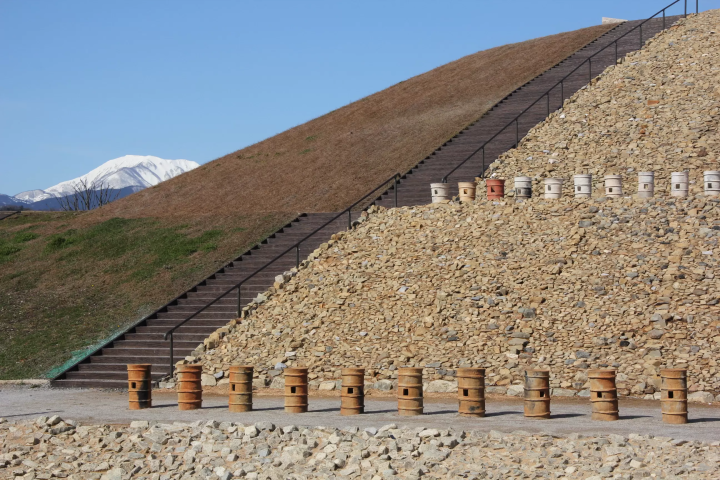
This is the largest keyhole-shaped burial mound in Gifu Prefecture, boasting a total length of approximately 150 meters. It is a massive tomb believed to have been built about 1,600 years ago during the Kofun period (3rd to 7th centuries). Visitors can climb to the top of the mound, where they can enjoy an expansive view overlooking the city of Ogaki and the Nobi Plain.
Spring spots
Boat ride through a cherry blossom tunnel
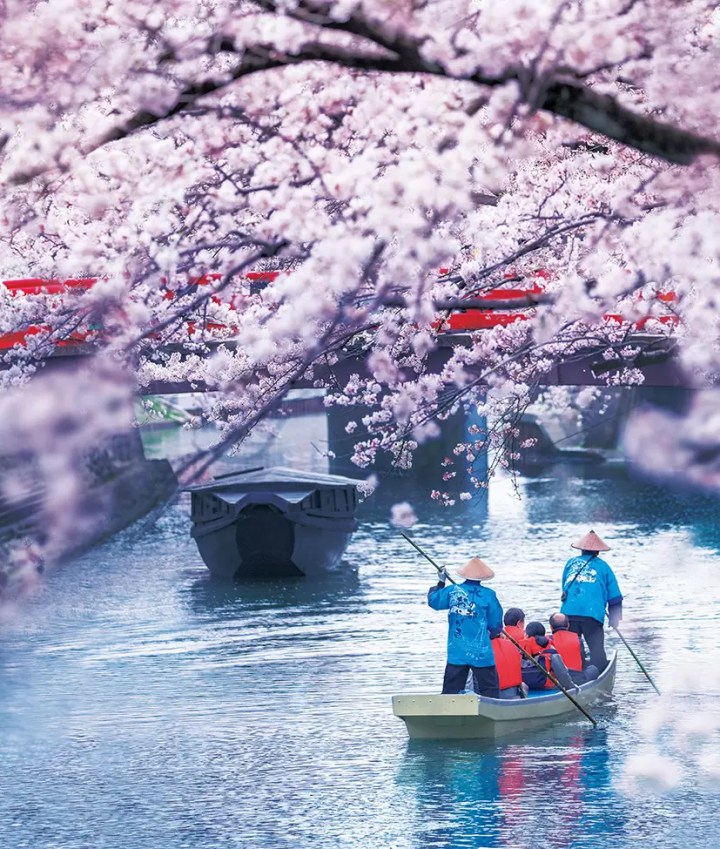
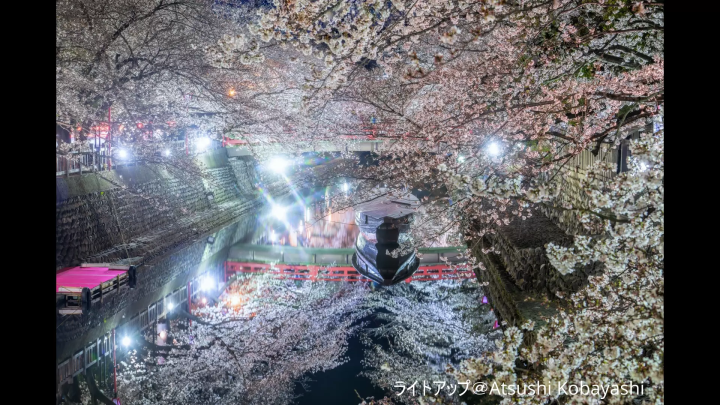
Ogaki's most spectacular spring scenery. A leisurely boat ride along the SUIMON River, beneath rows of cherry trees in full bloom, is an experience that symbolizes spring in Ogaki. Petals rain down from above, and the pale pink cherry blossoms are reflected on the water's surface—a fantastical scene unfolds, as if you were in a watercolor painting. This experience can only be had in Ogaki.
Sunomata One-Night Castle and the Cherry Blossom Trees along the Saikawa River River Embankment
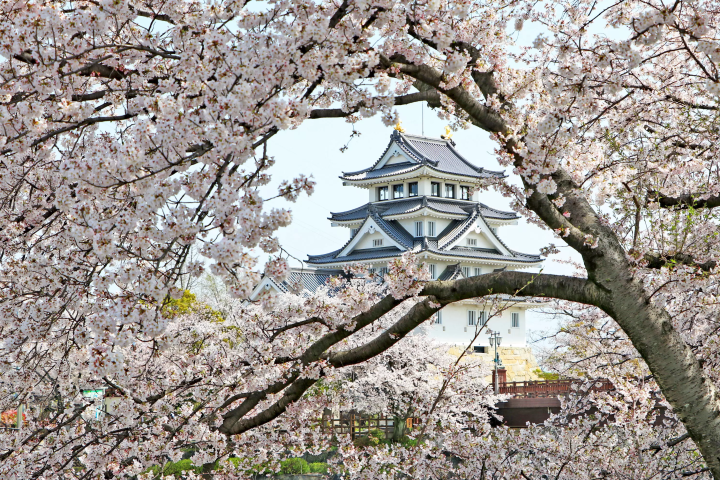
The spring scenery, with the Ichiyajo castle in the background and the cherry trees lining the Saikawa River River embankment in full bloom, is breathtaking. It's a spot where you can capture a picture that perfectly encapsulates the essence of Japanese spring: the castle and the cherry blossoms. During cherry blossom season, numerous food stalls line the area, making it an attractive spot to enjoy a festival while taking photos.
Ogaki Festival
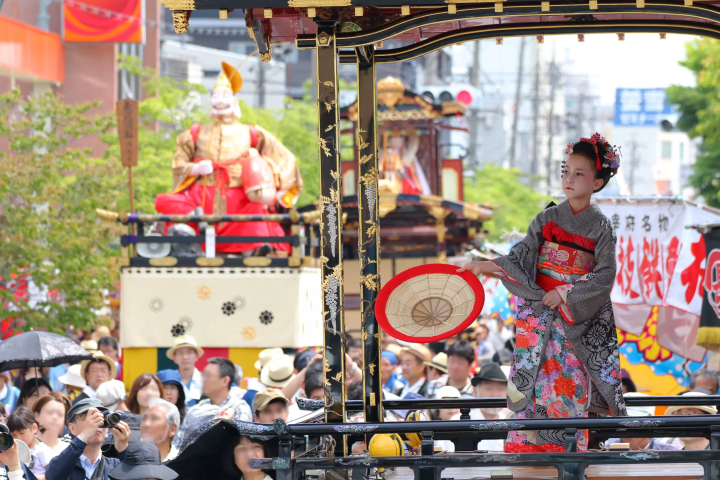
Held every May, the Ogaki Festival is a historic festival that has been held since 1665. The festival's float procession is registered as a UNESCO Intangible Cultural Heritage, and the sight of the magnificent floats parading through the streets is sure to move the hearts of those who witness it. With colorful lanterns, people dressed in traditional costumes, and nearly 400 stalls, it is an event where you can fully experience Japanese festival culture and take stunning photos.
TARAIBUNE(Tub boat)
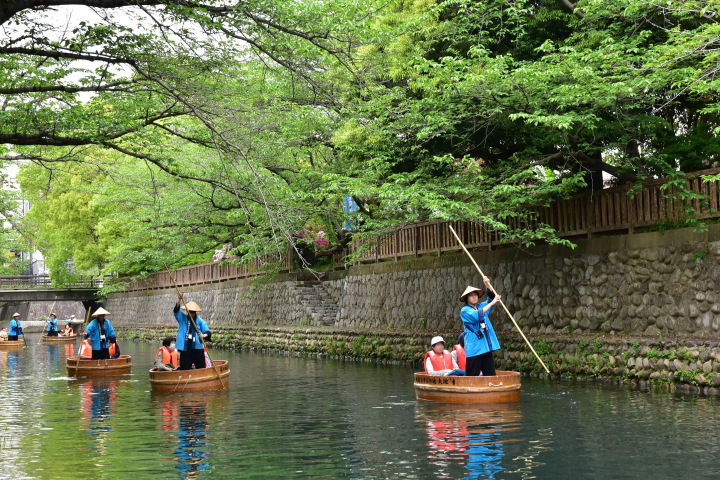
This unique interactive photo spot allows you to fully experience the essence of Ogaki as a "city of water." You can climb into a large wooden tub "TARAIBUNE", approximately 1.5 meters in diameter, and gently sway down the SUIMON River with just a pole—the heartwarming sight will naturally bring smiles to the faces of both onlookers and those riding in it.
The proximity to the water's surface and the unique feeling of floating make for stunning photos and videos. For foreign visitors tourists, it's a rare experience that's hard to come by in Japan.
Summer spots
MIZU MANJU
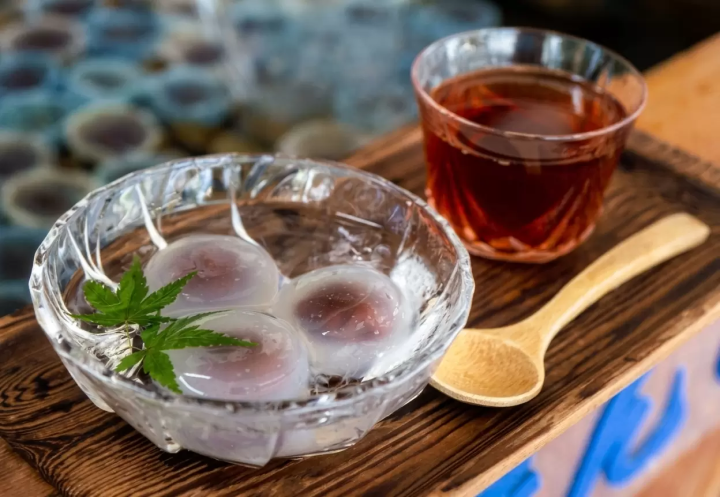
These refreshing-looking MIZU MANJU, encased in transparent kudzu starch, are a representative confection of Ogaki . Sold at Japanese confectionery shops throughout the city from April to September, their cool appearance, chilled in spring water, is perfect for Instagram. Be sure to take a photo before you eat them! With their mild sweetness, they are easy to enjoy even for those trying them for the first time.
Fireflies of Kinshou Mountain
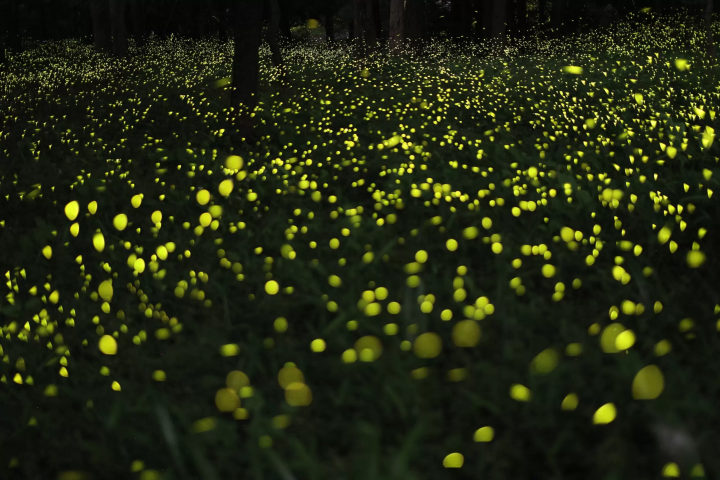
In the late hours of mid-to-late June, Mount Kinsho comes under a spell. The sight of the Hime fireflies, found only on this mountain, flitting about, their golden light twinkling, is truly a miracle of Japanese summer. Unlike the Genji firefly, the Hime firefly is characterized by its faster and brighter blinking. The specks of light dancing among the trees are so mystical they seem otherworldly.
Advance reservations are required to view and photograph the fireflies at Kinsho Mountain. For details, please visit the Myojo-rinji Temple website ( http://www.mirai.ne.jp/~kinsyou3/ ).
MANTO NAGASHI on the SUIMON River
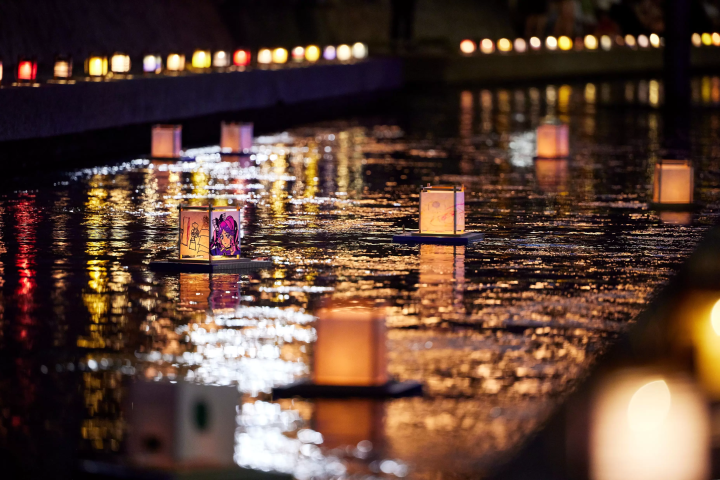
The MANTO NAGASHI ceremony, held every August, is a traditional Japanese summer event where lanterns are floated down the SUIMON River to commemorate the spirits of ancestors. The countless flickering lights illuminate the river, creating a fantastical scene. It is a precious experience that allows you to feel the beauty of Japan's "Obon" culture firsthand.
sunflower field
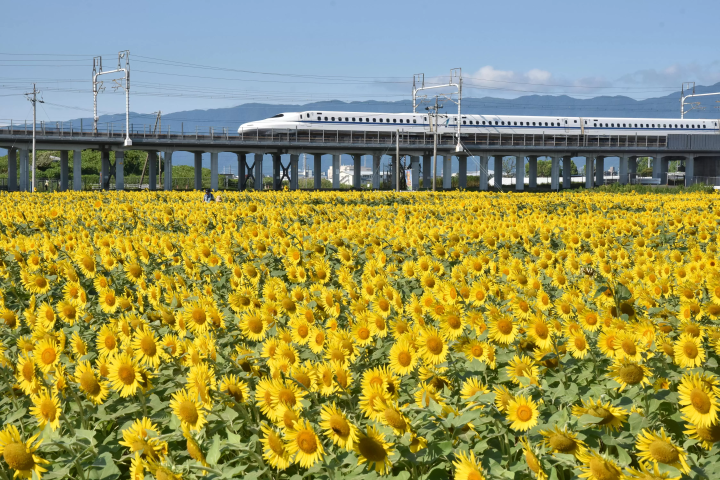
In August, the sunflower fields in Ogaki City City, offer a spectacular sight with sunflowers stretching as far as the eye can see, blooming towards the blue sky. It's a popular spot on social media for taking photos of the sunflowers with the Tokaido Shinkansen bullet train in the background.
Autumn spots
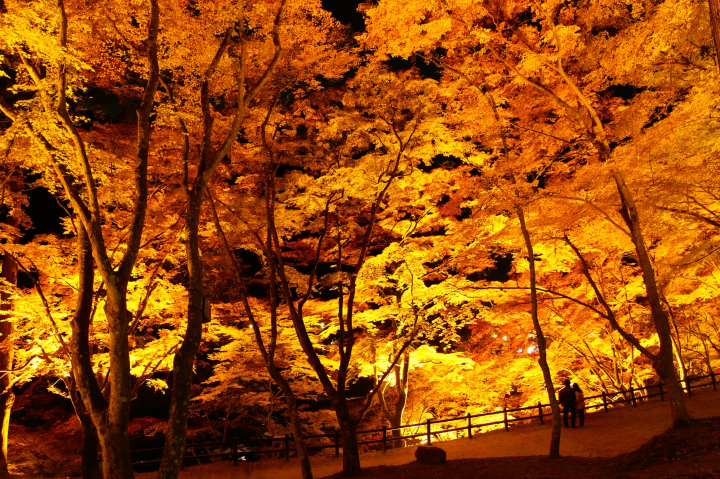
Autumn leaves in Tara Gorge
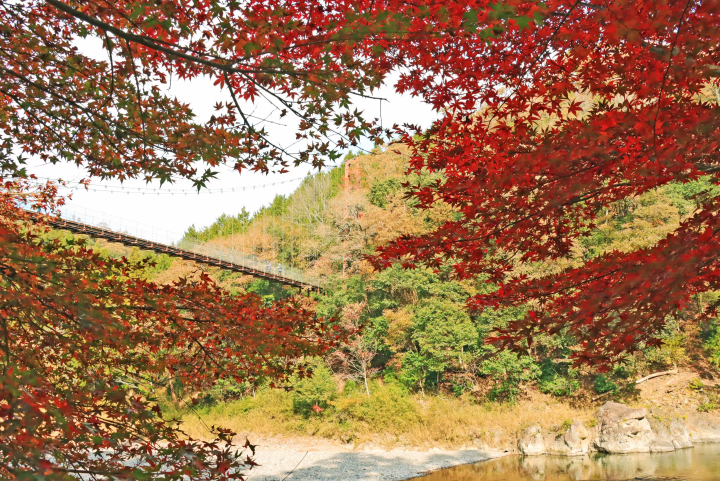
Tara Gorge, located in Kamiishizu-cho , Ogaki City, is a treasure trove of gorge beauty, renowned as one of the best spots in western Gifu Prefecture for viewing autumn foliage. Walking across the suspension bridges spanning the gorge, you can enjoy the contrast between waterfalls, strangely shaped rocks, and the vibrant autumn colors up close. Its charm lies in the raw, untamed power of nature, setting it apart from the autumn foliage found in urban parks.
Fresh greenery and bamboo grove at the site of Ochaya-yashiki.
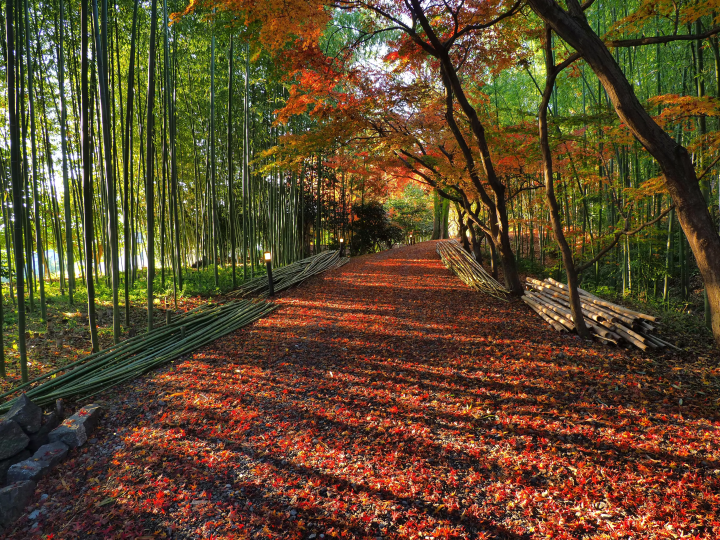
Ochaya-yashiki, which displays the beauty of each season—peonies and fresh greenery in spring, and autumn leaves in fall—is the site of a prestigious garden that was used as lodging for the Tokugawa shogunate during the Edo period. In November, the trees turn vibrant colors, creating a rich contrast with the historical stonework and the green of the moss. It is a secluded space where your sense of photography is naturally sharpened.
Autumn leaves at Myojo-rinji Temple
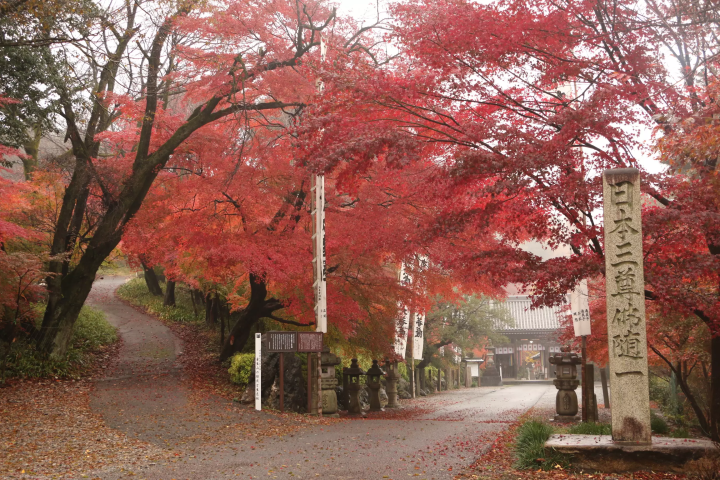
Myojo-rinji Temple, towering over Akasaka-cho in Ogaki City, is one of Japan's three great Kokuzo temples, and from its elevated position you can enjoy a Nobi Plain view of the Nobi Plain. Its greatest charm lies in the sense of a sacred place that sets it apart from other autumn foliage spots. It is a hidden gem of an autumn spot that those in the know should visit, especially those who want to escape the hustle and bustle and quietly appreciate the autumn leaves.
Nakasendo Akasaka-juku Festival
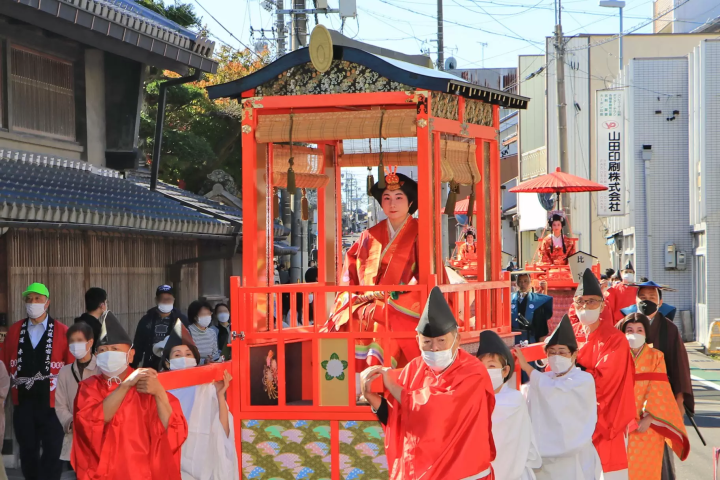
In November, a historical spectacle comes alive in Akasaka-juku on the Nakasendo. The main event of the Akasaka-juku Festival, the "Princess Procession," is a magnificent parade recreating a daimyo procession from the Edo period. The sight of the procession, adorned in vibrant costumes, walking through the streets of the old post town is truly a living piece of Japanese history.
Winter spots
Ogaki Illumination
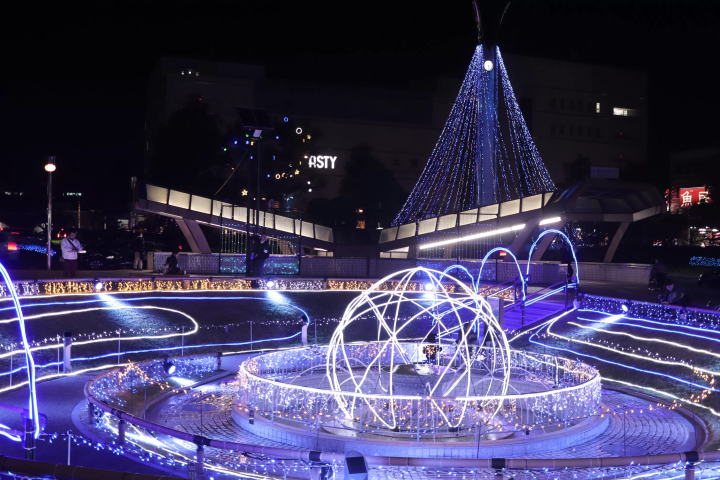
As the night air turns chilly in December, a dazzling display of light blooms in front of Ogaki Station. The Ogaki Illumination is a representative winter light event of Ogaki, the city of water. The central stage for this event is the area known as "Turtle Pond," located in the plaza south of Ogaki Station.
Despite its convenient location right in front of the station, the interplay of contemporary light art creates a unique and special atmosphere that can only be found in this place.
Ogaki Castle in Snow
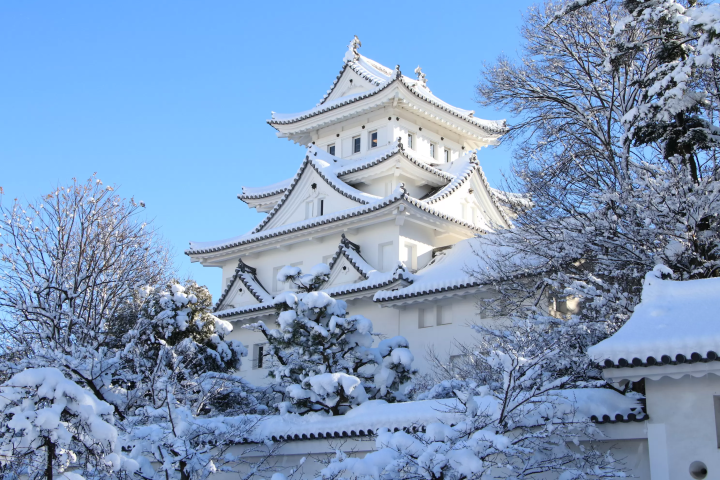
A few times each season, the sight of the castle tower, shrouded in a blanket of white snow, stands silently, presenting a completely different face from its usual appearance. It is a breathtaking beauty, a condensed representation of the history and tranquility of the castle town.
Whether you can capture it or not depends on luck. That might be the greatest charm of this scenery. The morning after a snow forecast, I headed to Ogaki Castle with my camera. A single shot, born from chance and a series of fortunate events, will surely become an unforgettable treasure.
Hokoin Naked Festival
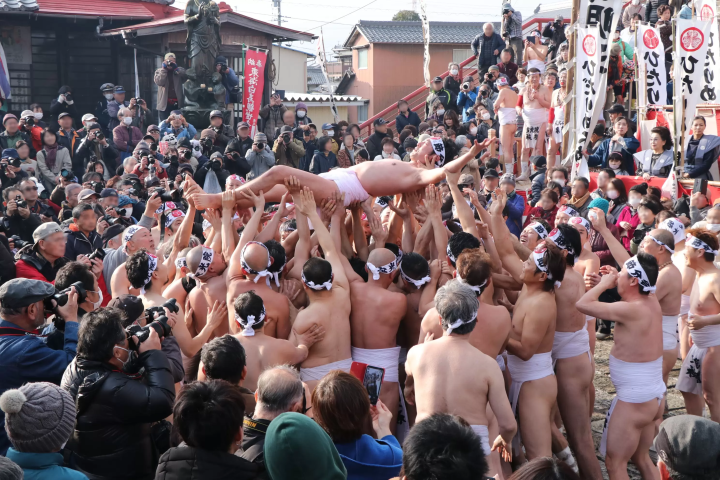
Held in February at Hokoin Temple in the Noguchi district, the "Hadaka Matsuri" (Naked Festival) is a unique winter festival that has been passed down in Japan since ancient times. Men wearing only loincloths purify themselves in the cold and pray for good health and a bountiful harvest. The power and energy of the event create a unique excitement on a winter night. It is an experience unlike any other, allowing you to feel the depth of Japanese folk culture. When taking photographs, please remember to show respect to the local people.
Hanging dolls adorn Sunomata
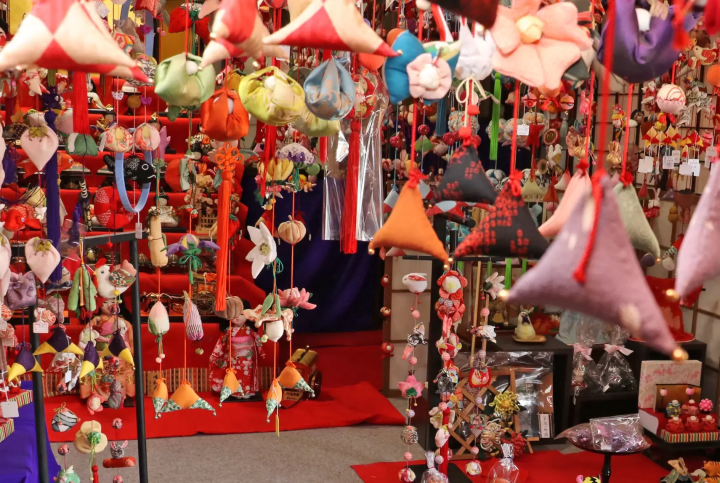
In February, the streets of the Sunomata district are adorned with colorful hanging hina dolls. Timed to coincide with the traditional Japanese event "Hina Matsuri" (March 3rd, a festival to pray for the healthy growth of girls), the sight of the adorable hina dolls hanging from the eaves is a very popular photo spot for foreign visitors tourists. It is a charming winter scene where the old townscape and traditional Japanese crafts intertwine.
Enjoy Ogaki even more! Transportation Guide
Ogaki's tourist attractions are scattered throughout the city center and surrounding areas such as Akasaka, Sumimata, and Kamiishizu. Combine different modes of transportation effectively to explore them efficiently and enjoy the scenery.
Highly recommended! Rental bicycles
If you want to make the most of your trip to Ogaki, renting a bicycle is definitely the best option. Along the willow-lined SUIMON River, at natural springs, and down the narrow alleys of the castle town... with a bicycle, you can easily venture into any alley that catches your eye and discover your own "photogenic moments."
Electric-assist bicycles are especially popular. Although Gifu Prefecture is mostly Hirano, there are inclines when going to Akasaka and suburban areas, so electric-assist bikes are very comfortable. You can rent one for as little as 1,000 yen a day. It's incredibly cost-effective.
Main lending locations:
● Oku no Hosomichi Haiku Journey Museum - A tourist facility located at the final destination of Basho's journey. Gather tourist information and rent bicycles at the same time.
● Quintessa Hotel Ogaki - Just a short walk from Ogaki Station. You can easily rent one at the hotel front desk.
After renting a bike, you can explore along the SUIMON River with a map in hand, or enjoy cycling towards Akasaka-juku and Sumimata. You'll discover so many charms of Ogaki that one day simply isn't enough time.
Route bus
Bus routes depart from Ogaki Station and go to Akasaka, Sumimata, and Aobaka. Since the number of buses is limited, it is recommended to check the timetable in advance.
train
The Yoro Railway (a local line) is a convenient way to get to the Akasaka area. Riding the Yoro Railway, with its retro-style trains, is a travel experience in itself.
Rental cars and taxis
If you're visiting mountainous areas with limited public transportation, such as Tara Gorge in the Kamiishizu area (a famous spot for autumn foliage), renting a car or taking a taxi is convenient. There are several car rental companies around Ogaki Station.
walking
Major attractions in the city center, such as Ogaki Castle, SUIMON River, the Basho statue, and spring water spots, are all concentrated within a 10-15 minute walk from Ogaki Station. Start by strolling around the station area and get a feel for the atmosphere of Ogaki.
Summary: Capture a memorable photo in Ogaki, the city of water.
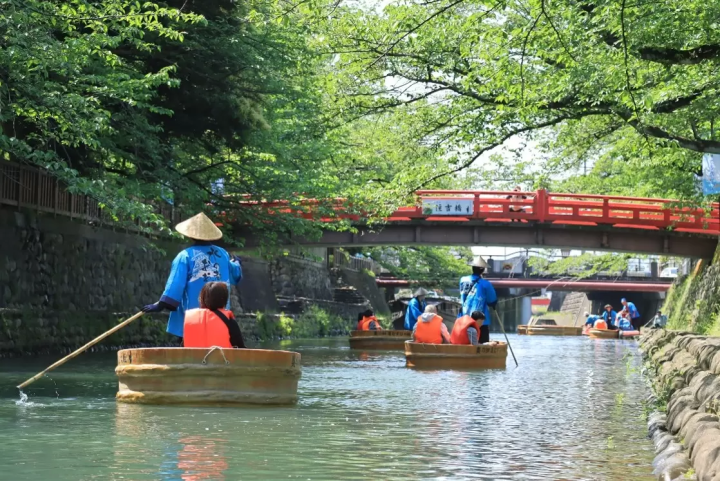
Located just 30 minutes from Nagoya, Ogaki offers a quiet and profound beauty of Japan, completely different from the famous tourist destinations. From tub boats amidst fresh greenery to the fantastical MANTO NAGASHI, the vibrant autumn leaves, and the alleys lined with hanging hina dolls, Ogaki's four seasons offer new and exciting experiences with every visit. Now is the perfect time to visit, as it's still relatively unknown to many foreign visitors tourists. Grab your camera and take a stroll through Ogaki. You're sure to find your own unique "Japanese masterpiece" here. We await you in Ogaki, the city of water.