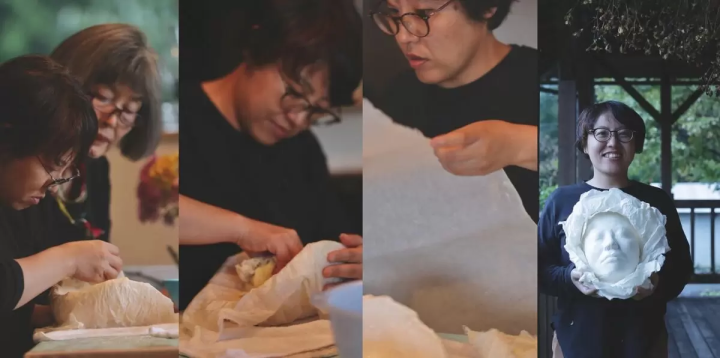
At the foot of Mt. Aoba in Takahama Town, Korean artist Kim Myung-hee offers a "Peace Mask" experience using Echizen washi paper. This 3-hour meditative art experience involves transferring your face onto washi paper and reflecting on introspection and peace. You can also stay at the Imadera guesthouse.

Written by
We are a voluntary tourism group dedicated to promoting the attractions of the northern Kinki region, specifically the areas of Tamba, Tajima, Tango, and Wakasa. The flavors of northern Kinki are not limited to crab, a representative winter seafood delicacy, but also include oysters, yellowtail, and pufferfish, as well as summer delicacies such as surf clams, rock oysters, and white squid. Mountain delicacies include Tamba chestnuts and Tamba black beans, and summer fruits such as sand dune melons, making it an area where you can enjoy gourmet food all year round. I would be happy if I could share information that allows people to visit this vast northern Kinki region many times and enjoy train travel.
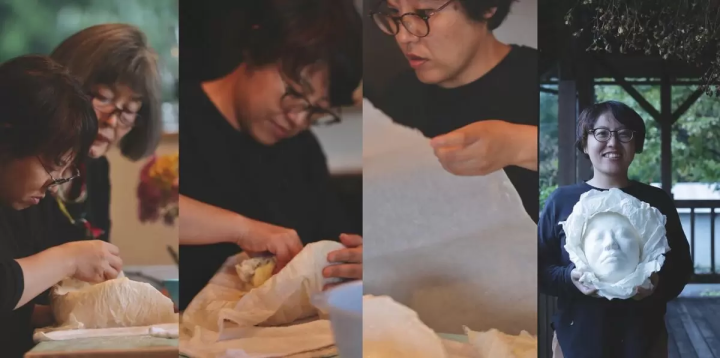
At the foot of Mt. Aoba in Takahama Town , Fukui Prefecture , Korean-born artist Kim Myung-hee is creating a unique experience that fuses traditional Japanese washi paper, contemporary art, and a message of peace.
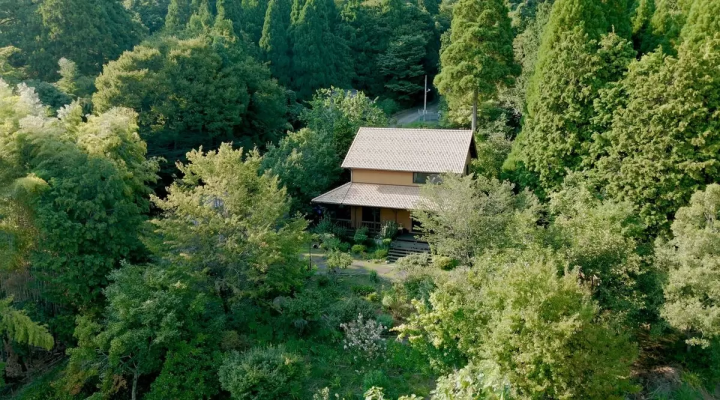
Guesthouse Imadera, where Ms. Kim introduces the Peace Mask experience to visitors.
In this experience, participants create a paper mask that is carefully shaped to fit the contours of their own face. Visitors become part of an art project that has connected people from different cultures for over 20 years.
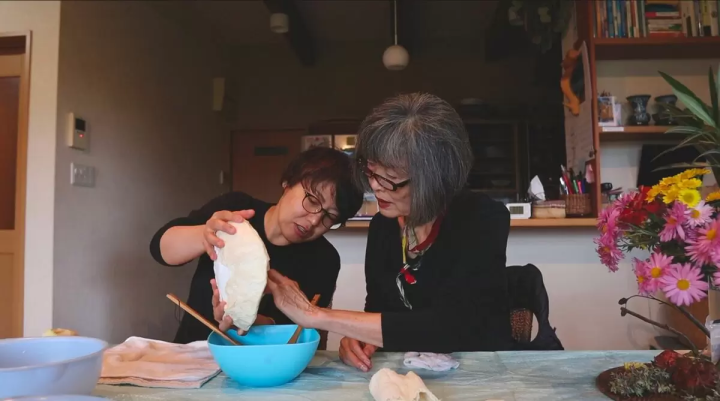
One of the attractions of the Peace Mask experience is its location. Kim's home is nestled at the foot of Aobayama, a symbol of Fukui, and surrounded by the quiet rural landscape of Takahama. It is a peaceful environment, far removed from the bustling streets and crowded tourist spots of Japan's major cities.
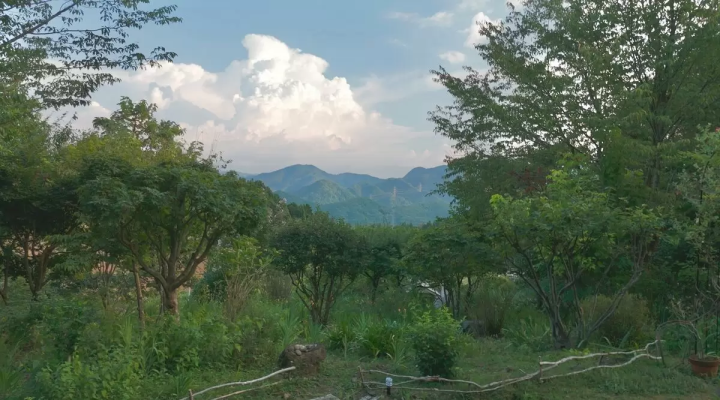
Here, the tranquil scenery itself gives visitors a chance to pause, step away from the hustle and bustle of everyday life, and look at a familiar face—their own face—from a completely different perspective.
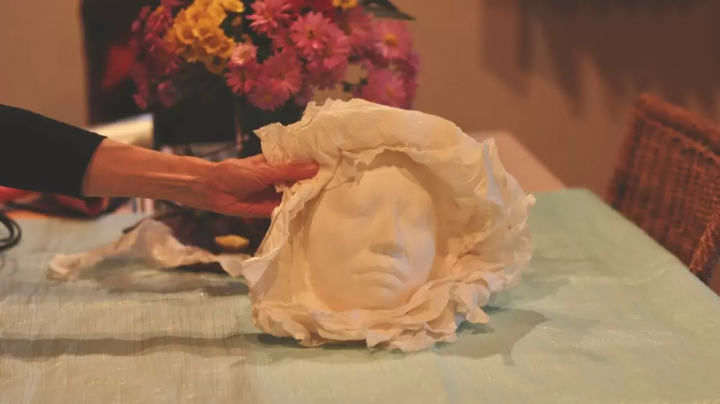
An example of a paper mask that guests can create during the experience.
An experience that begins with your own face
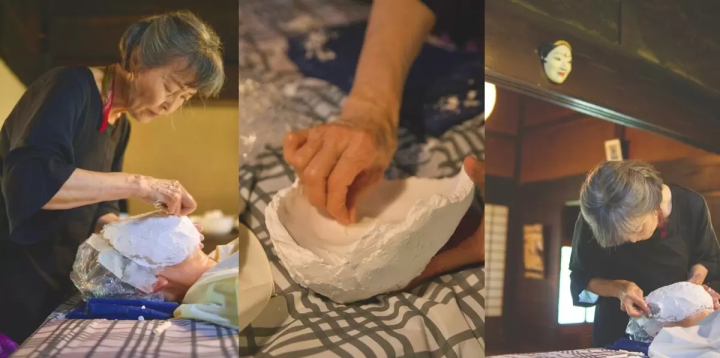
While Ms. Kim creates a mask around the participant's face using handmade Echizen paper, the participant is asked to close their eyes and remain still. As they slowly surrender and wait, their awareness of the outside world gradually fades. This art experience, which may feel a little strange at first, transforms into a time to stop, confront oneself, and encounter one's own face in a way that cannot be seen in a mirror or photograph.
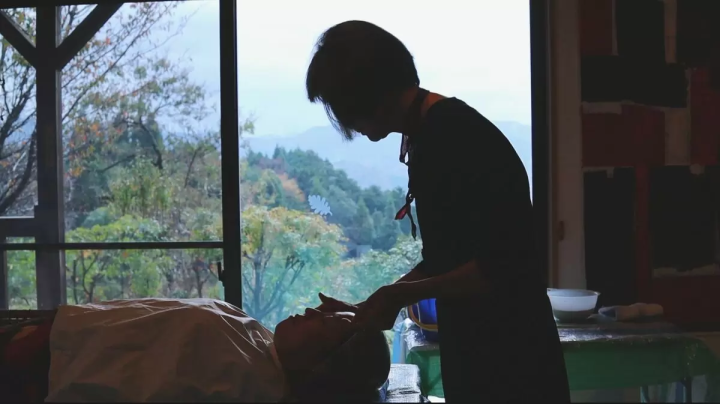
We are accustomed to seeing our own faces through mirrors, photographs, and smartphone screens. However, the experience of seeing our own faces take shape as actual works of art is something entirely different.
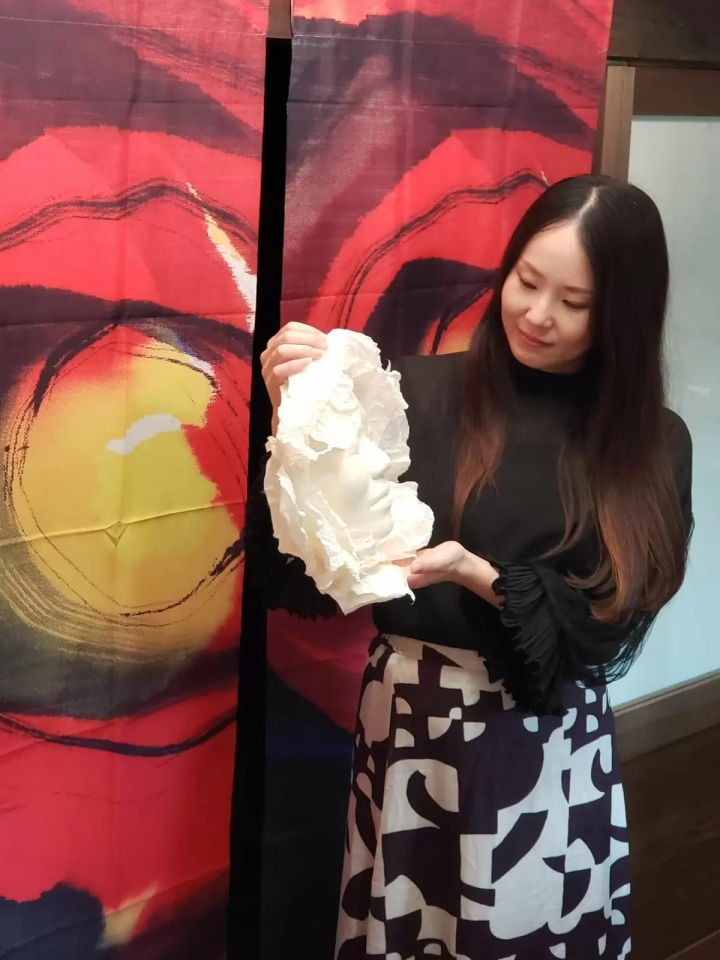
When you take off your mask and see your face reflected on washi paper, you might be unexpectedly moved. Seeing familiar facial features in an unfamiliar form can give you a chance to look at things you usually take for granted from a different perspective.
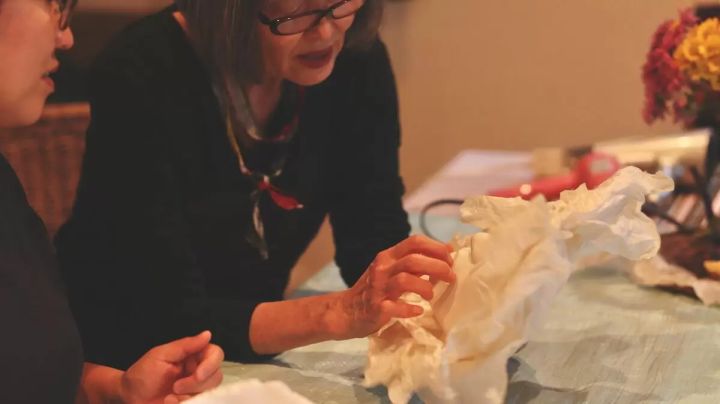
In this way, each individual's personal experience of making a mask connects to the larger ideals of the Peace Mask Project. It starts with one face, and from there, the humanity shared by many people gradually emerges.
The story behind the Peace Mask
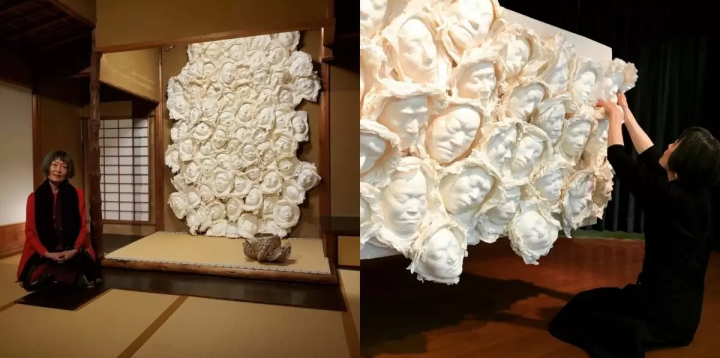
At the heart of this experience is Kim Myung-hee, a Korean-born artist who has lived and worked in Japan for over 30 years. Born in Seoul, Kim later moved to Japan and is currently based in Takahama Town , Fukui Prefecture . Her experience living between different cultures has influenced her artistic activities and has led to her desire to create opportunities for people from diverse backgrounds to meet and interact.
The Peace Mask Project originated from the "Japan-Korea Life Mask Project," which began in 2000. From 2000 to 2002, 1,580 masks were produced. For over 20 years since then, the project has expanded its activities through workshops and exhibitions in various countries and regions, including South Korea, the United States, India, Spain, Finland, and Cambodia.
This project has also addressed themes such as peace, history, and reconciliation. The "Peace Mask East Asia Project," conducted from 2014 to 2015, involved collaboration with people from Japan, China, and South Korea. In 2018, we partnered with the Cambodian NGO "Women Peace Makers" to hold a workshop in Cambodia.
Furthermore, from 2015 to 2017, she created masks representing first- to fourth-generation atomic bomb survivors and their descendants in Hiroshima and Nagasaki. These works were exhibited at the United Nations Conference Centre in Bangkok, Thailand in 2019.
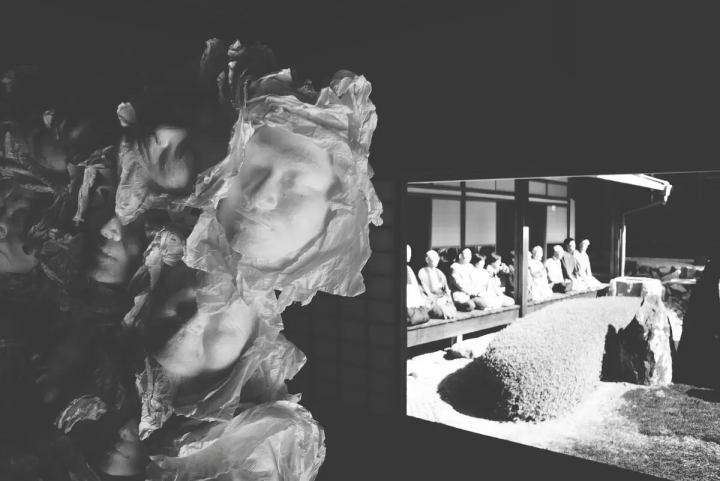
An example of Kim's Peace Mask exhibition in Kyoto
For Kim, the human face is both a canvas and a clue to what people share. Through the Peace Mask Project (PMP), she fuses contemporary art with traditional Japanese washi paper and a message of peace. Rather than starting with nationality, language, or cultural background, this project begins with something universal that everyone possesses—the human face.
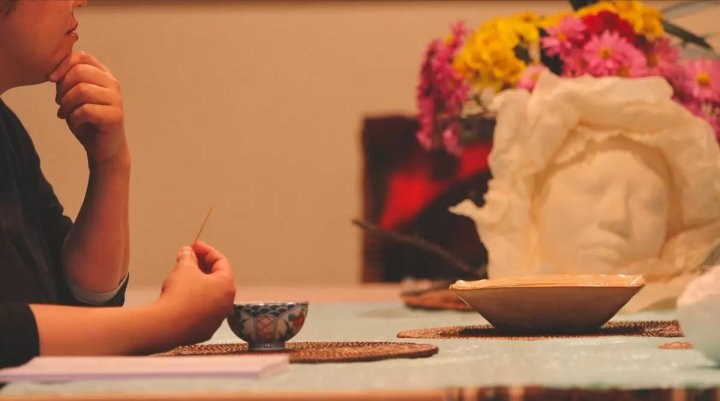
Traditional Japanese paper and contemporary art
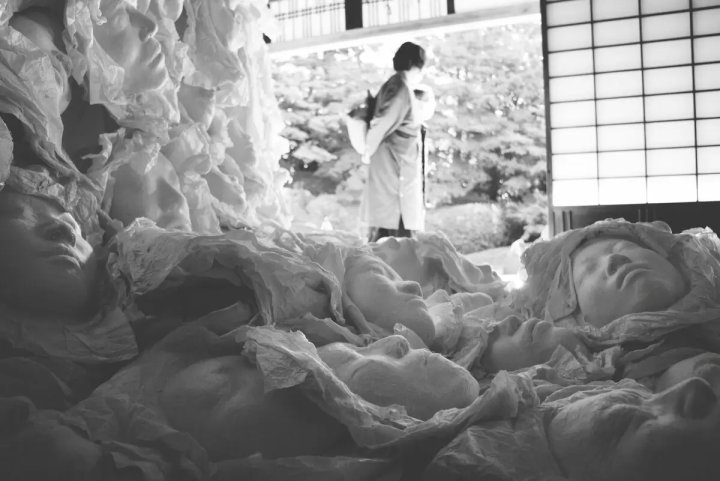
The masks are made using handmade Echizen paper, adding a uniquely Japanese element to the experience. In Fukui, a region with a long history of washi paper making, traditional crafts passed down through generations are connected to Kim's contemporary art through this material.
Staying with the artist
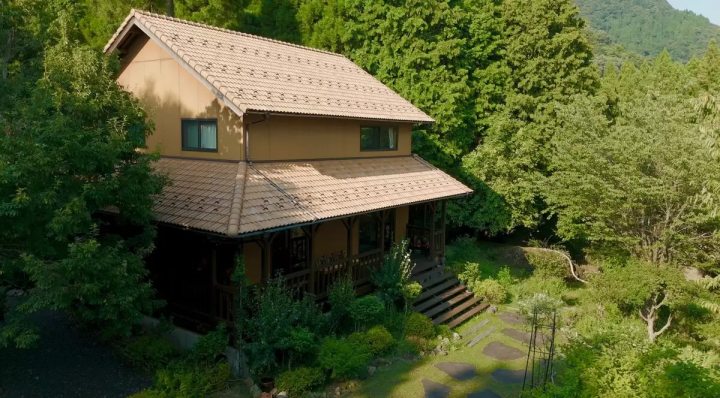
For those who want to spend a little more time relaxing in this area, we also recommend staying at "Guest House Imadera," Myunghee's home and guesthouse located in Imadera, a small farming village at the foot of Aobayama Mountain.
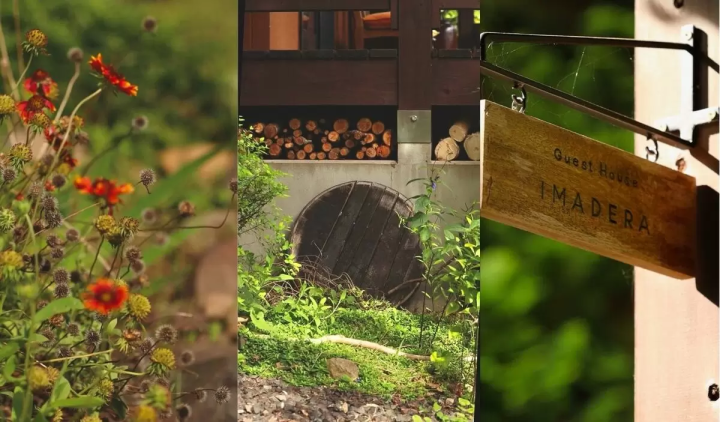
Located right next to the charming Kumano Shrine, at the entrance to the hiking trail on Mt. Aoba, this house is surrounded by a spacious garden adorned with flowers, offering views of the mountains beyond. The garden also participates in Takahama Town's annual "Open Garden" event, and many people have enjoyed its beauty throughout the seasons.
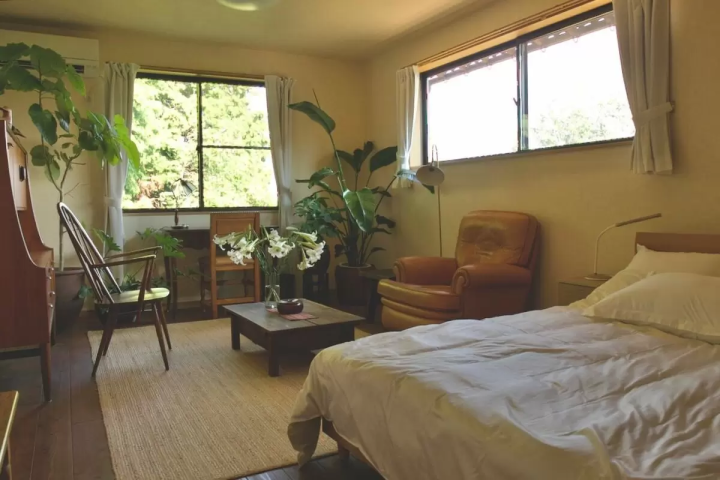
The guest room is located on the second floor of Ms. Kim's home and offers views of the garden through large windows. Inside, there are two semi-double beds, a relaxation area, a desk, and a private toilet and washbasin. Guests can also use the living room, dining room, kitchen, and spacious veranda on the first floor.
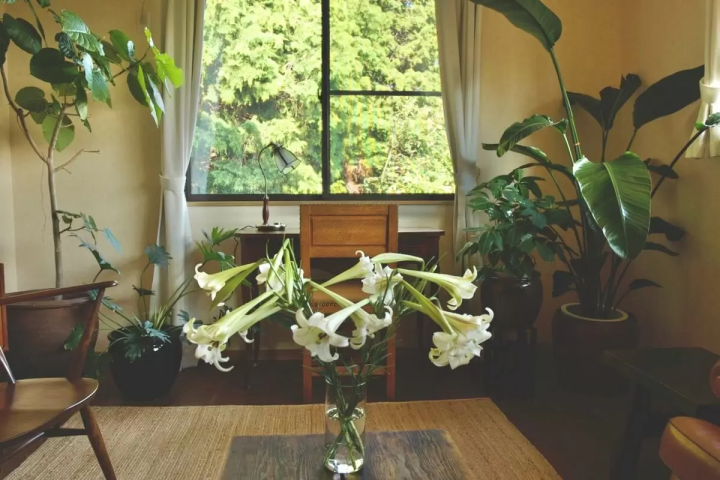
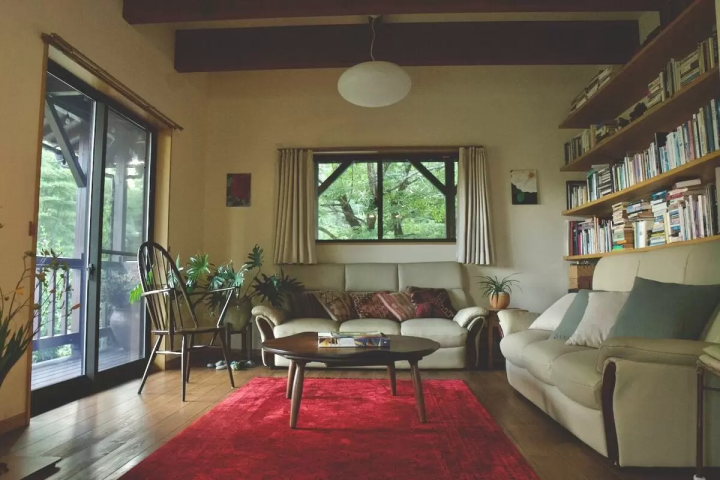
Guesthouse Imadera's living room
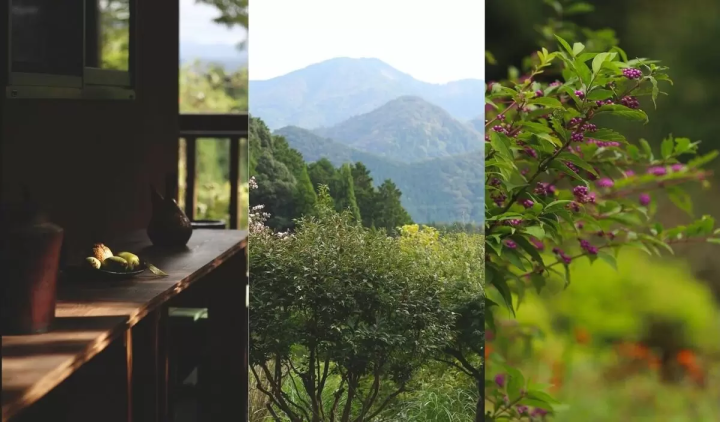
Because it's Kim's own home, a stay at Guesthouse Imadera is more than just a place to sleep. One of the unique charms of this guesthouse is the opportunity to experience the life and creative environment of artist Kim. Kim prepares breakfast every morning and also offers advice and recommendations for places to visit in the surrounding area.
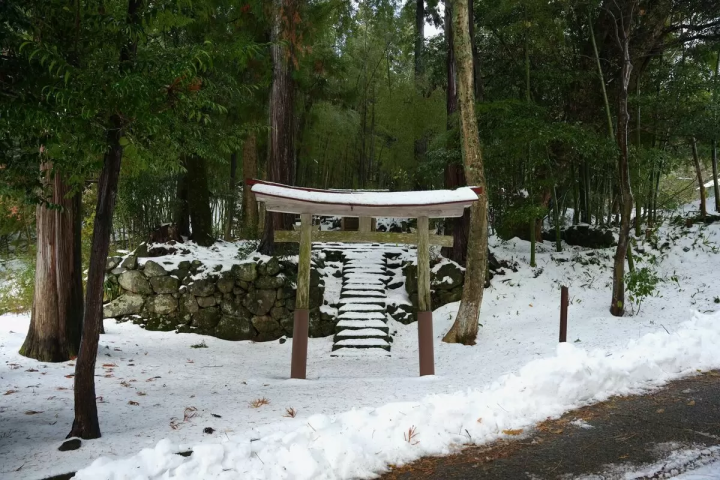
A charming Kumano Shrine stands at the entrance to Mr. Kim's house.
Traveling through mountains and the sea
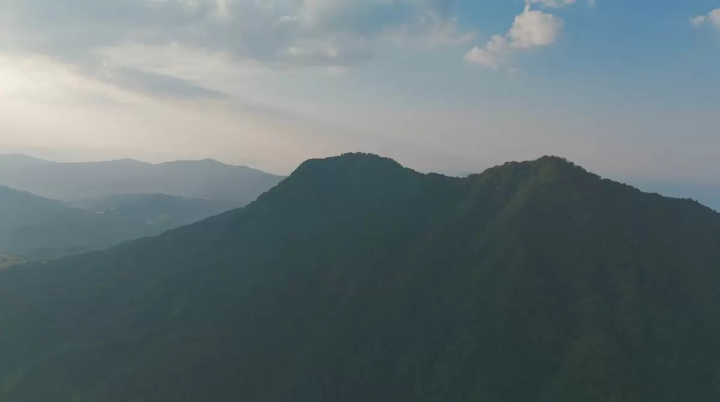
Guesthouse Imadera is conveniently located for enjoying the rich natural beauty of Takahama.
The majestic Aoba Mountain
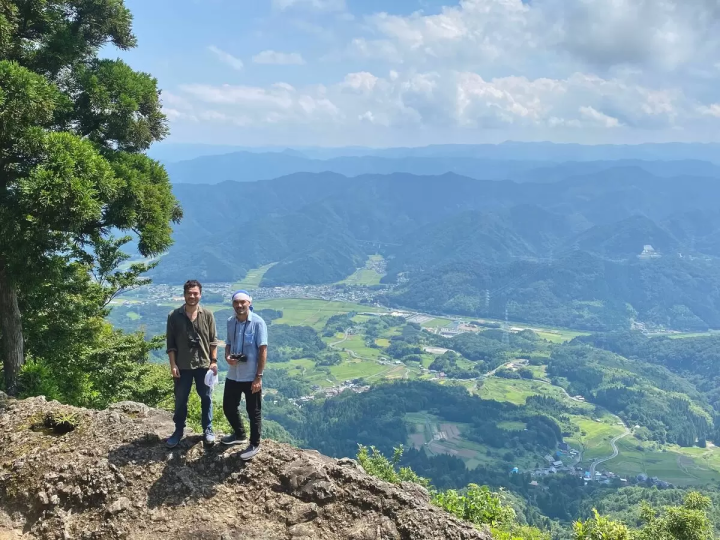
Hikers arrive at the summit of Aobayama
The hiking trail to Aobayama starts near my house, and it takes about 1-2 hours to reach the summit, depending on your walking pace. You can also reach Matsuo-ji Temple, the 29th temple on the Nishikoya Kannon pilgrimage route, in about 30 minutes on foot.
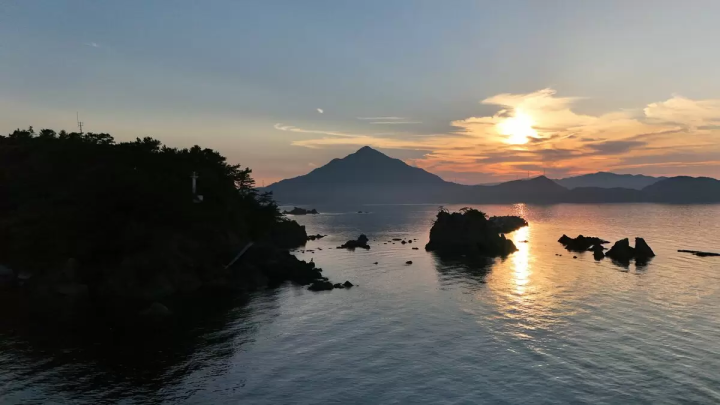
If you venture further towards the sea, you can enjoy a variety of activities in Takahama's clear waters, such as swimming, SUP, snorkeling, diving, kayaking, and fishing. Cafes, shops, and the center of Takahama are easily accessible by car, while Imadera still retains the atmosphere of a small mountain village.
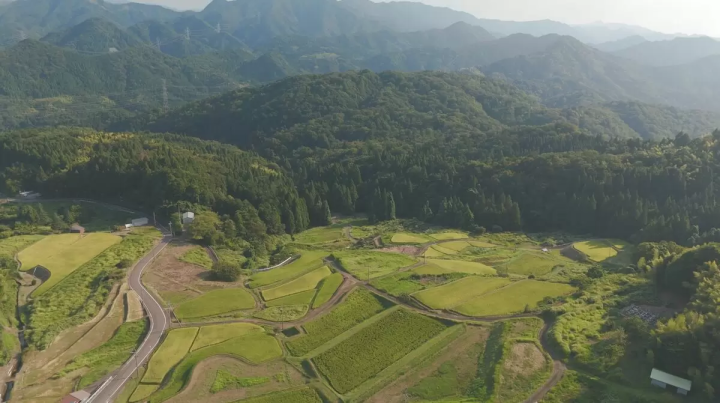
Aerial photograph of Imadera
Peace Mask Experience Information
[How to book an experience]
To register for a trial session, please contact us at the following email address : peacemask3@gmail.com
〇Experience Fee Peace Mask Experience (Completely private, one-on-one with the artist): 30,000 yen
〇Experience time: Approximately 3 hours
Venue: Guesthouse Imadera (Fukui Prefecture , Takahama Town Prefecture)
〇Experience Details The Peace Mask session is a relaxed, meditative experience lasting approximately three hours. An artist will carefully take a plaster cast of your face. Based on this cast, a Peace Mask will be created using the finest handmade Echizen paper, a traditional craft proudly produced in Fukui, Echizen Prefecture. You will take home your own original Peace Mask, the plaster cast, and the skills to continue making masks yourself. This is not just a craft experience. It is a moment of personal retreat to quietly confront yourself. It is an invaluable time spent with an artist who has dedicated their life to embodying the belief that "peace begins with each individual."
Guesthouse Imadera : 1 night (peace mask experience and breakfast included): 50,000 yen
Brian Keith Eastlake, Writer promoting the charms of the Tsuruga and Wakasa areas, Fukui Prefecture Regional Revitalization Cooperation Team
I also post daily on Instagram. Please check it out!
Instagram: https://www.instagram.com/wakasabayexplorer/



![[Wakasa Town] How to enjoy your stay at a lakeside inn ~ Lakeside Inn PAMCO and Wakasa Town sightseeing boat Lake Cruise ~](https://resources.matcha-jp.com/resize/720x2000/2026/10/06-271888.webp)
![[Shizuoka/ Izu] October 11th (Sun) Sutra Copying Session at Shuzenji Temple (Reservations required)](https://resources.matcha-jp.com/resize/720x2000/2025/05/31-235020.webp)