Nestled at the southern foot of the Yatsugatake Mountains, Hokuto City in Yamanashi Prefecture enjoys an extended cherry blossom season, as its varied elevations mean the flowers bloom at different times across the city. Explore Hokuto’s cherry blossom highlights in two parts, covering the best viewing spots from late March to mid-April.

Written by
It is located in the northwest of Yamanashi Prefecture, on the border with Nagano Prefecture. It is a vast area surrounded by 3,000m-class mountains such as the Yatsugatake Mountains, the Southern Alps, and Mt. Kinpu, and overlooking Mt. Fuji to the south. It is about a two-hour drive from Tokyo, about an hour from Mt. Fuji, and about an hour from Matsumoto, and is easily accessible, so many tourists visit throughout the year. It is also known as a "village of famous water," and three places have been selected as one of Japan's 100 famous water sources. This bounty of water is loved as natural water, and the area boasts one of the largest production volumes of mineral water in Japan. Sake is also produced from the pure water, and you can enjoy beautiful natural scenery and rich food.
Enjoy Cherry Blossoms Twice in Hokuto
The cherry blossom season in Hokuto begins with the blooming of Yamataka Jindaizakura, a tree estimated to be around 2,000 years old. From rows of cherry trees with the snow-capped Southern Alps as a backdrop to historic castle ruins adorned with blossoms and beautiful contrasts between cherry blossoms and historic architecture, each destination offers a unique springtime scene.
In Part 1, we explore two iconic cherry trees that bloom around the same time: Yamataka Jindaizakura, an ancient Edohigan cherry tree, and Wanizuka no Sakura, a celebrated solitary cherry tree in neighboring Nirasaki City.
In Part 2, discover Hokuto’s breathtaking spring scenery, where cherry blossoms come together with the snow-capped peaks of the Southern Alps and Yatsugatake Mountains.
Why not explore Hokuto’s cherry blossom spots at their peak and enjoy the beauty of spring in Hokuto?
-
Table of Contents
- 1. Yamataka Jindaizakura
- 2. The Cherry Blossoms of Wanizuka
- Suggested Itinerary | A Weekend Cherry Blossom Road Trip in Hokuto
- Stops Along the Cherry Blossom Route
- Enjoy Hokuto’s Cherry Blossoms Twice
1. Yamataka Jindaizakura
Yamataka Jindaizakura: A 2,000-Year-Old Tree and One of Japan’s Three Great Cherry Blossoms
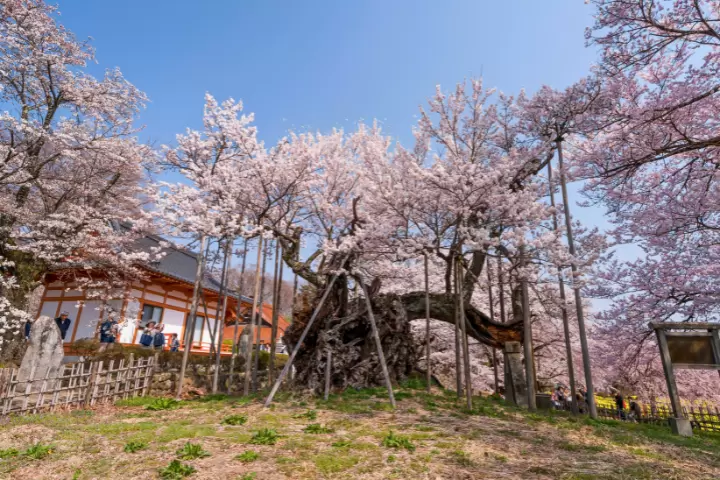
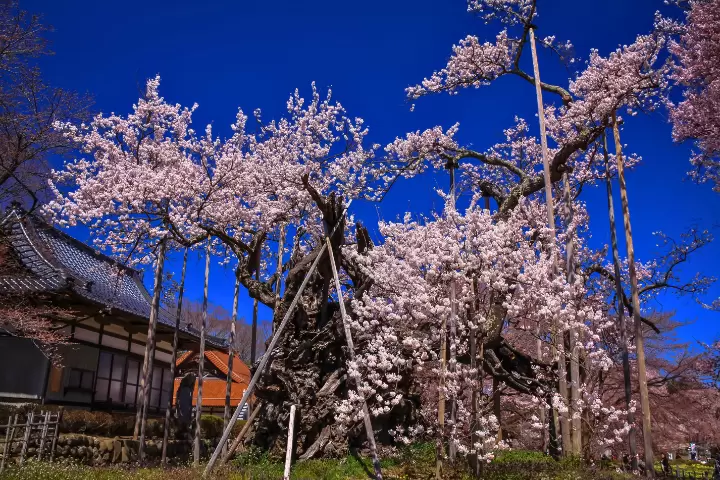
Located on the grounds of Jissoji Temple in Mukawa, Yamataka Jindaizakura is an ancient Edohigan cherry tree estimated to be around 2,000 years old. It was designated a National Natural Monument in 1922 and is celebrated as one of Japan’s Three Great Cherry Trees. Although natural disasters over the centuries have reduced its size from its former glory, the tree still stands impressively at approximately 10.3 meters tall, with a trunk circumference of about 11.8 meters at its base. Its majestic presence reflects the remarkable resilience of a tree that has survived for two millennia.
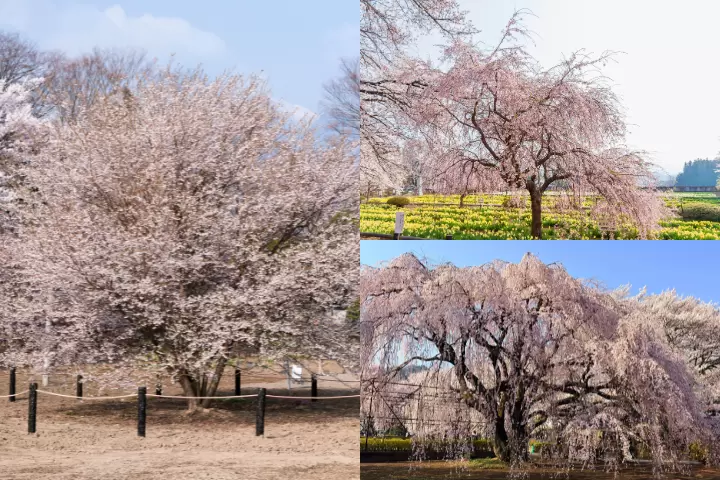
he temple grounds are also home to young trees grown from the branches of two other members of Japan’s Three Great Cherry Trees: Miharu Takizakura in Fukushima Prefecture and Neodani Usuzumizakura in Gifu Prefecture. Together, these trees represent a living connection between some of Japan’s most celebrated cherry trees. You can also see the “Uchuzakura” (Space Cherry Blossom), grown from seeds of Yamataka Jindaizakura that spent approximately eight months aboard the International Space Station, along with descendants of other famous cherry trees from across Japan.
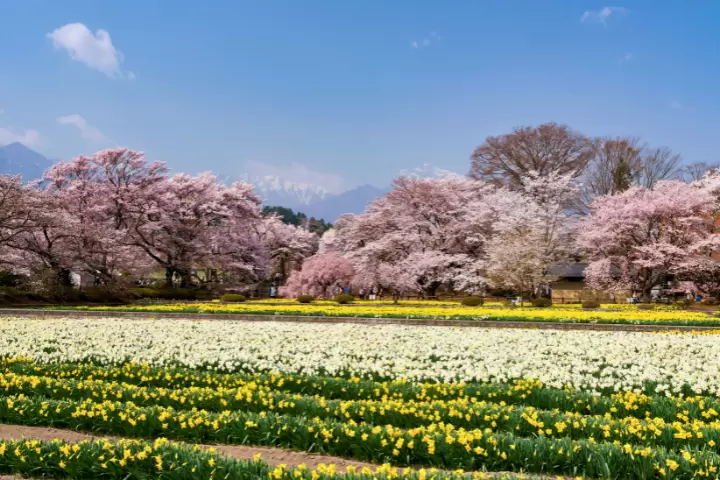
The site also offers beautiful views of pale pink cherry blossoms set against Mt. Kaikomagatake (2,967 m), a majestic peak in the Southern Alps with snow still covering its summit. Around 80,000 trumpet daffodils bloom at the same time, creating a striking contrast between the delicate pink of the cherry blossoms and the vibrant yellow of the daffodils.
Discover the timeless beauty of this ancient tree and the breathtaking spring scenery found only in Hokuto.
📍2763, Yamataka, Mukawa-cho, Hokuto City, Yamanashi Prefecture
Nichiren Buddhist Temple Ootsusan Jissoji
🌸Type: Edohigan cherry tree
🍃Age: Estimated 2,000 years old
👀Best time to see: Late March to early April (typically)
🏔 Elevation: Approximately 550m
📞Phone number: 0551-26-2740 Jissoji Temple
🕐Visiting hours: 8:30 - 17:00
🎫 Admission fee: 500 yen for adults, free for junior high school students and younger.
🅿 Parking: Temporary parking lot available during cherry blossom season. Reservations not accepted.
🚻 Toilets: One next to the parking lot and one within the temple grounds.
📯Event: Jindai Cherry Blossom Festival *The event date may vary depending on the blooming status.
*Visiting hours and admission fees apply only during the cherry blossom season.
*The information above is based on 2026 details. Please check the official website for the latest information.
【Access】
● From Tokyo area●
🚃 By Train:Take the JR Chuo Line Limited Express to Kofu Station. Transfer to a local train on the JR Chuo Line and get off at Hinoharu Station. From there, take a taxi for about 10 minutes.
🚙 By Car:About 15 minutes from Sutama IC on the Chuo Expressway.
● From Nagoya area●
🚃 By Train:Take the JR Chuo Line Limited Express to Kobuchizawa Station, then take a taxi for about 25 minutes. Alternatively, take a local train from Shiojiri Station on the Chuo Line to Hinoharu Station, then take a taxi for about 10 minutes.
🚙 By Car:About 25 minutes from Kobuchisawa IC on the Chuo Expressway.
The area can get crowded during peak bloom, especially on weekends. Please allow extra time for your visit.
Check out other articles!

-

Yamataka Jindai Cherry Blossoms🌸 2025.02.07
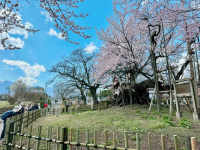
2. The Cherry Blossoms of Wanizuka
Wanizuka Cherry Tree: A Solitary Cherry Tree with Views of Mt. Fuji
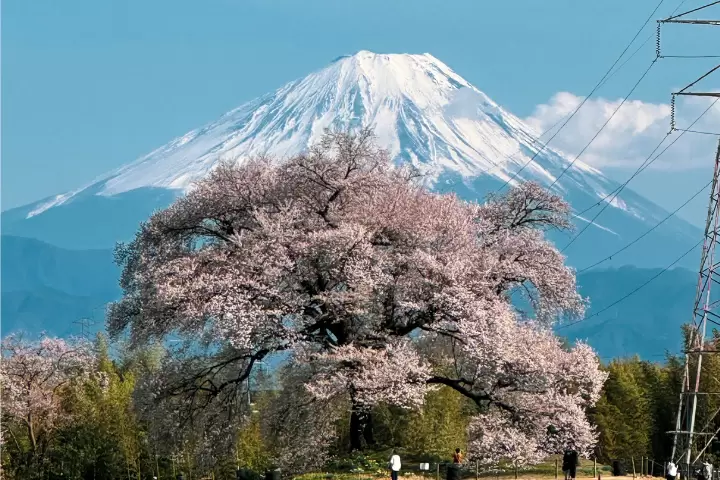
Located in Nirasaki City, the Wanizuka Cherry Tree is an Edohigan cherry tree estimated to be around 330 years old. Standing atop a mound, this magnificent solitary tree reaches approximately 17 meters in height, with a trunk circumference of about 3.6 meters. Every spring, it bursts into beautiful blossoms. There are several theories about the origin of the name “Wanizuka.” One suggests that the mound is the tomb of Prince Takeda, a son of the legendary Japanese prince Yamato Takeru. Another theory is that its shape resembles a wani-guchi, a traditional Buddhist temple gong.
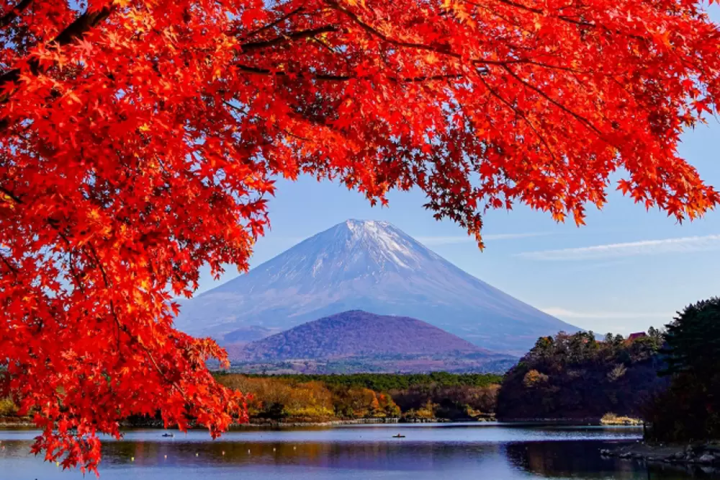
Cherry blossoms in full bloom against the backdrop of Mt. Fuji and the Yatsugatake Mountains, both still capped with snow, create a strikingly beautiful scene that captivates visitors. This stunning combination of mountains and blossoms also makes the spot a popular destination for photography.
During peak bloom, the tree is illuminated at night, creating a magical display of cherry blossoms with a completely different atmosphere from the daytime.
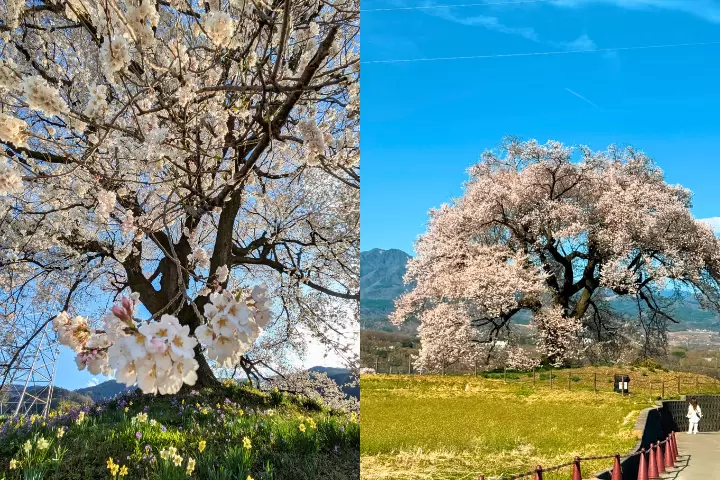
📍624 Yamanashi Prefecture, Nirasaki City , Kamiyama Prefecture
🌸 Variety: Edohigan cherry tree
🍃 Age: Estimated 330 years old
👀 Best viewing period: Late March to early April
🏔Altitude: Approximately 420m
📞Phone number: 0551-22-1991 (Nirasaki City Tourism Association)
🕐Opening hours: -
🎫Admission fee: -
🅿 Parking: Wanizuka Sakura Parking Lot, 164 Taketa, Kamiyamamachi, Nirasaki City (approx. 30 spaces)
A temporary parking lot will be opened during the cherry blossom season (approximately 120 spaces).
🚻 Toilets: Temporary toilets *Only available during the blooming season
📯 Event: Light-up *Dates vary depending on the blooming status.
【Access】
●From Tokyo & Nagoya ●
🚃 By Train:Get off at Nirasaki Station on the JR Chuo Line. Take the Enno Line bus operated by Nirasaki City and get off at Takeda Hachiman-iriguchi bus stop. From there, it is a 5-minute walk. Alternatively, take a taxi from Nirasaki Station (about 10 minutes).
🚙 By Car:About 15 minutes from Nirasaki IC on the Chuo Expressway.
During peak bloom, especially on weekends, crowds are expected. Please allow ample time for your visit.
Suggested Itinerary | A Weekend Cherry Blossom Road Trip in Hokuto
| time | spot | Travel tips |
| 8:00 | From Tokyo: Sutama IC on the Chuo Expressway From Nagoya: Kobuchisawa IC on the Chuo Expressway |
About 15 minutes from Sutama IC and about 25 minutes from Kobuchisawa IC. Expect traffic during peak bloom. Arrive early to avoid delays. |
| 8:30 ~ | Yamataka Jindai Cherry Tree (Jissoji Temple) | The parking lot is expected to be crowded during the peak blooming season. Please follow the instructions of the security guards when parking. |
| Admission opens at 8:30 AM. Arrive early to avoid queues during peak bloom! | ||
| Jindaizakura Festival | The Jindaizakura Festival takes place during peak bloom, with stalls selling local produce and food, as well as food trucks, lining the road in front of the temple and the plaza behind the main hall. | |
| 11:00 | Doma cafe Tomiyoshi | 🚙 About 5 min.A cozy café serving lunch and seasonal fruit parfaits,etc. |
| 13:00 | Wanizuka Cherry Blossoms (Nirasaki City) | 🚙 About 15 min.The parking lot is expected to be crowded during the peak blooming season. Please follow the instructions of the security guards when parking. |
| 15:00 | Nirasaki IC on the Chuo Expressway | 🚙About 15 min. If time allows, explore the surrounding area before returning at dusk to enjoy the nighttime illumination. |
Stops Along the Cherry Blossom Route
Doma cafe Tomiyoshi
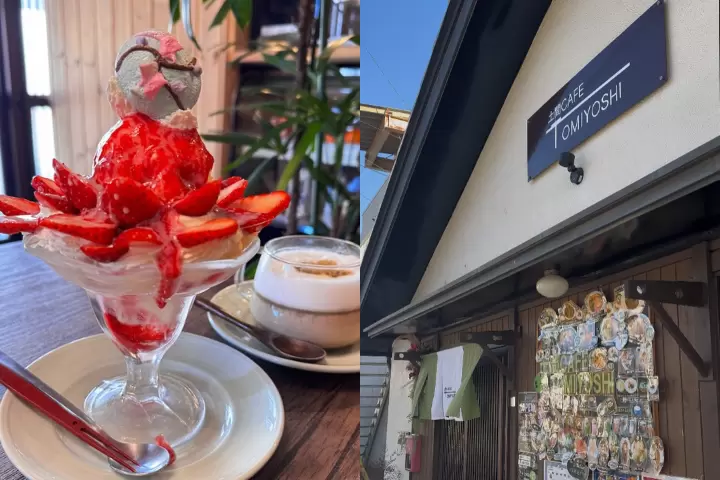
Enjoy hearty lunches made with locally grown Mukawa 48 rice, fresh vegetables and meat raised with the benefit of delicious local water. This café also offers tempting desserts, including parfaits generously topped with fresh fruit.
📍Doma Cafe Tomiyoshi
2143-17 Mitsubuki, Mukawa-cho, Hokuto Hokuto City Yamanashi Prefecture
📞Telephone: 0551-45-8467
🕐Opening hours: 11:00 - 16:00 *Lunch is served until 15:00. Closes when rice is sold out.
📅 Closed: Mondays and Tuesdays
🅿 Parking: Located diagonally across the street.
【Access】
● From Tokyo area●
🚙By car: Approximately 10 minutes from the Sutama IC on the Chuo Expressway
●From Nagoya area●
🚙By car: Approximately 20 minutes from Kobuchisawa IC on the Chuo Expressway.
Enjoy Hokuto’s Cherry Blossoms Twice
From the approximately 2,000-year-old Jindaizakura in Yamataka to the Wanizuka Cherry Tree, with views of Mt. Fuji and the Yatsugatake Mountains, Hokuto is home to cherry blossoms with distinct charms.
Discover more of Hokuto’s cherry blossom spots in PART 2!