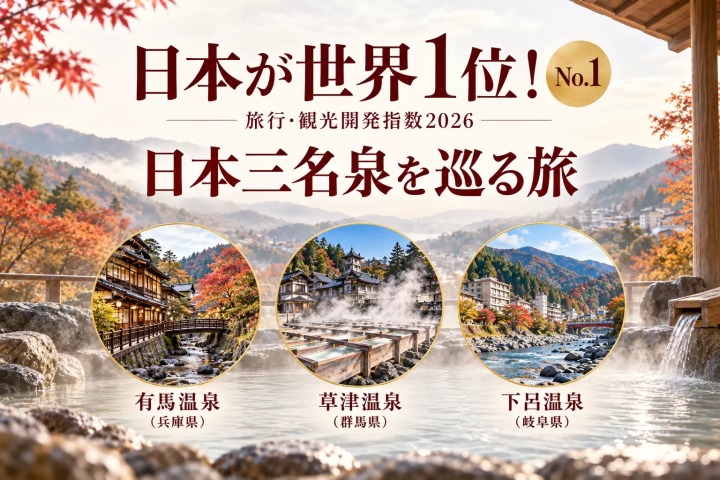
Japan ranked No. 1 in the Travel & Tourism Development Index 2026! Discover why, the charms of regional Japan, and the Three Famous Hot Springs: Arima, Kusatsu, and Gero.

Written by
We introduce the lesser-known charms and unique local experiences of various regions throughout Japan, including Gero Onsen. Hot springs, sake, local cuisine, beautiful nature, and encounters with local people. We introduce trips that go beyond simply "seeing" tourist destinations, allowing you to experience the local lifestyle and culture.
-
Table of Contents
- Japan Ranks No. 1 in the World! Why?
- Not Just Tokyo and Kyoto! Discover the Charms of Regional Japan
- Hot Springs Are a Must in Japan! What Are the Three Famous Hot Springs?
- Visit a Regional Hot Spring on Your Next Trip to Japan
Japan has been ranked No. 1 in the world in the World Economic Forum (WEF) Travel & Tourism Development Index 2026!
Rising from 3rd place in 2024, Japan now tops the list of 110 countries and economies. Why is Japanese tourism so highly regarded around the world right now?
In this article, we look at the reasons behind the ranking and introduce the charms of Japan beyond Tokyo, Kyoto, and Osaka.
One cultural experience you should not miss on a trip to Japan is the onsen (hot spring). We also introduce the "Three Famous Hot Springs of Japan", three historic onsen towns that represent the country.
Japan Ranks No. 1 in the World! Why?
The World Economic Forum's Travel & Tourism Development Index (TTDI) comprehensively evaluates the conditions that support the development of the tourism industry, including infrastructure, cultural resources, the travel environment, and sustainability.
In the 2026 ranking, Japan placed 1st, followed by the United States in 2nd and Spain in 3rd.
"Travel and Tourism Development Index 2026"
https://jp.weforum.org/stories/sustainable-development/top-10-countries-for-travel-and-tourism-2026-ttdi-index-ja/
Behind Japan's high score are its excellent transportation infrastructure and rich cultural resources, as well as efforts to encourage travelers to visit regions across the country.
The WEF report points out that the Japan National Tourism Organization (JNTO) actively promoted regions beyond Tokyo, Osaka, and Hiroshima and attracted travelers from a wider range of countries, which was a key factor in the evaluation.
In fact, a record of approximately 42.7 million international visitors came to Japan in 2025.
Beyond its world-famous cities, Japan is home to beautiful nature, traditional culture, unique local food, and many historic hot spring towns.
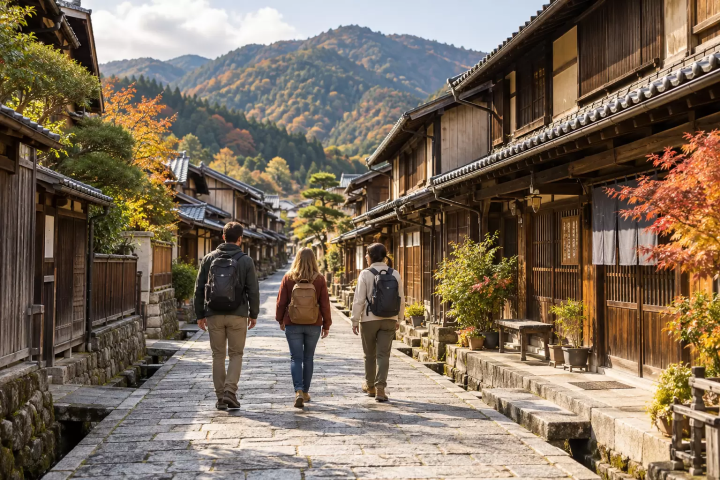
Not Just Tokyo and Kyoto! Discover the Charms of Regional Japan
When people think of traveling in Japan, many picture the streets of Tokyo, the temples and shrines of Kyoto, or the food of Osaka.
But Japan has much more to offer.
Small towns surrounded by mountains, traditional ryokan inns, and food cultures passed down through generations.
Traveling to regional areas lets you experience everyday life and tradition in Japan and enjoy truly special moments.
And the best way to experience Japanese culture with your whole body is the onsen.
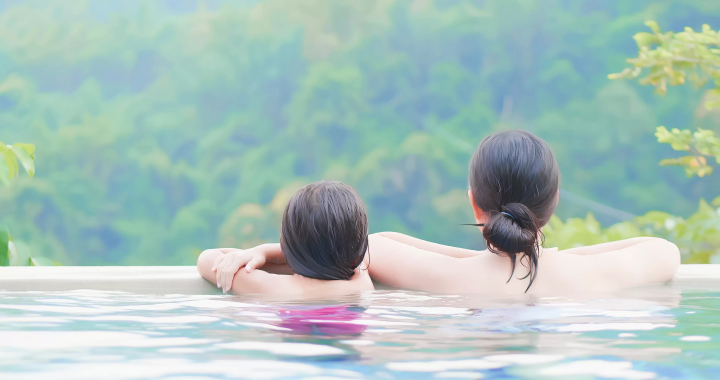
Hot Springs Are a Must in Japan! What Are the Three Famous Hot Springs?
Japan has countless hot spring areas, but the ones that have been celebrated since ancient times are known as the "Three Famous Hot Springs of Japan" (Nihon Sanmeisen).
They are Arima Onsen in Hyogo Prefecture, Kusatsu Onsen in Gunma Prefecture, and Gero Onsen in Gifu Prefecture.
These three hot springs were praised as the finest in Japan by Banri Shukyu, a monk of the Muromachi period, and Hayashi Razan, a Confucian scholar of the Edo period.
Each has its own spring water, scenery, and culture.
1. Arima Onsen (Hyogo Prefecture) | A Historic Hot Spring Town Full of Charm
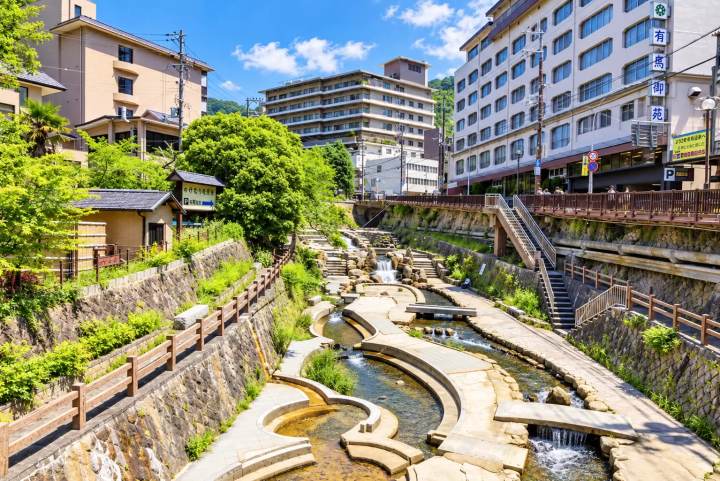
Located in Kita Ward, Kobe, on the north side of Mt. Rokko, Arima Onsen is said to be one of the oldest hot springs in Japan. It appears in the Nihon Shoki, Japan's oldest official history, and was a favorite of the warlord Toyotomi Hideyoshi.
Arima's biggest feature is its two types of water: the reddish-brown, iron- and salt-rich "Kinsen" (gold spring), and the clear "Ginsen" (silver spring), which includes carbonated and radium springs.
For an easy day trip, try the public bathhouses "Kin no Yu" and "Gin no Yu." Both are located in the hot spring town, so you can stop by between sightseeing.
The town's sloping lanes and narrow alleys are lined with ryokan, souvenir shops, and cafes. Strolling while snacking on the local specialty, "tansan senbei" (carbonated rice crackers), is part of the fun.
Arima is also easy to combine with sightseeing in Kobe and Osaka.
It takes about 1 hour by bus from central Osaka and about 30 minutes from Sannomiya in Kobe, making it perfect for a day trip.
2. Kusatsu Onsen (Gunma Prefecture) | A Hot Spring Town Wrapped in Steam
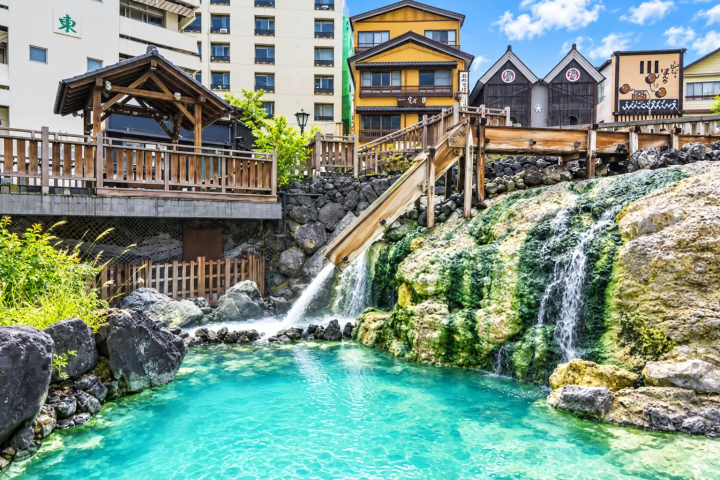
Located on a plateau about 1,200 meters above sea level in Gunma Prefecture, Kusatsu Onsen is said to have the largest volume of naturally flowing hot spring water in Japan.
Its symbol is the "Yubatake" (hot water field) in the center of town.
The sight of large amounts of hot water flowing through wooden channels as steam rises is breathtaking. At night, it is lit up and takes on a magical atmosphere.
Kusatsu's water is known for being strongly acidic. At "Netsu no Yu" next to the Yubatake, you can watch "yumomi," the traditional method of cooling the hot water by stirring it with long wooden boards.
Sainokawara Park, with its spacious open-air bath, is another popular spot.
Simply walking around the town lets you feel the essence of Japanese hot spring culture.
From Tokyo, it takes about 3 hours by limited express train and bus. Highway buses are also available. In winter, you can enjoy nearby ski slopes, making it a great destination all year round.
3. Gero Onsen (Gifu Prefecture) | Silky Water and Mountain Village Scenery
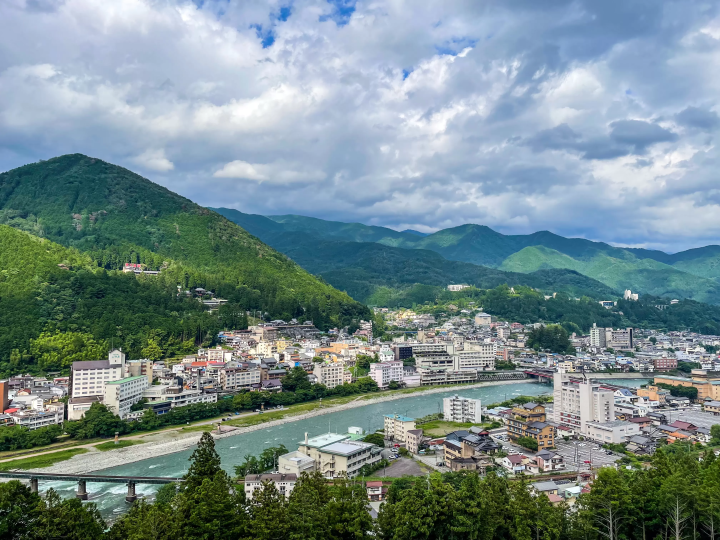
Gero Onsen in Gifu Prefecture stretches along the Hida River. With over 1,000 years of history, it is home to the "White Heron Legend," which tells of a heron that showed people where the hot water was flowing.
Its greatest appeal is the silky, alkaline simple spring water. Many people find their skin feels smooth after bathing, which is why it is called a "bijin no yu" (beautifying hot spring). The gentle water is also recommended for first-time onsen visitors.
Free footbaths are scattered around town, so you can casually enjoy onsen culture while strolling. With a "Yumeguri Tegata" (hot spring hopping pass), you can also try the baths at several ryokan.
Onsenji Temple, on a hill above town, is associated with the White Heron Legend. From the top of its stone steps, you can enjoy a panoramic view of Gero.
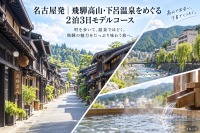
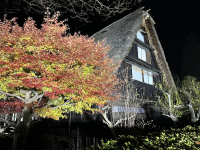
At "Gero Onsen Gassho Village," where traditional gassho-zukuri farmhouses stand, you can also experience the lifestyle and culture of a traditional Japanese mountain village.
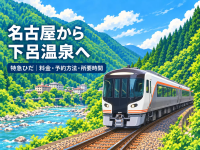
Gero is about 1 hour 30 minutes from Nagoya by the Limited Express Hida, with no transfers needed, making it a great stop on a trip through central Japan.
The mountain scenery changes with the seasons, from autumn leaves to snowy winter landscapes, adding to Gero Onsen's charm.
Comparing the Three Famous Hot Springs
Each of the three hot springs has its own personality. Choose the one that best suits your travel style.
■Arima Onsen (Hyogo)
Two types of water, Kinsen and Ginsen / Within about 1 hour of Osaka and Kobe / For those who want to stroll a historic hot spring town
■Kusatsu Onsen (Gunma)
Acidic water said to have the largest flow in Japan / About 3 hours from Tokyo / For those who want to experience onsen culture such as the Yubatake and yumomi
■Gero Onsen (Gifu)
Silky "bijin no yu" water / About 1 hour 30 minutes from Nagoya / For those who want to relax amid mountain village scenery
Visit a Regional Hot Spring on Your Next Trip to Japan
Japan is now No. 1 in the world for travel and tourism development. To truly experience its appeal, why not venture beyond the famous cities into the regions?
Soaking in a historic hot spring, savoring local cuisine, and relaxing amid beautiful nature: time like this may be a special experience you can only have in Japan.
On your next trip to Japan, why not find your own favorite onsen town?






![[Tokyo, Shinjuku] Buy Matcha Here! 2 Long-established Japanese Tea Shops Where You Can Get the Authentic Taste!](https://resources.matcha-jp.com/resize/720x2000/2025/09/24-245090.webp)

![[Gozaisho Ropeway] Gourmet Guide](https://resources.matcha-jp.com/resize/720x2000/2025/12/03-251960.webp)
![[October/November 2026, near Tokyo Station] An event where you can buy popular souvenirs from all over Japan!](https://resources.matcha-jp.com/resize/720x2000/2026/10/14-272472.webp)
![[2 hours from Tokyo ] Stunning scenery of Hokuto City Yamanashi City, that changes with the seasons: cherry blossoms, sunflowers, autumn leaves, and snowscapes](https://resources.matcha-jp.com/resize/720x2000/2026/09/28-271351.webp)